The First Elevators and the Rise of Ancient Skyscrapers
In a previous exploration of ancient engineering, we surveyed the ingenious methods that shaped our built environment. That discussion, available here, sets the stage for a deeper look at two remarkable achievements: towering structures that scraped ancient skies and the earliest elevators that made vertical movement possible. These ancient vertical systems reveals the incredible sophistication of early master builders.
The necessity of height in ancient world cities
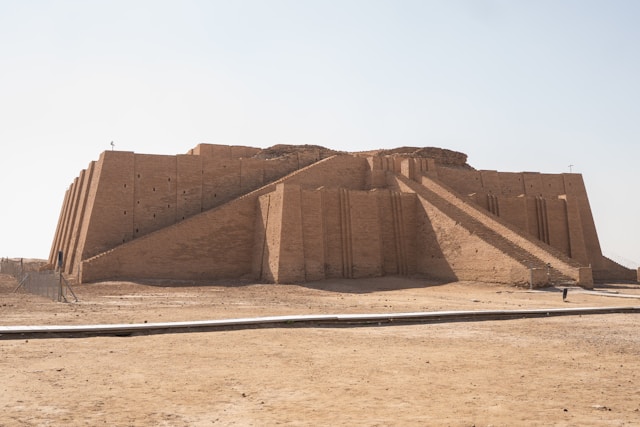
Ancient civilizations built tall structures for diverse reasons. In many early cultures, verticality connected directly with religious belief. For example, the Sumerians built the Great Ziggurat of Ur around 2100 BCE to serve as a mountain-like home for their gods. Similarly, the Egyptians constructed the Great Pyramid of Giza around 2560 BCE to elevate their pharaohs toward the afterlife. These structures dominated the landscape and projected immense political authority.
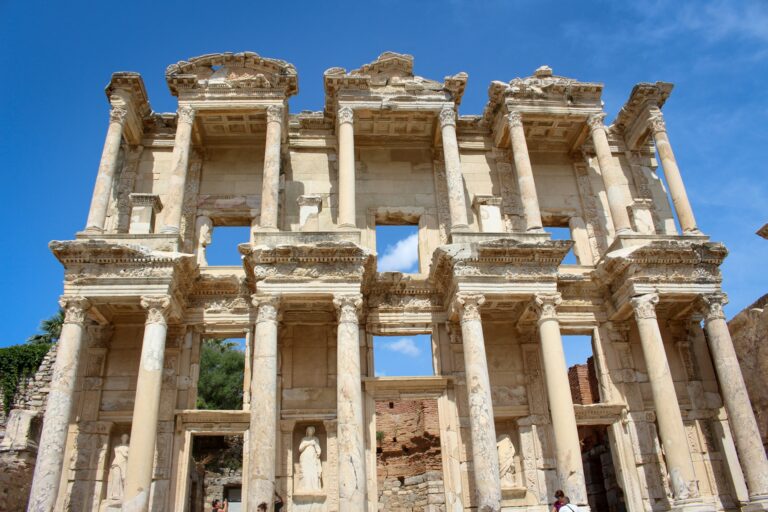
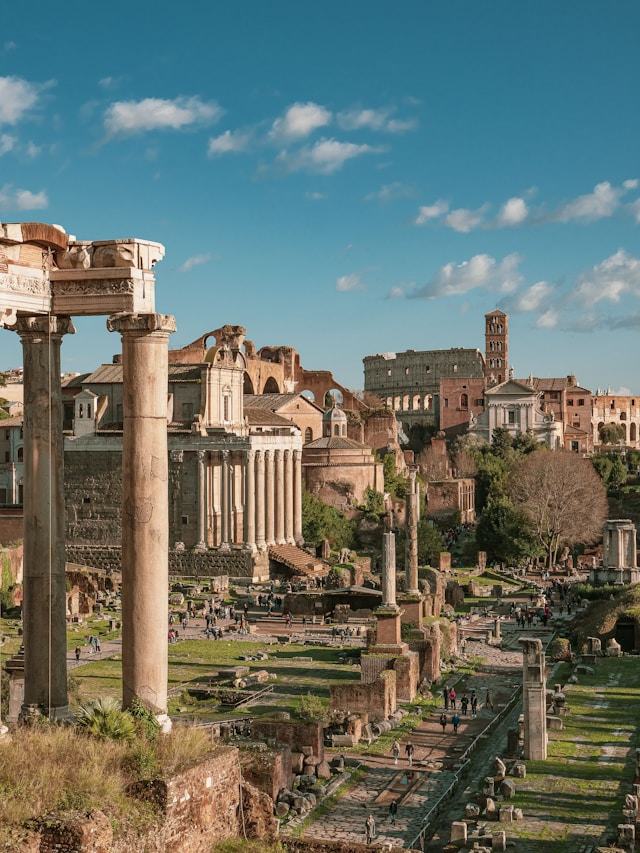
In contrast, the Roman Empire faced practical urban pressures that demanded vertical expansion. By the 1st century BCE, Rome became a dense metropolis with over one million residents. Land values skyrocketed, and horizontal space disappeared. Therefore, builders constructed multi-story apartment buildings called insulae. These structures often reached six or seven stories in height. Imperial politicians recognized the structural dangers of these tall tenements. As a result, Emperor Augustus capped the legal height of residential buildings at roughly seventy Roman feet around 6 BCE.
Architectural materials of the ancient sky
Building upward required highly durable materials. In ancient Mesopotamia, builders lacked large stone quarries. Consequently, they developed advanced techniques for manufacturing mud-bricks. They used sun-dried bricks for the inner core of ziggurats. Furthermore, they utilized kiln-fired bricks for the exterior walls to resist weathering. They bound these bricks together using naturally occurring bitumen as a mortar around 3000 BCE.
Later, Roman engineers introduced a massive technological leap with the invention of concrete, known as opus caementicium, around the 2nd century BCE. They mixed lime and water with a unique volcanic ash called pozzolana. This mixture created an incredibly strong material that cured even underwater. It allowed Romans to build sturdier, taller walls than previous civilizations.
Additionally, vertical construction required sophisticated mathematical and measuring systems. Egyptian architects utilized the royal cubit, which measured roughly 52.4 centimeters, to maintain alignment during pyramid construction. Romans relied on the Roman foot, or pes, which equaled nearly 29.6 centimeters. These precise measuring units allowed surveyors to calculate structural loads accurately. Consequently, these mathematical developments kept massive tall buildings stable over time.
Infrastructure and the challenges of high density living
Living in ancient multi-story buildings introduced severe infrastructural difficulties. Roman insulae featured commercial storefronts on the ground level. Wealthy tenants rented the lower floors because these areas offered easy access and better construction quality. Poor residents lived on the top floors under cramped conditions.
These tall residential towers completely lacked internal plumbing for the upper levels. Consequently, tenants carried fresh water up several flights of stairs by hand. Waste disposal systems were equally primitive. Residents often threw their sewage out of upper windows into the narrow streets below. This lack of proper infrastructure created significant health hazards throughout the city.
Furthermore, structural fires were a constant threat. Most insulae featured wooden floors and open cooking fires. Therefore, fires spread quickly through the vertical spaces. Roman politicians established the vigiles around 6 CE to serve as a public firefighting force. Despite these efforts, high-density vertical living remained dangerous for the average citizen.
The invention and operation of ancient elevators
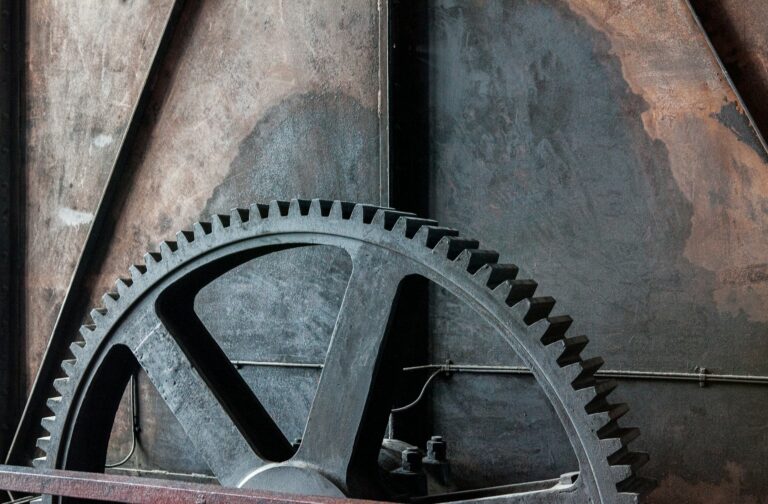
As buildings and monuments grew taller, the need for vertical transportation became urgent. The brilliant inventor Archimedes of Syracuse developed the first recorded elevator system around 236 BCE. This early hoist functioned through a system of ropes, pulleys, and a central winding drum. Hand-operated capstans turned the drum to lift heavy freight vertically.
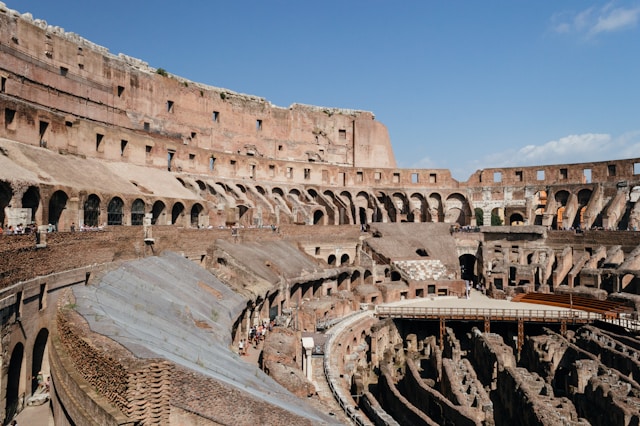
Subsequently, Roman engineers expanded this technology for entertainment and political theater. The Roman Colosseum, completed around 80 CE, featured an intricate subterranean network of 28 mechanical lifts. These lifts operated within the hypogeum, which was the complex basement beneath the arena floor.
Each elevator unit utilized a heavy wooden frame, hemp ropes, and counterweights to ensure stability. Workers turned massive wooden treadwheels to power the hoists. This mechanical system could lift thousands of pounds simultaneously. As a result, stage directors raised wild beasts and gladiators directly onto the arena floor to surprise the audience.
Historical registers of vertical achievements
Modern scholars understand these ancient engineering achievements through a combination of written texts and archaeological evidence. The Roman architect Vitruvius provided the most complete descriptions of ancient machinery. He authored a multi-volume treatise titled De architectura around 15 BCE. In this text, Vitruvius detailed the geometry of pulleys, cranes, and hoisting devices used in major construction projects.
Similarly, the Greek historian Herodotus recorded details about ancient building methods around 440 BCE. He described how Eastern civilizations moved heavy stones using simple wooden levers and tiered scaffolding. These written registers offer an invaluable window into the minds of ancient inventors.
Furthermore, physical archaeology confirms these literary records. Excavations at the Colosseum during the 19th and 20th centuries revealed clear physical evidence of the elevator systems. Archaeologists discovered vertical guide tracks, rope wear marks, and bronze socket fittings embedded in the stone walls. These physical findings perfectly match the descriptions written by Vitruvius centuries ago.
Social conditions and the legacy of ancient engineering
The construction of ancient skyscrapers and elevators depended heavily on specific social conditions. Powerful centralized governments, like the Roman Empire and Egyptian kingdoms, commanded vast material wealth. They controlled massive labor forces that included specialized artisans, engineers, and laborers. Furthermore, extended periods of political stability allowed these empires to fund long-term infrastructure projects.
Religious beliefs also provided immense social motivation for these vertical developments. Priests and rulers believed that tall structures brought society closer to the divine realm. Politics played an equally vital role. Towering monuments projected imperial power to rival nations and citizens alike.
Today, these ancient vertical structures continue to inspire generations of architects. The mathematical principles formalized by Archimedes still guide modern engineering. Similarly, the Roman development of concrete laid the foundation for modern urban design. These historical monuments prove that the human drive to reach the sky is a timeless ambition.