The First Markets and the Origins of Global Trade
Human beings have always looked for ways to exchange goods and meet with neighbors. In the ancient world, seasonal fairs and permanent markets emerged as the first hubs of organized commerce. These gatherings allowed completely different cultures to interact, share ideas, and establish peaceful relationships. Therefore, the simple act of trading goods laid the groundwork for early international diplomacy.
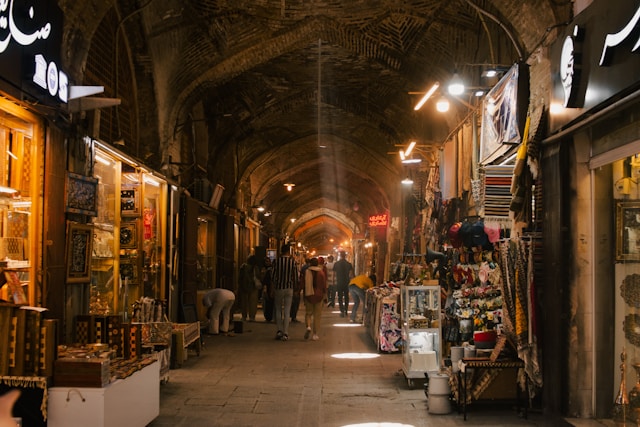
The marketplace became the beating heart of ancient urban life, driving economic survival and social evolution simultaneously. Consequently, the development of civilization became deeply intertwined with the evolution of the market. Fairs provided a neutral ground where communities could suspend their conflicts for commercial gain. This shared economic interest encouraged different peoples to develop common languages and cross-cultural understanding. Over time, the informal barter at a crossroads transformed into structured municipal institutions that defined ancient societies.
When trade became organized
The earliest evidence of recurring exchange reaches back to around 9500 BCE, when nomadic groups converged at sites like Göbekli Tepe in southeastern Anatolia to worship and trade food supplies. Organized commerce as a true institution, however, only crystallized with the rise of Mesopotamian cities.
Around 2500 BCE, the Sumerians had already developed a network of structured dirt roads connecting cities like Ur, Eridu, and Lagash. These routes allowed animal-drawn carts to carry pottery, metals, textiles, and spices between urban centers. The Sumerians even built the first recorded bridge in history, spanning canals to connect city banks and speed up the movement of merchants and goods. These were the physical foundations on which organized trade would grow.
Across the Mediterranean, dedicated marketplaces matured by the first millennium BCE. In Greece, true markets appeared around 900 BCE, gradually replacing barter with monetary exchange. In Rome, the Forum began as a marketplace, and state-authorized periodic markets called nundinae and mercatus became far more widespread than historians once assumed.
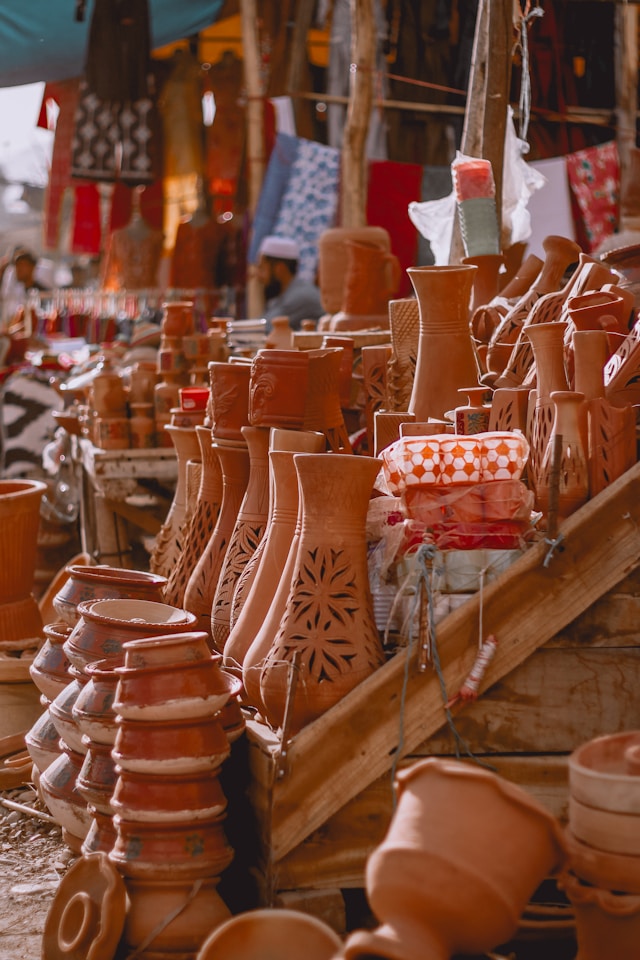
Historical records of early trade
Our knowledge of ancient commerce comes from two main sources: written records and physical excavation. Mesopotamian merchants used clay tablets as early as 3000 BCE to log transactions, debts, and inventories in cuneiform script, giving us precise figures for the prices of barley, wool, and silver. Egyptian papyri from the New Kingdom period around 1300 BCE document state-sponsored expeditions down the Red Sea to Punt, describing the acquisition of exotic woods, precious resins, and gold for the pharaoh’s temples.
Physical evidence reinforces the written record. Standardized stone weights from the Indus Valley Civilization, dating to roughly 2500 BCE, confirm that merchants followed strict regulatory frameworks across vast distances. Legal codes, particularly the Code of Hammurabi around 1750 BCE, complement these finds by establishing official interest rates and protecting honest merchants from fraud.
How markets built cities
A permanent market attracted settlers, and settlers generated demand. Craftspeople set up workshops nearby. Innkeepers offered lodging to traveling merchants. Blacksmiths repaired tools and vehicles. These clusters of activity gradually became towns. The Greek emporia illustrate this process clearly. Trading posts like Naucratis in Egypt and Olbia on the Black Sea coast were cosmopolitan communities where people from vastly different cultures shared space and language.
The Romans institutionalized the same principle by building macella, permanent covered markets, in towns across the empire. By the 2nd century CE, a road network stretching over 80,000 kilometers connected those markets from Britain to Mesopotamia.
In Byzantium and across the wider Greco-Roman world, religious festivals reinforced commercial activity. Merchants set up stalls alongside temples, and the Byzantine state collected the kommerkion, a tax of roughly 10 percent on goods sold, turning sacred gatherings into significant sources of imperial revenue.

The greatest markets of antiquity
Several cities became legendary for the scale of their commercial complexes. The Agora of Athens functioned as the center of Greek public and economic life from at least the 5th century BCE. Grain from the Black Sea region, olive oil from Attica, pottery, silver coins, and dyed textiles all changed hands there. Its international reach made Athens one of the wealthiest city-states of the ancient world.
Around 110 CE, the Roman Empire completed Trajan’s Market in the center of Rome. The multi-level brick structure housed over 150 individual shops and administrative offices, making it the closest ancient equivalent to a modern shopping mall.
Further east, Petra flourished between the 4th century BCE and the 1st century CE as the capital of the Nabataean Kingdom and the central node of the Incense Route. Caravans carrying frankincense and myrrh from southern Arabia passed through its red rock canyon, and Petra grew wealthy by taxing every load.
Along the Silk Road, formalized during the Han Dynasty around 130 BCE, Samarkand and Bukhara became meeting points where Chinese silk met Roman gold, and where paper, glassware, precious stones, and eventually religions crossed thousands of kilometers.
What people traded and why they traveled
Ancient markets featured a vast array of goods that varied from everyday staples to exotic luxury items. Regular citizens purchased grain, olive oil, wine, and salted fish for their daily survival. But the goods that drove ancient long-distance trade were the rare, precious, or impossible to produce locally. Silk from China was a status symbol across the Roman Empire, and demand for it repeatedly drained Roman gold reserves. Spices like pepper, cinnamon, and ginger from South and Southeast Asia commanded extraordinary prices in Mediterranean markets, where they served as preservatives, medicines, and markers of wealth.
Salt powered entire regional networks. Rome’s Via Salaria, the Salt Road, connected the Adriatic coast to the capital and gave merchants a reliable path for one of antiquity’s most essential resources. Amber from the Baltic traveled south along the Amber Road, active as early as 3000 BCE, prized across the Mediterranean for jewelry and ritual objects.
The profits at the destination justified the dangers of the road. A single successful caravan could make a merchant wealthy for life, even accounting for the real risks of bandits, storms, hostile territories, and disease.
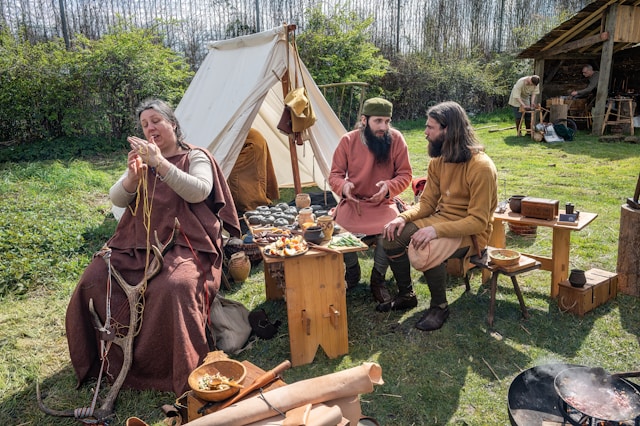
Pilgrimage, politics, and the road
Fairs in antiquity rarely existed apart from religion and politics. Delphi, where pilgrims consulted the oracle of Apollo from at least the 8th century BCE, became politically neutral ground where rival city-states negotiated trade agreements. The Greek sanctuary system effectively created the ancient world’s first free trade zones by protecting visitors during pan-Hellenic festivals.
In Arabia, pre-Islamic sacred months forbade tribal warfare, allowing merchants to travel safely between markets. Mecca was already a significant commercial hub long before the 7th century CE, its fairs protected by those religious truces. Buddhist pilgrimage circuits formalized by Emperor Ashoka in the 3rd century BCE generated constant demand for inns, food, and trade along routes connecting Bodh Gaya, Lumbini, Sarnath, and Kushinagar.
Infrastructure made all of it possible. The Persian Royal Road, built around 500 BCE under Darius I, stretched approximately 2,700 kilometers from Sardis to Susa with rest stations every 25 kilometers. The Assyrian king Esarhaddon had ordered roads built throughout his kingdom as early as 670 BCE to facilitate trade. By 100 BCE, these systems had merged with the Silk Road into a connected network linking China to the Mediterranean.
For a deeper look at how faith and movement shaped the ancient world, read our full article on the history of pilgrimage in antiquity at The Coin Code.
The foundations of global wealth
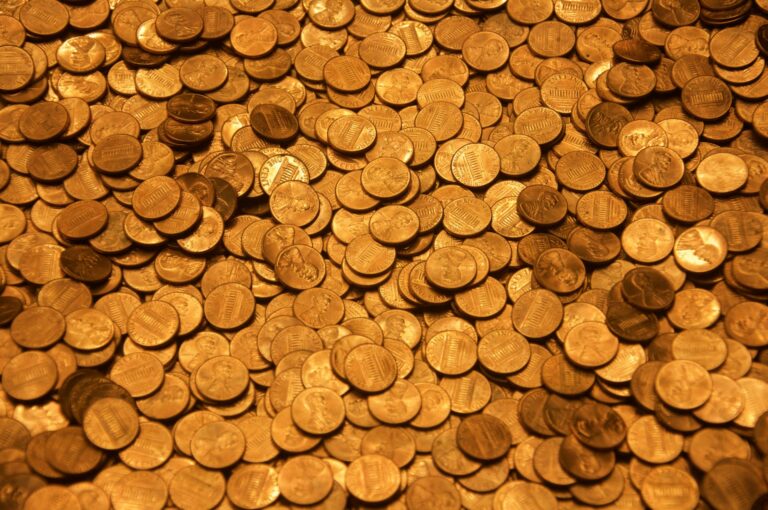
Specific technologies accelerated the expansion of ancient trade. The invention of metal coinage in Lydia around 600 BCE replaced cumbersome barter with faster, more reliable transactions. Advanced shipbuilding techniques, including mortise-and-tenon joints, allowed vessels to carry hundreds of tons of cargo across open waters. Political stability, particularly the Pax Romana beginning in 27 BCE, reduced piracy and banditry along the major routes.
Through those secure channels, wealth accumulated in imperial capitals and spread outward to distant provinces. The ancient marketplace created the earliest networks of global interdependence, and the combination of monetary innovation, engineering, and imperial peace produced a commercial world whose basic logic still runs beneath our own.