How ancient civilizations built sewers and saved millions
In our last post, we looked at how ancient peoples engineered the movement of water toward cities. That story focused on supply: canals and aqueducts feeding growing populations. In this post, we turn to the other side of that problem. Moving waste away from the city before it could contaminate drinking water and kill thousands is a challenge that shaped empires, defined urban planning, and gave birth to medicine and public policy.
Sanitation is less glamorous than an aqueduct. Yet it may be the single most important piece of infrastructure in the history of urban life. Without it, cities cannot grow. Diseases spread freely, trade collapses, and armies surrender before a single battle is fought.
The first pipes underground
The oldest known plumbing systems appeared in Mesopotamia. Around 4000 BCE, Sumerian cities introduced clay sewer pipes, with early examples found in the Temple of Bel at Nippur and at Eshnunna. These systems carried wastewater away from public buildings and captured rainwater in wells. By 3200 BCE, the city of Uruk had brick-constructed latrines, making it one of the earliest cities on record with organized waste disposal.
Meanwhile, the Indus Valley civilization was building what many historians consider the most advanced sanitation network of the ancient world. By around 3000 BCE, cities like Mohenjo-Daro and Harappa had indoor bathrooms and latrines in nearly every home. Terracotta pipes, joined together with tar for a watertight seal, carried waste from upper floors down to street-level drains. Those drains fed a citywide network of covered brick sewers running under every major avenue, eventually discharging into a nearby estuary. Mohenjo-Daro likely housed around 40,000 people at its peak, and keeping human waste physically separated from the city’s 700 wells was, above all, a matter of survival.
Egypt’s water discipline
In Egypt, sanitation developed alongside a deeply religious relationship with purity. Egyptian priests were required to bathe multiple times per day, blending hygiene with spiritual obligation in a way that gave public health an institutional force. By 1550 BCE, the Ebers Papyrus documented soap-like compounds made from animal fats and alkaline ash, prescribing them for treating skin diseases. Cleanliness had entered the domain of medicine.
The Egyptians also relied on the natural behavior of the Nile flood cycle to help flush waste from surrounding land. However, urban settlements developed drainage structures and latrines as cities grew denser. The connection between water, purity, and divine favor meant that governments could enforce sanitation practices through religious authority long before any understanding of microbiology existed.
Rome’s total system
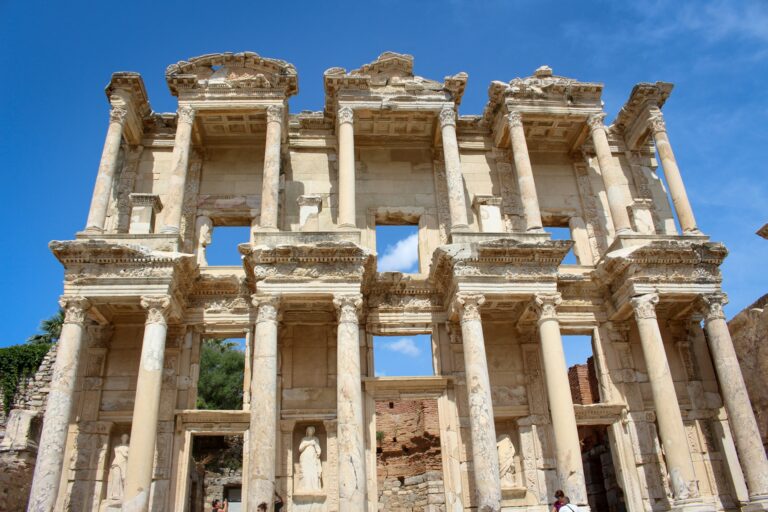
No civilization institutionalized sanitation more completely than Rome. The Cloaca Maxima, meaning “great drain,” was constructed around 600 BCE under King Tarquinius Priscus as an open stone channel, designed to drain the marshy areas around the Roman Forum. By the 3rd century BCE, engineers enclosed it with a stone barrel vault. In its later form, the Cloaca Maxima connected to a vast network of public latrines, thermae, and the lead and bronze pipes running beneath private homes across the city.
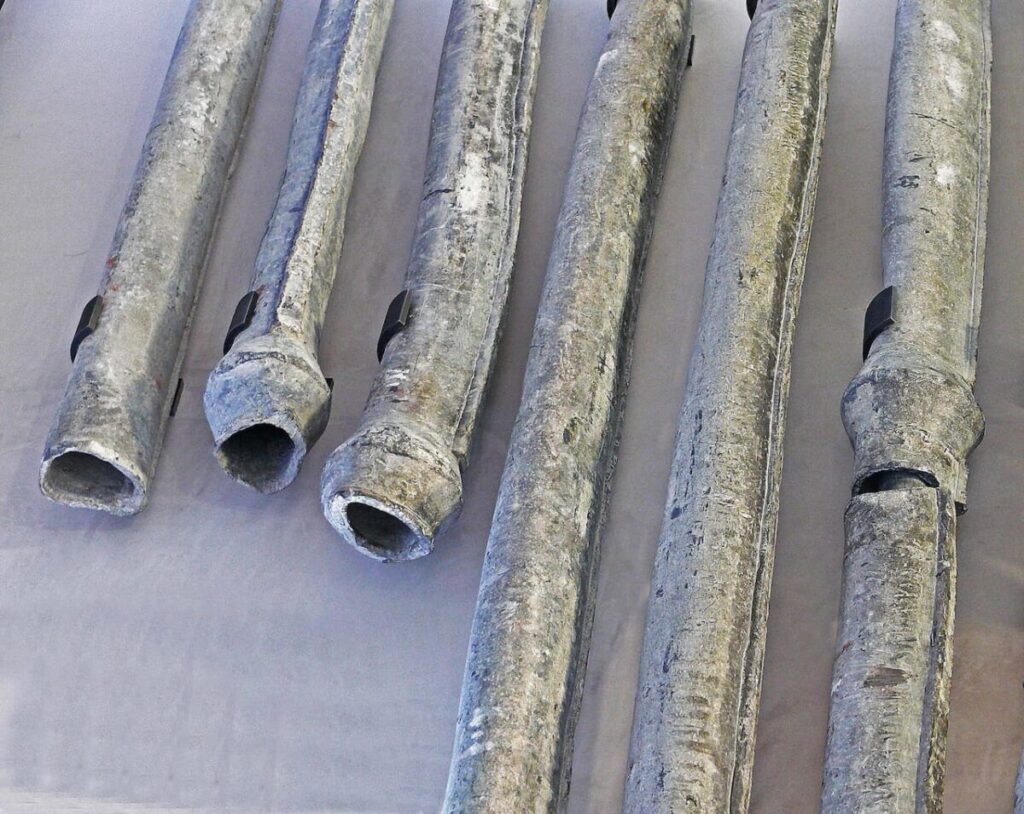
The Romans used lead so extensively in their water infrastructure that the metal left its mark on the English language. The Latin word for lead is plumbum, and the workers who shaped and fitted those pipes were called plumbarii. That term passed through centuries of use and eventually gave us the word “plumbing.” The Romans were aware that lead could cause illness in high concentrations, yet the material remained dominant because it was easy to shape, resistant to corrosion, and capable of holding pressure.
Building this system demanded real mathematical precision. Engineers used the groma and the chorobates, a leveling instrument, to ensure every drain dropped at exactly the right gradient to maintain flow without clogging. Public latrines featured continuous water flow beneath the seating rows, flushing waste directly into the Cloaca Maxima. Rome grew to over one million inhabitants by the first century CE, a density that would have been lethal without this infrastructure.
China’s communal pipes
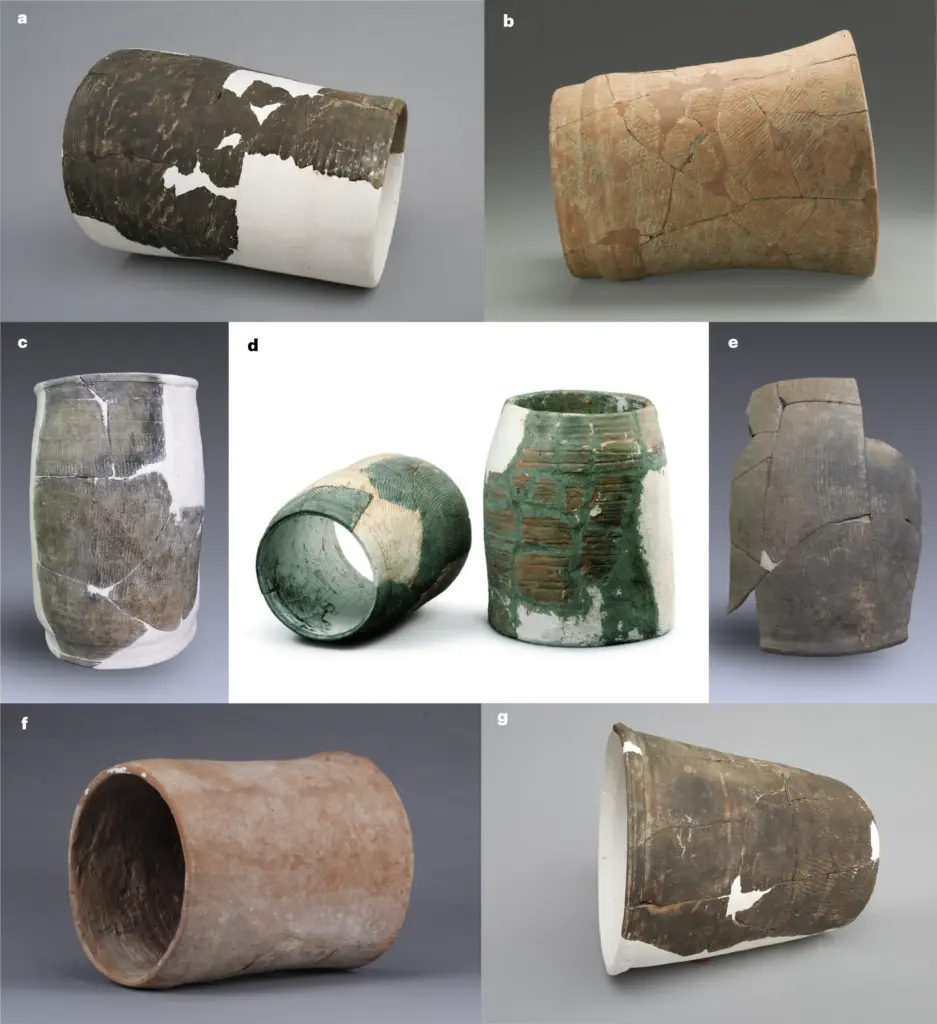
China developed its own water management tradition independently, and remarkably early. The Liangzhu culture of the Yangtze Delta, dated to approximately 5,100 years ago, built one of the world’s oldest known large-scale hydraulic systems, including dams, levees, and drainage channels. Later, between 2,100 and 1,900 BCE, the Neolithic settlement of Pingliangtai in Henan Province constructed an extensive network of ceramic drainage pipes, the oldest yet discovered on Chinese soil. Notably, archaeological evidence indicates this system was built without a centralized state, pointing to a strong tradition of communal engineering.
During the Longshan period, from around 2600 to 2000 BCE, Chinese settlements used sophisticated ceramic piping for both supply and waste removal. In later dynasties, the management of water became one of the defining political responsibilities of the imperial state, linking hydraulic competence directly to the legitimacy of rulers.
Water as a weapon and a shield
Sanitation infrastructure carried military value from very early on. Around 600 BCE, the Athenian statesman Solon reportedly poisoned the water supply of Cirrha using hellebore roots, causing mass illness that rendered enemy forces unable to fight. In 51 BCE, Julius Caesar forced the surrender of the Gauls at Uxellodunum by cutting off their access to water entirely. Going further back, in 129 BCE, the Roman general Aquilus poisoned water sources in besieged Asian cities, an act that the historian Florus later condemned as a violation of the customs of war.
Cities responded by hardening their infrastructure. As explored in our previous post, the Romans buried approximately 80% of the aqueduct network underground, partly to protect it from sabotage. The Indus Valley cities separated their wells from their drainage channels through deliberate urban planning. Covered cisterns, underground channels, and strict institutional control over water sources all emerged as answers to the threat of contamination, whether accidental or deliberate.
Beyond pipes: soap, religion, and mathematics
The history of sanitation reaches into nearly every field of ancient knowledge. Soap-like substances appeared in Mesopotamia around 2800 BCE, when Babylonians mixed animal fats with potash ash to create early cleaning compounds. By 2500 BCE, Sumerian clay tablets from the city of Girsu recorded soap-making recipes, and by 1550 BCE in Egypt those substances were prescribed in medical texts. Hygiene had become science.
Religion reinforced sanitation practices at the institutional level, embedding hygiene into daily life through belief systems. In Ancient Rome, the goddess Cloacina was believed to oversee the sewer network and was honored near the entrance of the Cloaca Maxima. Meanwhile, in Ancient India, ritual bathing in rivers carried deep spiritual meaning while also promoting cleanliness in practical terms. In Ancient Egypt, strict priestly purity codes doubled as early forms of public health policy. Across these societies, sanitation gained the force of sacred obligation, encouraging widespread adherence even in the absence of formal enforcement systems.
Medicine also benefited from these advancements. Ancient doctors began to notice the correlation between clean water and a lower mortality rate. While they did not yet understand germ theory, they recognized that stagnant waste was a source of “miasma” or bad air.
Additionally, engineering and mathematics advanced directly because of these systems. Building a functional drain required understanding slope ratios, the behavior of water under pressure, and the load-bearing properties of clay, brick, stone, and lead. These problems were solved under real conditions, in growing cities, by craftsmen and engineers who had to get the calculations right.
What made it all possible
Several conditions aligned to enable ancient sanitation systems. Kiln-fired ceramics provided a durable and watertight material for pipes, a technology available across Mesopotamia and the Indus Valley by at least 3500 BCE. The development of centralized states created the political will to fund and sustain large public works over years or decades.
Yet population density itself was perhaps the most powerful driver. As cities grew past a certain size, the consequences of poor waste management became catastrophic enough to force solutions. Mohenjo-Daro could not have functioned at 40,000 inhabitants without its sewer network. Rome could not have sustained a million people without the Cloaca Maxima and its tributaries. Sanitation is what allowed those populations to live in proximity without mass die-offs.
The aqueduct brought water in. The sewer carried the consequence out. Together, they made the ancient city possible.