
The History and Uses of Silver in Antiquity
Human history has always been intertwined with the discovery and mastery of metals. In our previous post about gold, we explored how early societies valued golden artifacts for sacred rituals and social prestige. Silver followed a different path. While gold remained a symbol of divinity and eternal power, silver became the metal of daily life, trade, and eventually, the backbone of ancient economies. Its story reveals how human societies moved from admiring precious metals to actually using them to build systems of value. This article explores the origins, production, distinct physical properties, and economic legacy of silver throughout antiquity.
The discovery of silver and its earliest uses
Silver occurs in nature both as a pure metal and combined with other elements, particularly lead. This connection to lead ore, known as galena, meant that early humans likely discovered silver almost by accident while smelting lead for other purposes. Archaeological evidence places the earliest silver objects in Anatolia and the Aegean region around 4000 BCE.
Unlike gold, silver rarely appears in a pure, workable state in nature. This meant early metalworkers needed a smelting process called cupellation to separate silver from lead. Cupellation involves heating lead ore in a shallow vessel with a strong airflow, which oxidizes the lead and leaves behind purified silver. Evidence of this technique appears in archaeological sites in the Near East dating to the fourth millennium BCE, making it one of humanity’s earliest chemical processes.
The historical record for early silver use comes from a combination of sources. Archaeologists have recovered silver jewelry, vessels, and ornaments from burial sites in Mesopotamia and Anatolia. Written records from Sumerian city states, dating to around 3000 BCE, also mention silver as a valuable commodity used in temple offerings and elite trade. These early texts, inscribed on clay tablets, give us some of the first written evidence connecting silver to concepts of value and exchange.

The spread and popularization of silver
Silver production expanded dramatically once ancient societies developed better mining and smelting technologies. The Laurion mines near Athens became one of the most important silver sources in the ancient world starting around 600 BCE. These mines used deep shaft mining techniques, and thousands of slaves worked to extract silver ore from tunnels that sometimes reached depths of over 100 meters.
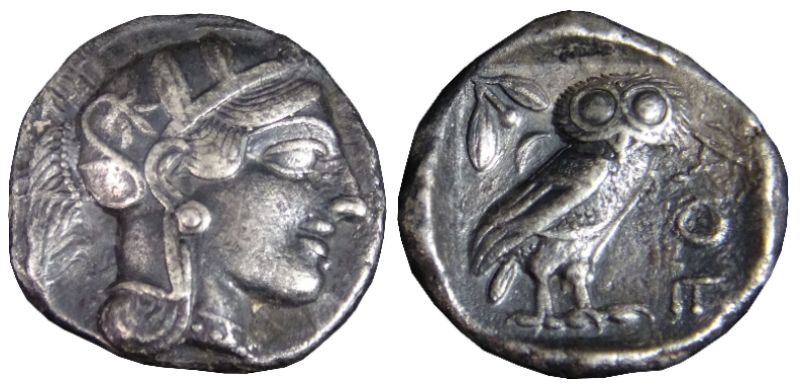
The wealth generated by Laurion directly funded the Athenian navy during the Persian Wars in the early fifth century BCE. This silver also allowed Athens to mint its famous tetradrachm coins, which featured the owl of Athena and became a widely trusted currency across the Mediterranean.
Beyond Greece, the Iberian Peninsula emerged as another major silver production center. The Romans, after conquering Spain in the second century BCE, exploited mines in regions like Cartagena and the Rio Tinto area. Roman engineers introduced water wheels and drainage systems to reach deeper ore deposits, significantly increasing output. By the first century CE, Spanish mines were producing so much silver that Pliny the Elder documented the scale of these operations in his Natural History.
Advances in mining technology, including better ventilation systems and water management, allowed ancient societies to reach silver deposits that earlier generations could not access. This technological progress, combined with the organizational capacity of empires to mobilize labor, transformed silver from a rare curiosity into a widely available resource.
Distinct uses of silver compared to other metals
Silver possessed unique physical characteristics that set it apart from other common metals like copper, bronze, iron, and gold. Copper and bronze were heavy and prone to oxidation, which created a green patina over time. Iron was strong and abundant, yet it suffered from rapid rusting when exposed to moisture. Gold remained untarnished and brilliant, but its extreme rarity limited its widespread functional use.
Silver occupied a unique middle ground. It offered exceptional malleability and ductileness, allowing artisans to hammer it into ultra-thin sheets or draw it into fine wires. Silversmiths developed techniques like repousse and filigree to create intricate designs on silver objects. These techniques allowed for more delicate detail work than was practical with gold. Additionally, silver provided the highest optical reflectivity of any natural metal. Ancient mirror makers capitalized on this trait by creating polished silver specula around 100 BCE across the Roman Empire.
Furthermore, ancient societies noticed the natural preservative properties of silver. Liquids stored in silver containers stayed fresh for extended periods. Around 400 BCE, the Greek physician Hippocrates documented the beneficial qualities of silver in healing wounds and preserving water. Consequently, wealthy households utilized silver vessels, plates, and goblets during banquets to prevent spoilage and maintain hygiene.
Silver as currency and the creation of inflation
Before the widespread adoption of minted coins, merchants used silver as an informal medium of exchange. Between 1200 BCE and 600 BCE, traders across the Levant utilized cut pieces of silver known as Hacksilber. These unstandardized silver fragments were weighed on scales during commercial transactions to determine their value.
The creation of true coinage transformed ancient economies. Around 600 BCE, the kingdom of Lydia, in what is now western Turkey, began minting some of the earliest coins using electrum, a natural alloy of gold and silver. Soon after, pure silver coins spread throughout Greek city states, since silver was more available than gold and better suited for the volume of trade needed in growing economies.
Silver functioned as a substitute for gold in several important ways. Gold was scarcer and more valuable, making gold coins suitable for large transactions but impractical for everyday commerce. Silver filled this gap perfectly. It was valuable enough to store significant wealth yet common enough to facilitate ordinary trade. The silver-to-gold ratio in the ancient world fluctuated within a fairly narrow band, typically between 10:1 and 14:1. Herodotus mentioned a ratio of 13 to 1, while Plato cited 12 to 1.
The silver crisis that fueled Rome’s inflation
The widespread reliance on silver also created economic problems. When Rome expanded its silver mining operations in Spain during the second and first centuries BCE, the increased supply of silver coins led to inflation. Prices for goods rose as more silver currency entered circulation without a corresponding increase in available goods. Roman emperors, including Nero in the first century CE, worsened this problem by debasing silver coins, reducing their silver content while maintaining the same face value.
During the terrible third century CE, the Roman economy experienced ruinous inflation as the currency was gradually debased. The silver content of coins fell dramatically. The denarius, which had contained about 2.7 grams of silver in 160 CE, contained only 0.04 grams of silver by 274 CE. Coins became mostly copper alloy with only a trace of silver. This debasement was accompanied by a sharp increase in the amount of coinage issued, flooding the empire with virtually worthless money. Most prices rose about fifty thousandfold during this period, materializing the strongest inflationary period ever experienced during antiquity.
The inflation had profound social consequences. Debased silver coins ruined traditional classes while enriching the Roman autocracy and its servants. The destruction of silver’s value as currency undermined trust in the monetary system and contributed to the broader instability that characterized the late Roman Empire.
More examples of inflation in antiquity can be found in our complete post on the subject here.
The Enduring Legacy of Silver in Antiquity
The expansion of silver throughout antiquity depended on interconnected technological innovations and evolving social structures. Advances in cupellation, deep-shaft mining, and standardized minting allowed ancient societies to process complex ores on an industrial scale. Simultaneously, expanding trade networks and imperial state systems created the legal stability needed to move raw bullion and finished coins across vast distances.
From its early origins in Anatolia, silver spread across the Mediterranean, Persia, India, and along the early Silk Road routes. Through these historical pathways, silver established itself as an enduring foundation of global commerce, artistic craftsmanship, and monetary history.