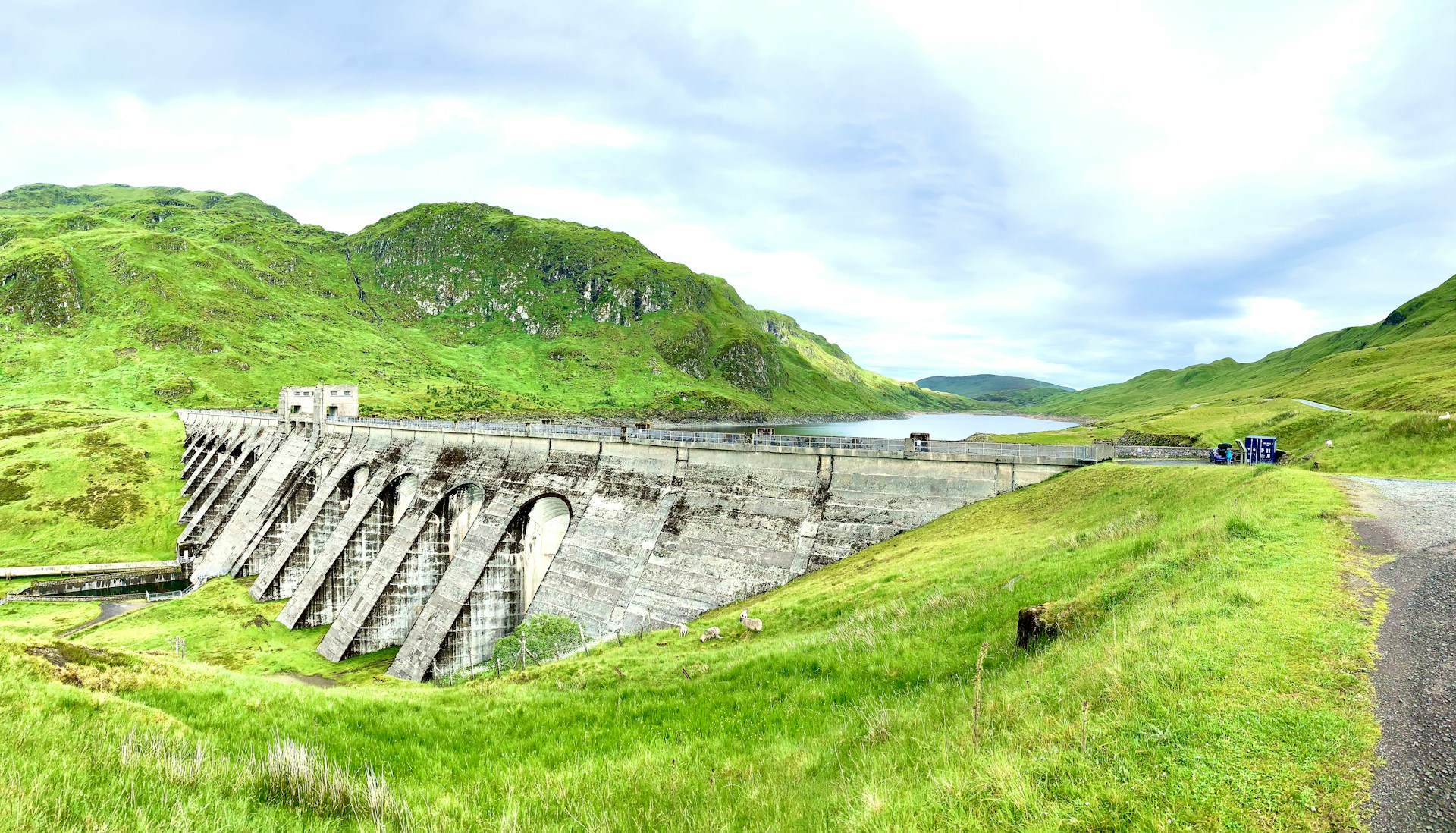
Ancient water engineering: the history of dams
Our last post explored how ancient peoples engineered the movement of water toward their cities. That story was about supply: channels and canals feeding growing populations across arid landscapes. This post takes a different angle. A dam turned an unpredictable natural force into a controlled resource, and that challenge drove some of the most ambitious construction projects in human history, quietly shaping the politics, medicine, and engineering of entire civilizations.
Water nearby was never enough
It seems counterintuitive at first. Why build a massive dam when a river is already flowing nearby? The answer lies in reliability. Rivers flood, dry out, and shift course. A city dependent on a river’s natural cycle is permanently at its mercy.
The earliest settlements understood this problem. A nearby river could sustain a village of hundreds. However, feeding a city of thousands required storage. Around 3000 BC, builders in what is now Jordan constructed the Jawa Dam, a stone gravity structure designed to capture flash flood waters in an arid region. The river existed, but its water was seasonal and violent. A dam turned that unpredictable burst of water into a manageable reserve.
This logic applied everywhere. Surplus water captured in a reservoir could irrigate fields during dry months, supply drinking water through droughts, and sustain populations that would otherwise perish. The dam was therefore a precondition for urban growth.
The first builders
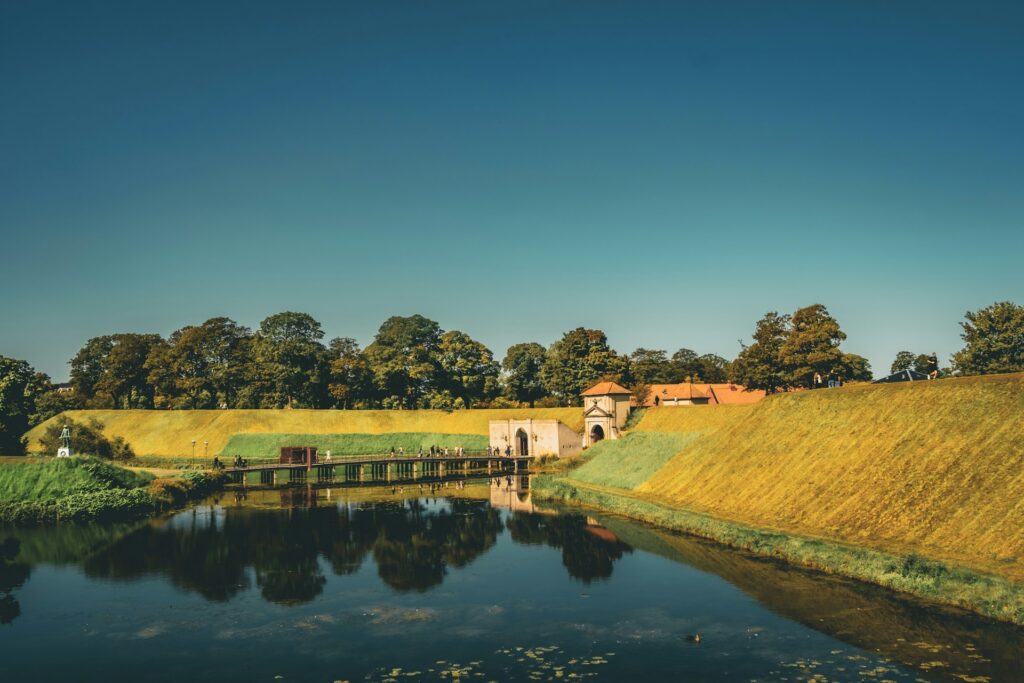
We know about these ancient achievements through a combination of archaeological findings and surviving written records. In modern-day Jordan, the remains of the Jawa Dam date back to approximately 3000 BCE. This structure stands as the oldest known large-scale dam in the world. It was part of a sophisticated system designed to catch runoff in an arid environment.
In Ancient Egypt, around 2600 BCE, workers built the Sadd el-Kafara. Engineers built the masonry structure to protect nearby workers and quarries from flash floods. Although inadequate spillways caused it to fail during construction, the project demonstrates the remarkable ambition of the pyramid-building era.
Around the same era, perhaps even earlier, dam-building appeared independently in China. Archaeologists in Hangzhou uncovered a system of eleven dams from the Liangzhu civilization, dated between 3300 BC and 2000 BC. These are now considered the oldest known water management systems in China. Their scale was remarkable. The longest surviving section ran 6.5 kilometers and showed evidence of sophisticated planning.
Materials and methods
Ancient dam builders worked with what they could quarry, shape, and carry. The Jawa Dam used local materials such as sun-dried bricks, reeds, and bitumen, which is a natural asphalt, to create waterproof seals. They rely on careful placement of stones without mortar to resist water pressure.
Earth-fill dams were the most common type across early civilizations. They were cheaper, faster to build, and required no specialized stone-cutting. The risk, however, was erosion. Without proper spillways to discharge excess water, earthen dams were vulnerable to overtopping and catastrophic failure.
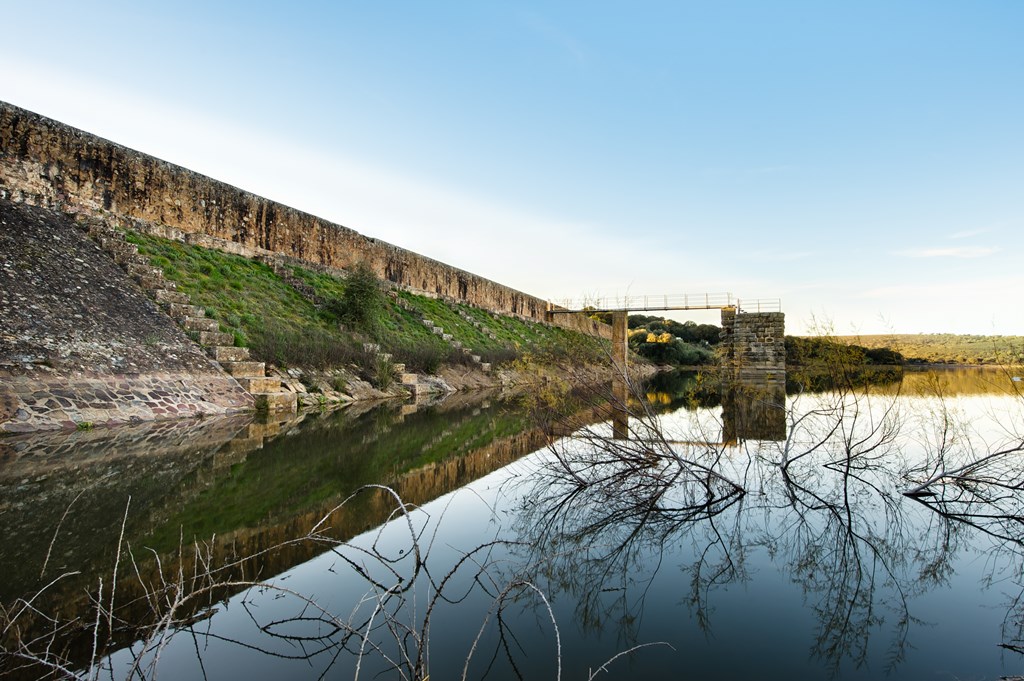
The Romans introduced pozzolanic concrete, made from volcanic ash, which allowed them to build waterproof masonry structures of unprecedented durability. Their dams in Spain, including the Cornalvo Dam and the Proserpina Dam, both built in the 1st century AD, still stand today.
Water as a weapon of war
Because water was the lifeblood of any city, it also became a powerful tool in military strategy. Invading armies often sought to destroy dams to flood a city or divert rivers to starve the population of hydration. In 689 BCE, the Assyrian King Sennacherib used this tactic against Babylon. After he conquered the city, he destroyed its dams and redirected the Euphrates River to wash away the ruins.
In response to these threats, cities developed defensive water systems. Engineers built reinforced masonry walls and hidden underground cisterns to store water within city walls. These fortifications allowed a population to survive a long siege even if the external river supply was cut off by an enemy. Furthermore, some civilizations designed their dams with sacrificial sections that could be opened to flood an approaching army.
The city of Shushtar in Persia demonstrates how defensive water engineering worked in practice. Its hydraulic system, including tunnels, dams, and mill channels, was designed so that its water supply could not be easily interrupted from outside the walls.
Water, health, and the city
Access to stored and managed water had immediate consequences for public health. As cities grew larger, the need for clean water and sewage removal became a public health priority. The Greeks and Romans recognized that stagnant water led to disease. Therefore, they used their dams and aqueducts to provide a constant flow of fresh water to hygiene, public baths and fountains. This practice improved the general health of the urban population and allowed for higher population densities
The connection between clean water storage, drainage, and reduced disease was observed empirically even when the germ theory of disease was unknown. In Mesopotamia, ancient medical texts from around 2000 BC already recognized contaminated water as a source of illness, and canal laws required that water channels be kept clear of refuse.
Engineering, mills, and mathematics
Dams created more than water storage. They also created head pressure, the energy potential of water held at height. This energy could be put to work. By the 1st century BC, waterwheel technology spread through the Mediterranean world. Roman engineers built water mills at dam outlets across the empire, using gears to grind grain, saw stone, and power industrial operations.
The math required to design these systems was substantial. Calculating water pressure, determining the correct slope for channels, surveying land elevations across miles of terrain: all of these demanded applied geometry and arithmetic. The Persians, who engineered the qanat underground tunnels around the 7th century BC, used precise surveying techniques to maintain consistent gradients across dozens of kilometers. These projects pushed ancient mathematics into practical engineering in ways that abstract scholarship alone could never have achieved.
Why dams created powerful civilizations
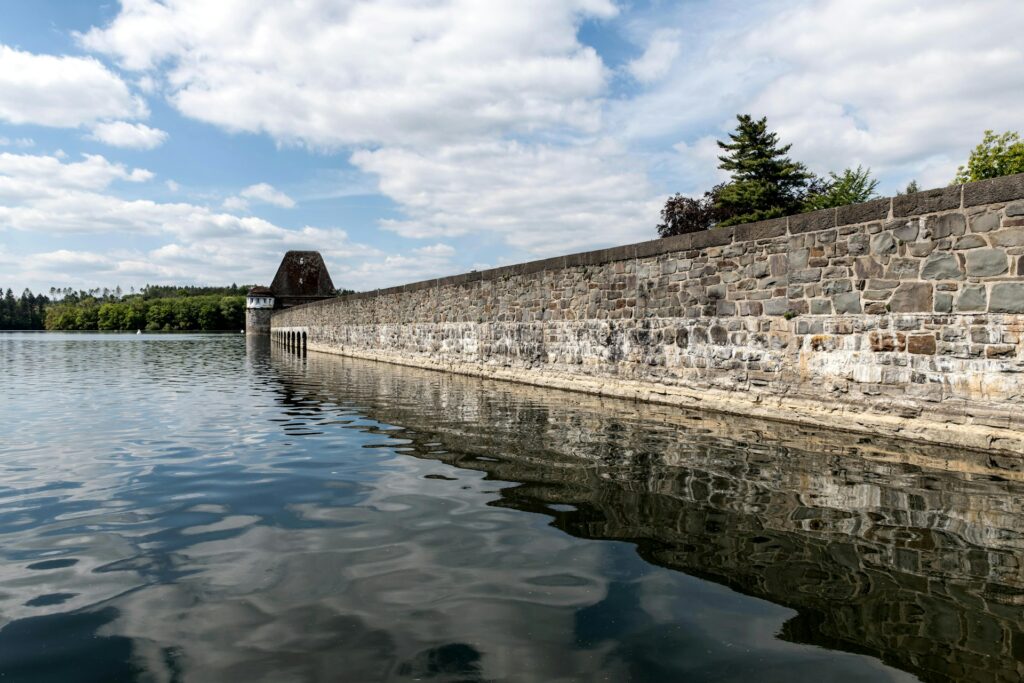
No individual built a dam alone. Stable bureaucracies planned, organized, and sustained these massive long-term projects. The construction often spanned several decades, which required a government that could maintain records and funding over many generations. The Marib Dam in Yemen required ongoing institutional maintenance across multiple dynasties over a thousand years.
The discovery of new materials, such as hydraulic cement in Rome and advanced masonry techniques in Egypt, provided engineers with the means to construct increasingly ambitious hydraulic systems. At the same time, the development of early surveying instruments and the standardization of metrics enabled remarkably accurate elevation measurements, ensuring that water could travel from reservoirs to cities solely through the force of gravity.
Water management also shaped political structures. Whoever controlled the dam controlled the city’s survival. This gave rulers leverage that went far beyond military force. In Mesopotamia, water law was among the oldest codified legislation. The Code of Hammurabi, issued around 1754 BC, included specific provisions about the responsibility of landowners for maintaining irrigation channels and the penalties for negligence.
Ancient dams and the engineering of civilization
Dams were the anchor of a larger system that moved water in, stored it, distributed it, and eventually had to move waste out. Every reservoir that sustained a city created a new problem downstream: what to do with the water after it had served its purpose.
That question, and the civilizations that answered it, is the subject of our next post on ancient sewer systems. The engineering logic that built the Marib Dam and the Roman aqueducts flows directly into the tunnels and drains that kept ancient cities from poisoning themselves.
Ultimately, the history of dams is a history of cooperation and ingenuity at scale. Ancient peoples learned to store and manage water against the whims of nature, and in doing so, they built the conditions for everything else: cities, agriculture, trade, medicine, and politics.