Ancient measurement systems that built civilizations
From the banks of the Euphrates to the plazas of ancient Athens, human civilization depends on the ability to quantify the world. Long before written law or coinage existed, ancient peoples had to create their own systems to measure distance, weight, and volume. These developments were essential for the growth of trade, the construction of monuments, and the administration of early states. By examining the history of measurement, we can understand how early societies organized their lives and built the foundations of modern science.
The body as the first ruler
The earliest measuring tools were the ones humans always carried with them: their own bodies. Ancient length measurements were based on the human body, including the length of a foot, the span of a hand, the breadth of a thumb, and the stride of a walking person. Similarly, the earliest weights seem to have been based on the objects being weighed, such as seeds and beans.
This approach was universal. Cultures separated by thousands of kilometers arrived at the same solution because the human body offered a convenient, always-available reference. Consequently, this era produced a remarkable variety of local systems, each slightly different from the next. However, the rise of centralized governments forced a change toward standardization. Rulers realized that they could not collect taxes efficiently without a common language of numbers. Consequently, the establishment of official units became a political priority. These systems allowed for the creation of the first maps and land surveys, which helped define the boundaries of growing empires.
Mesopotamian systems and the invention of the mina
The people of Mesopotamia were among the first to develop a sophisticated system for weighing goods. Around 2500 BCE, they introduced the mina as a standard unit of weight. This unit was part of a larger system that included the shekel and the talent. The Sumerians, followed by the Babylonians, developed a sexagesimal system based on the number sixty. This choice proved highly practical, as sixty is easily divisible by many numbers. The system was not only useful for calculations but also became the foundation for measuring time.
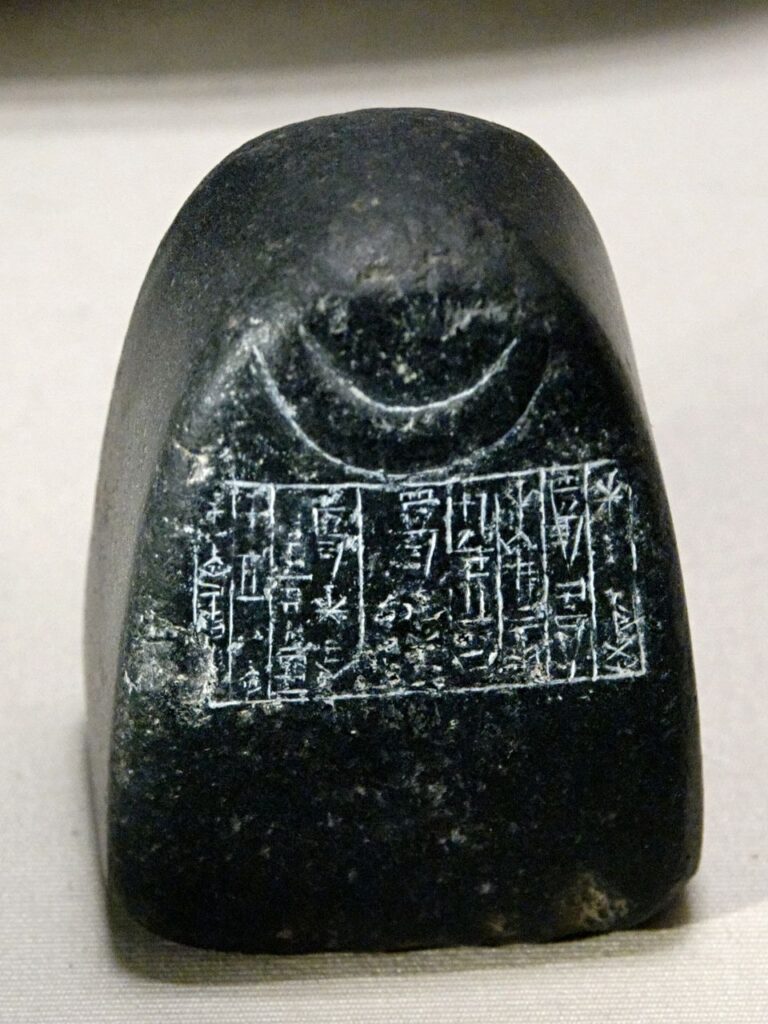
The mina played a crucial role in international trade. Merchants carried stone weights shaped like ducks or frogs to ensure they were receiving the correct amount of gold, silver or grain. By using these standardized weights, traders from different regions could communicate value without confusion. This system spread throughout the Near East and eventually influenced the Greeks. In addition to trade, these weights were essential for legal matters. The Code of Hammurabi, written around 1754 BCE, included laws that punished merchants for using false weights to cheat their customers.
Egyptian engineering and the royal cubit
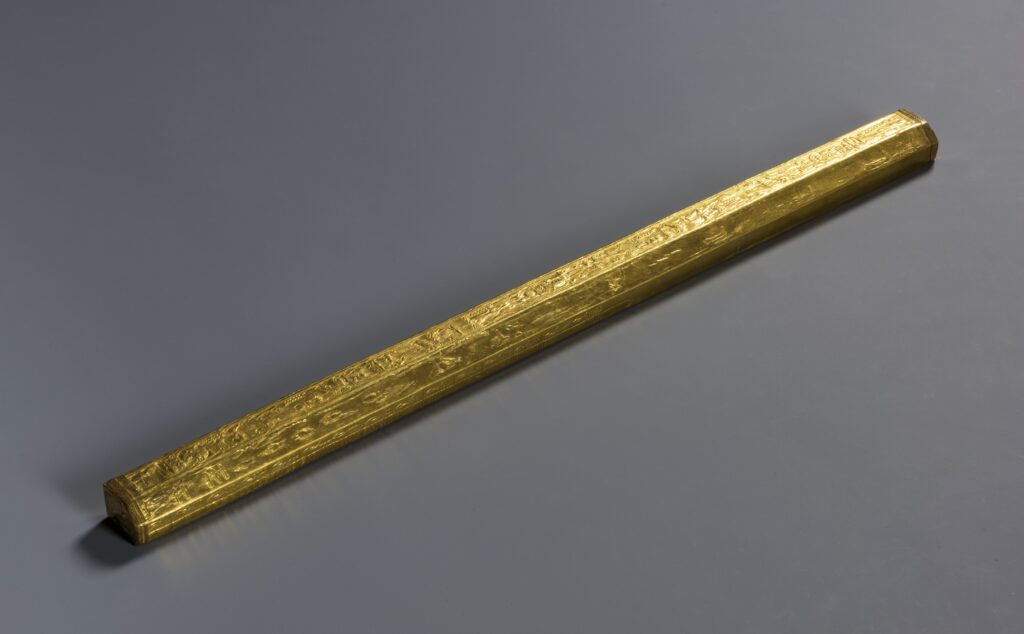
While Mesopotamia focused on weights for trade, the Egyptians perfected linear measurement for their massive engineering projects. The most famous Egyptian unit was the royal cubit. This measure first appeared during the Old Kingdom around 2700 BCE. It was based on the length of a human arm from the elbow to the tip of the middle finger. To maintain accuracy, the Egyptians created master rods made of black granite.
Construction crews used wooden copies of these master rods to build the pyramids. The builders of the Great Pyramid of Giza, finished around 2560 BCE, achieved incredible precision using this system. The four sides of the pyramid have a margin of error of only a few centimeters. This level of accuracy would be difficult to achieve even with some modern tools. Furthermore, the Egyptians used a smaller unit called the palm and another called the digit. These divisions allowed for the detailed measurements needed in both art and architecture.
Greece, trade, and legal standards
Greek measurements inherited heavily from Egyptian and Babylonian traditions. The basic Greek unit of length was the finger breadth (about 19.3 mm), with 16 fingers forming a foot and 24 fingers forming the Greek cubit. Trade, above all, spread these units beyond local use.
By around 400 BCE, Athens had become a major commercial hub. In the Agora, the city’s commercial center, merchants traded goods from across the Mediterranean. Disputes over weights and measures were common, so a legal standard set of measures was kept there for arbitration. If a container failed to match the official size, its contents were confiscated on the spot. Measurement had become a matter of public law and civil order. The Greek drachma, a unit of both weight and coinage that emerged around the sixth century BCE, was itself derived from the Sumerian mina, tracing a direct line of influence across more than a thousand years.
Rome: the foot, the pace, and the mile
The Romans took the Greek system and reshaped it around the practical demands of a conquering empire. Their basic unit was the foot (pes), roughly 29.64 centimeters, divided into 12 inches. Notably, the Roman word for inch and the word for ounce were the same, reflecting how weight and length standards were understood as proportional.
For longer distances, Rome used the pace, equal to five feet or one double step. Then 1,000 paces equaled one Roman mile, a unit that is the direct ancestor of the modern mile. As the Roman Empire expanded across Europe, these standards traveled with it. Local measures gradually gave way to Roman ones, establishing the foundation on which medieval and early modern European measurement would be built.
The power of measurement in politics, schools, and engineering
Measurement was a fundamental tool that supported every aspect of ancient life. In the realm of politics, it allowed for the fair distribution of land and the calculation of tribute. Without a way to measure the area of a field, a government could not determine how much grain a farmer owed in taxes. In education, learning the systems of weights and measures was a primary task for young scribes. These students spent years practicing how to convert different units and calculate volumes.
Engineering also relied heavily on these systems to ensure the safety of public works. For example, the Romans had to calculate the precise slope of an aqueduct to keep water flowing over long distances. If the slope was too steep, the water would erode the stone. If it was too shallow, the water would stagnate. Therefore, the use of accurate leveling tools and standardized units was a matter of survival for many cities.
Key factors behind ancient measurement systems
Several factors made the development of these systems possible during antiquity. The growth of large urban centers created a need for organization that did not exist in nomadic societies. When thousands of people live together, they must have clear rules for property and commerce. Additionally, the invention of writing provided a way to preserve measurement data over long periods. Scribes could record the dimensions of a temple or the weight of a shipment, which allowed for better planning and record-keeping.
The availability of durable materials also played a part. The ability to carve hard stone or cast bronze allowed civilizations to create reference standards that would not warp or wear down. Finally, the rise of powerful monarchs provided the social authority to enforce these standards. A merchant might want to use his own weights, but the threat of state punishment encouraged him to use the official ones. This combination of technology, urban growth, and political power transformed measurement from a simple convenience into a pillar of civilization.
Ancient foundations of modern precision
The systems designed by the thinkers of Mesopotamia, Egypt, Greece, and Rome still influence us today. We continue to use the twelve-inch foot and the sixty-second minute. These units have survived for thousands of years because they are deeply embedded in our history and our way of thinking. They represent the first time humans successfully used mathematics to master their environment. By looking at the history of measurement, we see the beginning of the quest for precision that continues in modern science. These ancient pioneers provided the tools that allowed humanity to move from the chaos of the natural world into the order of the modern age.