The invention of sugar and its journey from India to the ancient world
The history of sugar begins long before it became a common household staple. In the modern era, sweetness is available at every corner. However, the inhabitants of antiquity viewed sugar as a rare and mysterious substance. It was often described as a form of solid honey that grew on reeds. The journey of this crop from a wild grass in the Pacific to a global commodity involves centuries of innovation and trade. This transition changed how humans preserved food and how they viewed luxury.
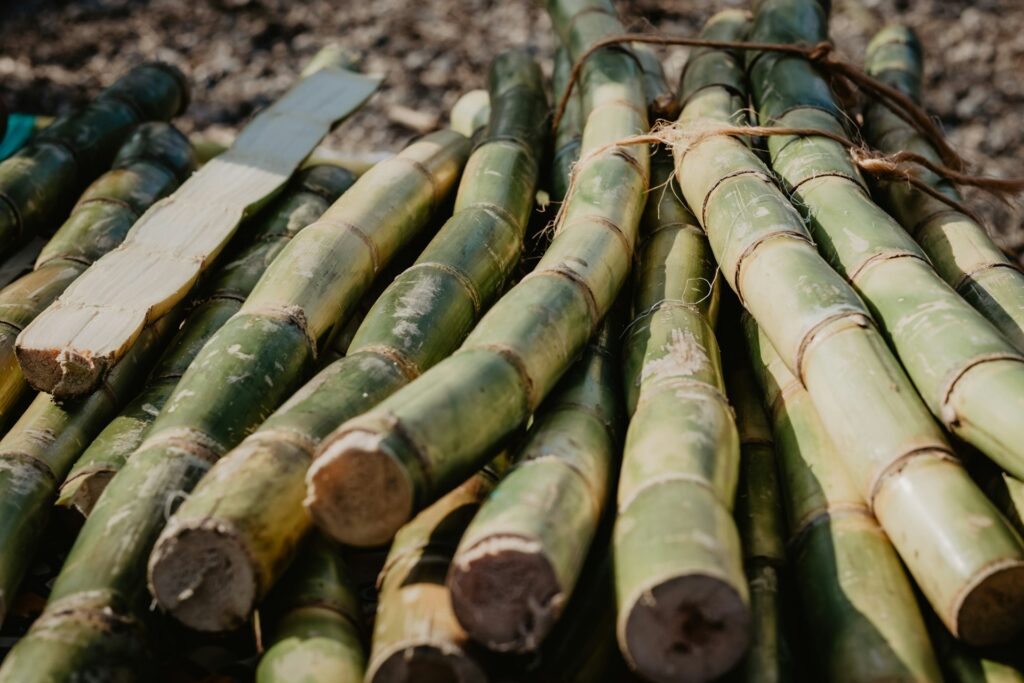
The earliest evidence of sugarcane cultivation takes us back to approximately 8000 BCE. The people of New Guinea were likely the first to domesticate Saccharum officinarum. At this time, individuals chewed the raw stalks to enjoy the sweet juice. This practice spread slowly through Southeast Asia and eventually reached the Indian subcontinent. It was in India where the most significant technological leaps occurred. By the year 500 BCE, Indian processors began to turn the juice into a transportable solid.
The invention of crystallized sugar
The development of sugar as a granular product is a major milestone in human history. While many cultures enjoyed sweet juices, the Indians discovered how to create crystals. Ancient Indian texts from the 1st century CE describe various forms of sugar. These included various types of unrefined sugar known as khanda. This word is actually the root of the modern English word candy.
During the Gupta Dynasty around 350 CE, the process of sugar crystallization became more sophisticated. This era saw the creation of methods to boil the juice and cool it into solid forms. These solid pieces were much easier to store and transport over long distances. Consequently, sugar began to appear in trade manifests across the Silk Road. It was highly valued because it did not spoil like fruit or honey. The technology of the sugar press also improved during this period. Indian engineers developed heavy stone and wooden rollers to extract juice more efficiently from the tough stalks.
Life before the crystal
Before the invention of refined sugar, ancient civilizations relied on natural substitutes. Honey was the primary source of sweetness for the Egyptians, Greeks, and Romans. Beekeeping was a highly respected profession in ancient Egypt as early as 2400 BCE. Honey served as an alcohol beverage, sweetener and also as a base for many medicines. It was the only concentrated sugar available to most people in Europe and the Mediterranean for millennia.
In the Middle East, people produced syrups from fruits. Date syrup was extremely popular in Mesopotamia and the Levant. The Romans used a substance called defrutum, which was a thick syrup made by boiling down grape must. They also used dried fruits like figs and raisins to add sweetness to their cooked dishes. These substitutes provided the necessary calories and flavor, but they lacked the neutral profile of pure sugar. Sugar offered a clean sweetness that did not alter the flavor of other ingredients in the same way that honey or grape syrup did.
The persian encounter and greek discovery
The expansion of the Persian Empire brought sugar to the attention of the Western world. In 510 BCE, the Persian Emperor Darius the Great led an expedition to the Indus River. His soldiers discovered a reed that produced honey without the help of bees. This description highlights how foreign the concept of sugar was to those living outside of India. The Persians kept the secrets of sugar production closely guarded for many years. They recognized its value as a luxury item and a strategic resource.
Alexander the Great later encountered sugarcane during his invasion of India in 326 BCE. His admiral, Nearchus, recorded the existence of the sweet stalks. However, the knowledge of how to process the sugar did not immediately travel back to Greece. For several centuries, the Greeks and Romans viewed sugar as a medicinal curiosity. The Roman author Pliny the Elder wrote about it in the 1st century CE. He described it as a white, brittle substance that was used primarily to treat ailments of the kidneys and the digestive system.
Sugar as a tool for conservation and luxury
In antiquity, sugar played a vital role in the conservation of food and the display of wealth. Because sugar inhibits the growth of bacteria at high concentrations, it became a prized preservative. Ancient confectioners used sugar to coat fruits and flowers. This process allowed seasonal flavors to be enjoyed throughout the year. In India and Persia, the art of making preserves became a sign of high culture.
Sugar also functioned as a powerful status symbol. Because the cost of transportation from India was so high, only the elite could afford it. Royal courts in the ancient world used sugar to create elaborate sculptures for banquets. These displays demonstrated the power and reach of the ruler. In terms of trade, sugar was often exchanged for silk, spices and gold. It was part of a global luxury economy that connected the East and the West long before the modern age.
Water, engineering, and the spread of sugarcane
Several key technologies facilitated the spread of sugar across the globe. The first was the evolution of the sugar mill. Early designs used a mortar and pestle approach, but this was slow. The invention of the horizontal cable mill allowed for much higher yields. This technology used animal power to turn large rollers. This increased the volume of juice that could be processed in a single day.
Another essential technology was the development of advanced irrigation systems. Sugarcane requires a massive amount of water to grow. The Persians developed a system of underground tunnels known as qanats. These tunnels transported water from mountain aquifers to dry plains. By the 6th century CE, these irrigation techniques allowed sugar to be grown in areas that were previously too arid. This technological breakthrough paved the way for the Islamic Golden Age to spread sugar cultivation across North Africa and into Spain.
Networks of knowledge in the early history of sugar
The expansion of sugar depended on specific social and economic conditions. In the ancient world, sugar production required a large and organized workforce. The labor involved in harvesting and boiling the cane was intense. This led to the development of specialized agricultural estates. In the Byzantine Empire and the Sasanian Empire, sugar was often grown on large plantations managed by the state or wealthy elites.
The movement of people also played a role in the history of sugar. Traders, soldiers, and scholars acted as vectors for agricultural knowledge. When the Islamic Caliphates expanded in the 7th century, they brought Indian sugar technology with them. They combined these techniques with their own knowledge of chemistry and refining. This synthesis of cultures allowed sugar to move from being a rare Indian medicine to a Mediterranean commodity. By the end of antiquity, the stage was set for sugar to become one of the most important crops in human history.
The legacy of ancient sugar
The transition from honey to sugar represented a shift in how humans interacted with nature. While honey was a gift from the bees, sugar was a product of human ingenuity and labor. The ancient world recognized the potential of this substance as a medicine, a preservative, and a luxury.
The foundations laid in antiquity would eventually lead to sugar’s transformation from a luxury for the rich to a daily necessity for billions. But that is a later chapter. In the ancient world, sugar remained something special, something precious, a taste of sweetness hard-won from nature through human skill and patience.