The science of ancient food preservation
Before the advent of the electric refrigerator humanity lived in a constant race against the clock. The moment a fruit was plucked or an animal was slaughtered, the countdown to rot began.
Rot is essentially a microscopic feeding frenzy. Bacteria, yeasts, and molds thrive on moisture, warmth, and oxygen. To preserve food is to wage war on these microbes by making the environment too hostile for them to survive. By manipulating heat, air, and biology, our ancestors turned a surplus of meat and grain into a resource that could last months. These early methods of food preservation laid the foundation for everything from transcontinental trade to the rise of standing armies.
Drying: the architecture of the sun
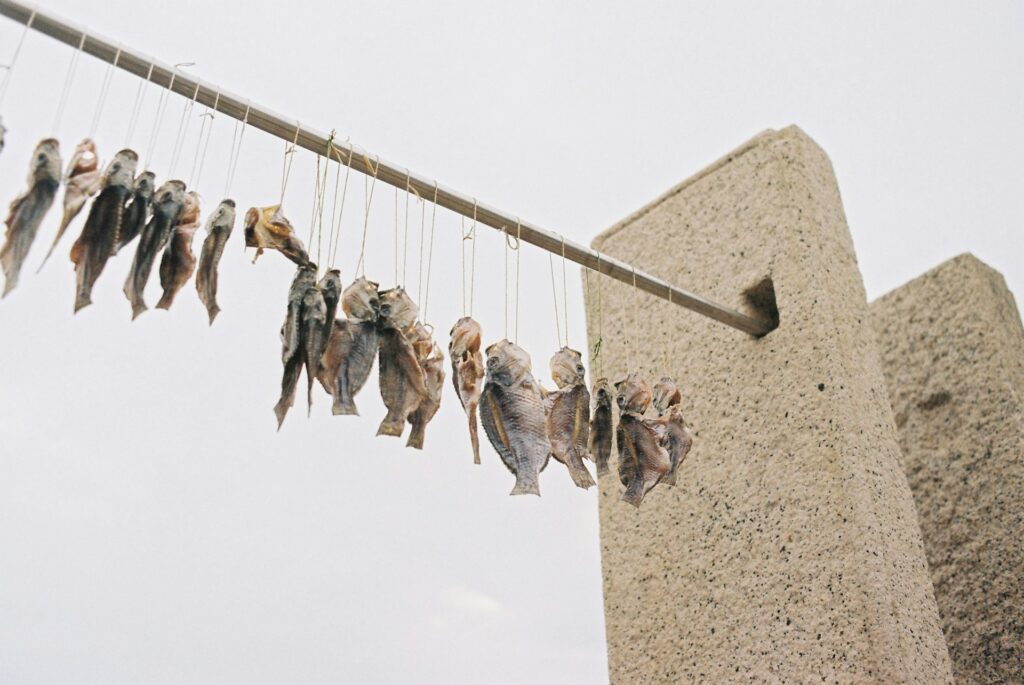
Drying is arguably the oldest preservation method known to man, with evidence of sun-drying in the Middle East and East Asia dating back as far as 12,000 BCE. The science is simple: dehydration. Microorganisms require water activity to fuel their metabolic processes. By exposing food to the sun and wind, the ancients removed the moisture that bacteria need to multiply. Without water, the cellular machinery of rot simply grinds to a halt.
The Middle East and North Africa provided the perfect laboratory for this invention. The arid climate and relentless sun allowed for the rapid dehydration of fruits like dates, figs, and grapes, as well as strips of fish and game. For the Egyptians of the Old Kingdom (c. 2686–2181 BCE), drying was a matter of state security. Their massive granaries held dried cereal crops, the bedrock of their economy, that could feed the population during years of low Nile flooding.
This method was inextricably linked to the birth of agriculture. Once humans cultivated vast fields of wheat, they faced a surplus that would rot without intervention. Drying technology, facilitated by the construction of raised clay platforms and ventilated storage jars, allowed for the accumulation of wealth. Socially, it enabled long-distance travel across deserts, effectively decoupling human life from the immediate landscape.
Smoking: the chemistry of the hearth
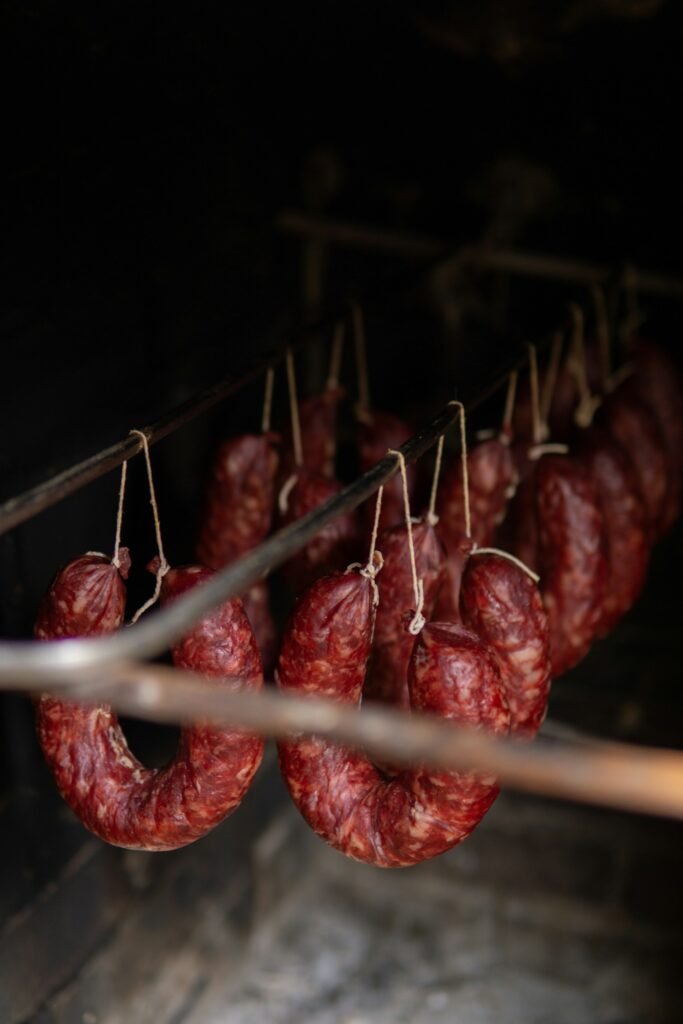
In wetter, colder climates where the sun lacked the power to dehydrate food quickly, antiquity looked to the fire. Smoking was likely a byproduct of the first indoor hearths. Early humans hanging meat near a fire to keep it away from scavengers noticed that the “yellowed” meat didn’t spoil as quickly and tasted better.
Smoking is a triple threat to decay. First, the heat of the fire causes surface dehydration, creating a dry pellicle or skin that acts as a physical barrier. Second, wood smoke contains phenols and formaldehyde, which are natural antimicrobials that kill surface bacteria. Third, these same chemicals act as antioxidants, preventing the fats in meat from turning rancid when exposed to oxygen.
The practice became intentional and widespread across multiple civilizations independently. In ancient China, smoking was used to preserve fish and meats, becoming a foundational element of regional cuisine. Scandinavian societies, working with cold climates and abundant fish, developed smoking into a staple preservation technique that shaped their culinary identity for millennia. In Mesopotamia, smoking and salting were combined to cure meats as early as 3000 BCE.
The technology of smoking relied on the mastery of fire and animal domestication. As tribes kept herds of pigs and cattle, the seasonal slaughter, usually in autumn when fodder became scarce, produced a massive amount of meat at once. The Roman writer Columella, in his 1st Century AD treatise De Re Rustica, describes specialized smoking rooms called fumaria. These were used to flavor and preserve meat and cheese on a commercial scale.
This technological leap allowed for the growth of permanent villages in Northern Europe. People no longer had to follow the herds; the herds, once smoked, stayed with them through the winter.
Sausages: the whole animal, nothing wasted
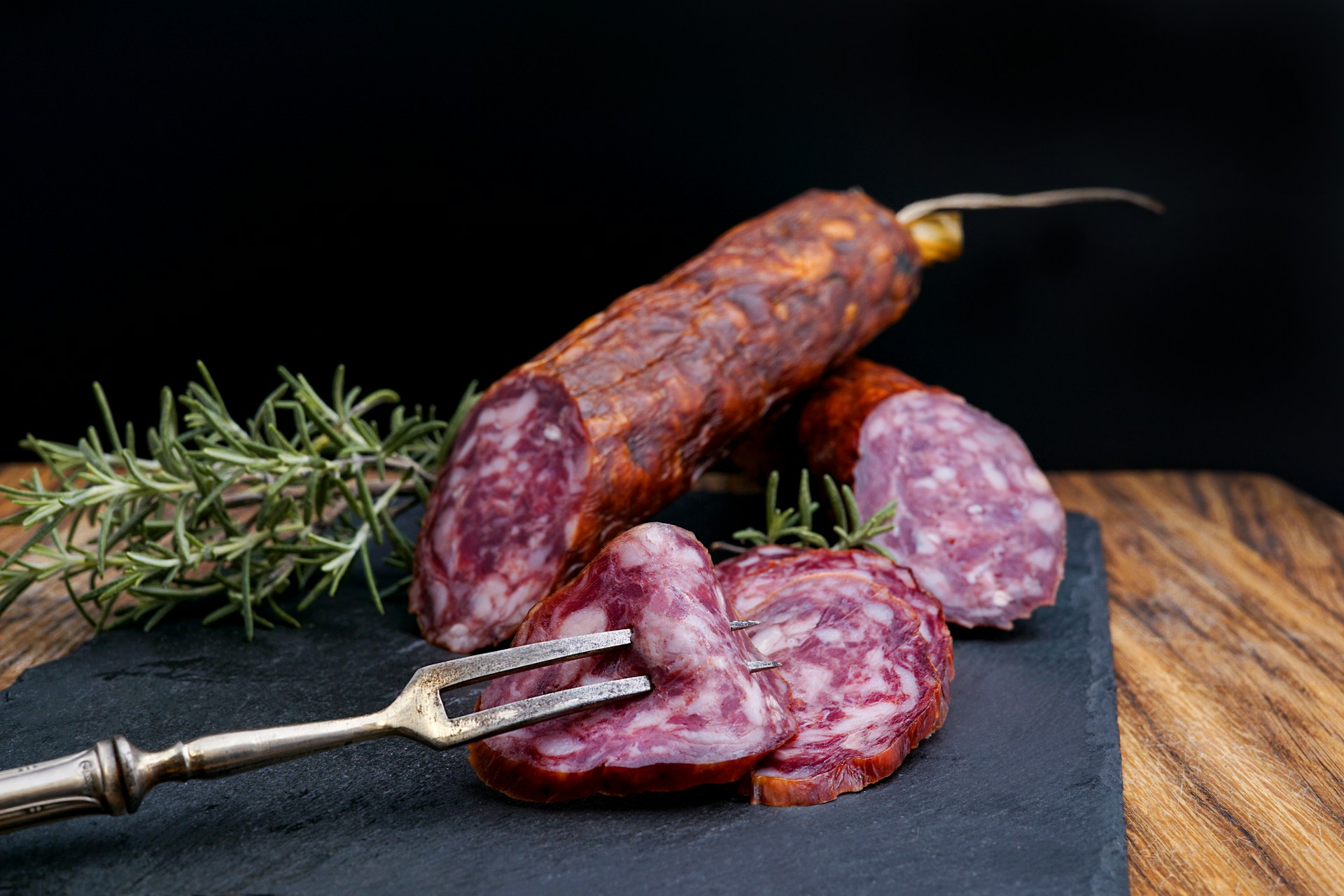
Sausage appear in the historical record as early as 4,000 BCE in Sumeria. Cuneiform tablets from the Ur III period (c. 2100 BCE) mention various types of prepared meats stuffed into casings.
Sausages preserve food through encapsulation and salt. By grinding meat and stuffing it into cleaned intestines, the ancients created a barrier against light and most airborne contaminants. Crucially, these meat mixtures were heavily salted. Salt works via osmosis, drawing water out of bacterial cells and effectively dehydrating them from the inside out. In many cases, early sausages also benefited from natural lactic acid fermentation, which raised the acidity of the meat to a level where spoilage bacteria could not survive.
This invention resulted directly from animal domestication. In antiquity, people wasted nothing. Specifically, after a butcher slaughtered a cow, the offal and trimmings spoiled almost instantly. Consequently, sausages turned these “scraps” into a portable, durable protein package.
The Greeks and Romans took this to a professional level. In the Odyssey (c. 8th Century BCE), Homer mentions a “stomach stuffed with fat and blood.” By the time of the Roman Empire in the 1st Century AD, sausages (botulus) facilitated the expansion of empires, allowing for the logistics of feeding thousands of soldiers across vast distances and creating a new social class of professional butchers and charcutiers.
The Romans produced dozens of sausage varieties, including the ancestor of modern mortadella, known in Latin as farcimen murtatum, seasoned with myrtle. The first full written recipe appears in De Re Coquinaria, a Roman culinary text from the 4th or 5th century CE, calling for minced meat, fat, and spices forced into a casing and smoked.
Preserves: the power of the seal
While drying and smoking dealt largely with meat and grains, the preservation of fruits and vegetables required a more delicate touch. Ancient civilizations, particularly the Romans and the Greeks, mastered the use of “sealants” to create what we now call preserves.
Preserving works by creating an anaerobic environment (oxygen-free). Most common rot-causing bacteria are aerobic, meaning they need oxygen to breathe. By submerging fruits in honey, oil, or thick syrups, the ancients physically blocked oxygen from reaching the food. Furthermore, substances like honey have an incredibly high osmotic pressure; they are so sugar-dense that they suck the moisture out of any bacteria that land in them, killing them instantly.
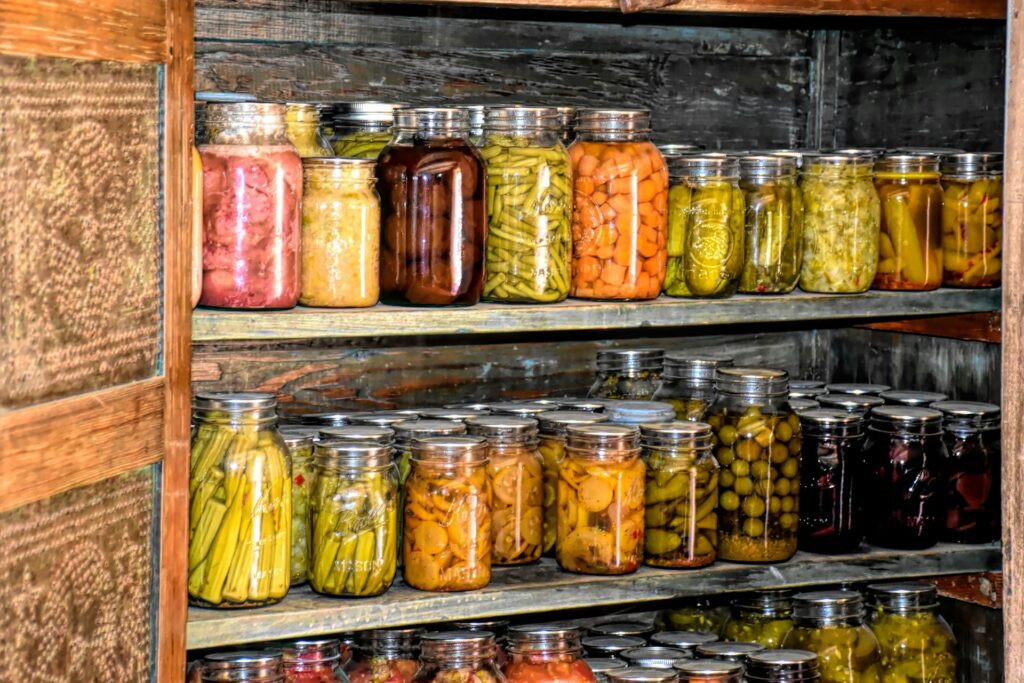
The Greeks, as early as the 4th Century BCE, used olive oil to keep vegetables and fish from contact with the air. The Roman cookbook Apicius, compiled in the 4th or 5th Century CE, contains instructions for preserving grapes in “boiled-down must.”
Pottery development provided the hardware that made this possible. By firing clay into non-porous jars, ancient potters scaled liquid-based preservation. Around 50 BCE, the invention of glass blowing in the Roman province of Syria provided a more inert (though expensive) vessel that didn’t react with the acidity of the preserves. This allowed for better quality control and longer shelf lives, turning seasonal surpluses into
This method radically changed the human diet and social status. For the first time, the elite ate summer fruits in the dead of winter. This process turned seasonal surpluses into luxury trade goods. Merchants shipped jars of honey-preserved fruit or oil-packed fish across the Mediterranean, creating a globalized trade network that untied flavors from their place of origin.
The foundation of the modern kitchen
These four methods: drying, smoking, sausages, and preserves, were the tools that allowed humanity to stop being victims of the seasons. They provided the caloric stability needed to build cities, fund wars, and survive the unpredictable whims of nature.
These innovations represent only a portion of the ancient preservation toolkit. The use of salt as a mineral preservative, the complex chemistry of alcohol, and the controlled “spoiling” known as fermentation were equally vital breakthroughs that served as the focus of our previous explorations into the history of human survival.