From fire to iron: the origins of metallurgy
Metal smelting sits at the crossroads of fire, stone, and human curiosity, and its mastery quietly rewrote the rules of ancient history. Before the first empires rose or the first coins circulated, one transformative realization forever altered our species’ trajectory: intense heat could bleed secrets from the earth’s dull, heavy rocks. This was the origins of metallurgy, a mastery over the elemental world that forged the foundations of the modern world.
First experiments with melting stone
Long before towering blast furnaces, people noticed that some stones were different: they were heavy, colored green or blue, and sometimes soft enough to hammer into shape. Early humans utilized native metals, gold, silver, and copper found in their pure form. These metals took the form of ornaments or simple tools through cold-hammering.
In the Near East and Anatolia (modern Turkey), native copper became simple tools and ornaments through this process as early as the 11th–7th millennia BCE. The decisive step was not just using copper, but learning to extract it from ore by fire.
Metallurgy probably did not have a single birthplace. Evidence from the Balkans, the Near East, and other regions points to communities independently experimenting with brightly colored ores and learning, through trial and error, that under the right heat and airflow, rock could bleed metal.
At the Vinča culture site of Belovode in Serbia, archaeologists uncovered slag droplets and copper residues dating to around 5000 BCE. The earliest secure evidence of high‑temperature copper smelting so far identified. These finds suggest that people were already grinding copper minerals, mixing them with charcoal, and firing them in pits or simple installations hot enough to free the metal from the rock.
How ancient smelters reached metal-melting heat
To smelt metal, ancient workers had to solve a hard physics problem with very simple tools. A wood fire in the open rarely exceeds 800–900 °C. But copper smelting requires roughly 1100–1200 °C in a reduced, oxygen‑poor atmosphere. The answer was to concentrate heat and control air. Smelters dug pits or built small shaft furnaces lined with clay. Then packed them with alternating layers of charcoal and broken ore.
Airflow was the critical innovation. Using blowpipes or, later, leather bellows connected through clay tuyères, workers could force additional air into the burning charcoal. Raising temperatures far beyond those of a simple campfire. In bloomery iron furnaces, for example, reconstructions show operating ranges of about 1100–1300 °C. It’s enough to reduce iron ore to a spongy bloom, even if the iron itself did not fully melt.
Other refinements followed. Ancient metallurgists learned to roast ores first to drive off moisture and volatile components, making them easier to smelt. They also discovered that adding “flux” materials such as silica or limestone helped form slag, a glassy by‑product that trapped impurities and allowed cleaner metal to separate.
From copper to bronze to iron
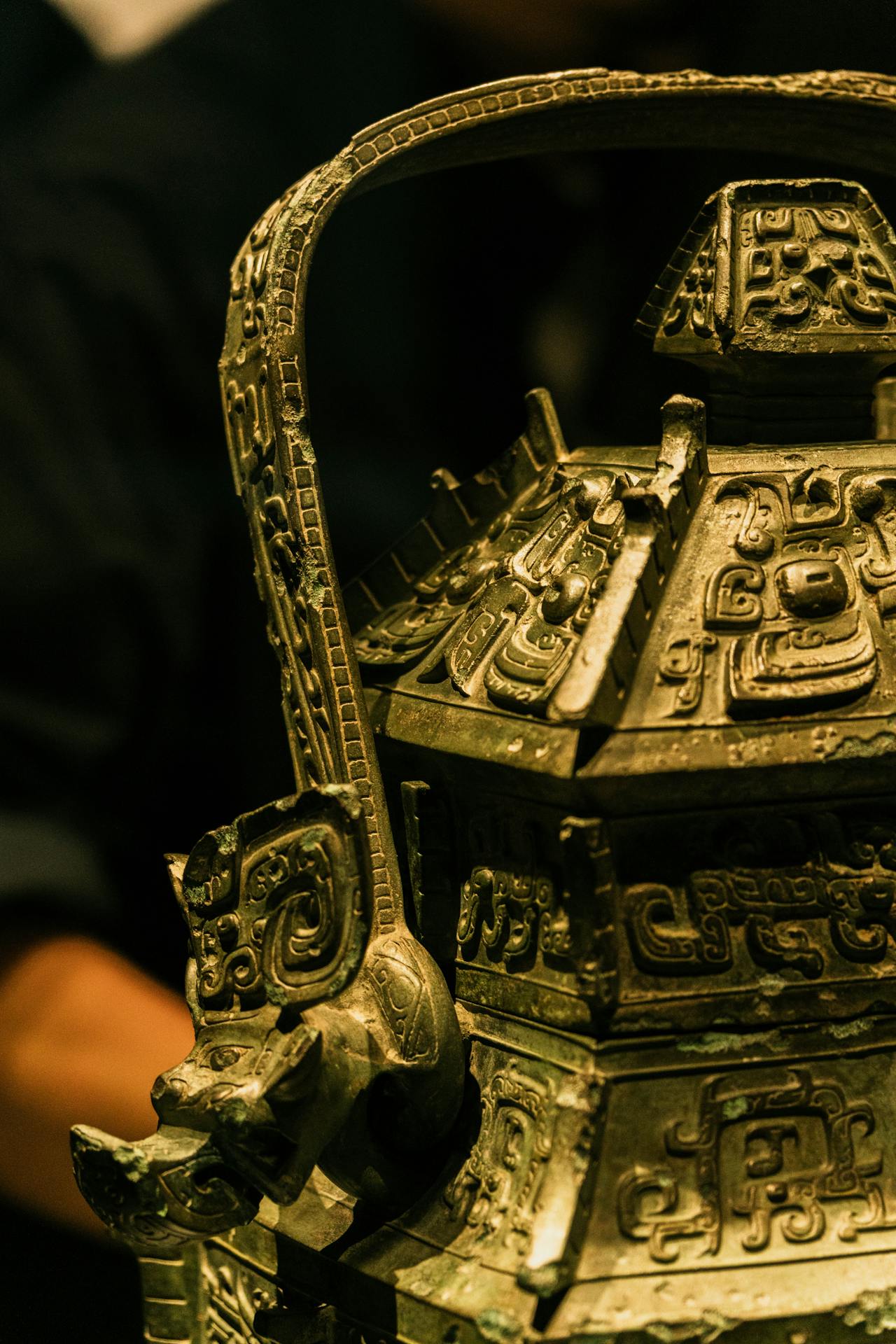
The earliest metalworking revolved around copper, but pure copper is relatively soft. Over time, craftspeople discovered that mixing copper with tin (or, in some regions, arsenic) produced bronze. It’s harder, and more durable alloy that held sharper edges and resisted wear. This shift marks the Bronze Age in many parts of Eurasia. When bronze axes, swords, and ornaments became markers of status and power.
Bronze had a hidden cost: it depended on two separate raw materials that rarely occurred in the same place. Tin, in particular, was scarce, and Bronze Age societies developed long‑distance trade routes, sometimes called “Tin Roads”. That linked tin‑rich regions in Central Asia, Anatolia, or even the British Isles with copper‑producing centers and urban consumers. In parallel, metallurgical traditions spread into regions like Southwest China and Southeast Asia. Where sites such as Longbohe on the Red River show copper mining and smelting from the second millennium BCE onward.
The iron age
Around 1200 BCE, the Mediterranean world experienced a catastrophic systemic collapse. Trade routes were severed, and the supply of tin vanished. It was out of this chaos that the Iron Age was born. Iron ore was far more abundant than copper or tin, found in almost every region. However, iron was notoriously difficult to work. Its melting point is a staggering 1538°C (2,800°F), a temperature virtually unattainable by most ancient furnaces.
The Hittites of Anatolia are often credited with being the first to master the bloomery process. Instead of melting the iron completely, they heated the ore until it became a spongy mass of metal and slag. Which was then hammered repeatedly to squeeze out impurities. This “wrought iron” was tougher and more plentiful than bronze.
The shift to iron was a democratization of power. While bronze was the metal of the elite, iron was the metal of the people. It allowed for the mass production of heavy-duty plows, which could break the tough soils of Northern Europe and China. Leading to a population explosion. It also meant that entire infantries could be outfitted with metal armor and blades. Shifting the scale of warfare from skirmishes between heroes to the clashing of massive imperial legions.
Tools, weapons, buildings, and coins
Metals reshaped daily life at every scale. Copper and bronze allowed sharper chisels, saws, and adzes for woodworking and stone carving. Which in turn made larger and more ambitious construction projects feasible. Metal ploughshares and sickles improved agricultural productivity, letting farmers turn heavier soils and harvest more efficiently.
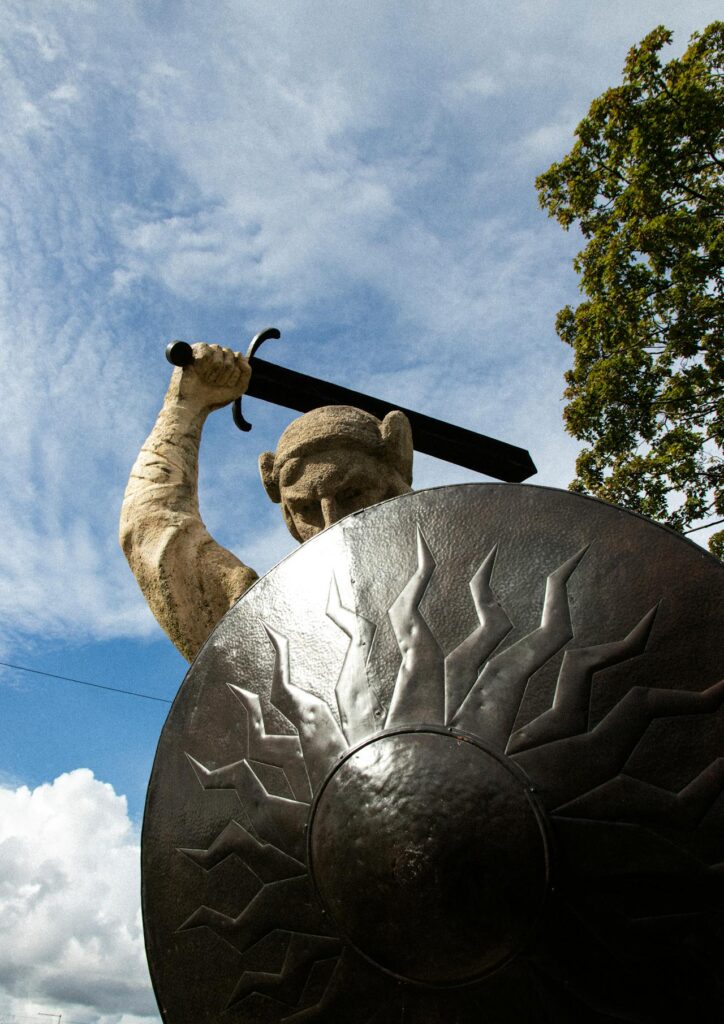
On the battlefield, metal weapons transformed warfare. Bronze spearheads, swords, and armor concentrated material and labor in the hands of elites, while iron weaponry later multiplied the availability of lethal force. Control over ore deposits and skilled metalworkers often mattered as much as control over land or herds.
As metallurgy advanced, metals became the standard for trade. Initially, this took the form of “hacksilver” or ingots weighed on scales, but the true revolution occurred in the 7th century BCE in the Kingdom of Lydia.
The Lydians were the first to strike coins, uniform discs of electrum (a natural alloy of gold and silver) stamped with a royal seal. This was only possible because of the refined ability to assay and smelt metals to precise purity levels. Coins transformed the ancient economy; they allowed for “portable wealth” that didn’t rot like grain or require feeding like livestock.
In construction, metal became the hidden skeleton of the ancient world. The Romans used lead pipes for their sprawling aqueduct systems and iron clamps to hold together the massive stone blocks of the Colosseum. The architectural grandeur of the Mediterranean was held in place by the products of the forge.
Peoples, technologies, and the web of trade
Metallurgy was an ecosystem of people and places. In the Balkans, Vinča communities at sites like Belovode and Pločnik organized copper production on a scale that suggests communal craft rather than isolated experimentation. In the southern Levant, copper mining and smelting complexes in regions such as Timna reveal specialized workers, logistical planning, and even evidence of elite consumption in the form of fine dyed textiles at industrial sites.
Farther afield, Andean cultures began large‑scale copper smelting around 700–50 BCE, as shown by copper pollution layers in ice cores from Bolivia’s Illimani glacier. Their metallurgy developed independently of Old World traditions yet served similar roles in signaling status, fueling trade, and supporting complex political organizations. In Southwest China and Southeast Asia, sites like Longbohe show how metallurgical knowledge traveled along river corridors, tying upland mining communities into wider networks of exchange.
Technologically, the quest for higher temperatures and purer metals led to the development of early chemistry and physics. The bellows, the crucible, and the flux were the lab equipment of the ancient world. Furthermore, the environmental impact was profound. The hunger for charcoal to feed the furnaces led to the first large-scale deforestation in history. Ancient mining sites, such as the Rio Tinto in Spain or the copper mines of Cyprus (from which “copper” gets its name), were industrial scars on the landscape that changed the local ecology forever.
The mastery of metal smelting was the moment humanity stepped out of the natural cycle and began to reshape the physical world to suit its will. It was a journey from the flickering embers of a Neolithic pit to the sophisticated blast furnaces of the Roman era. Through the smoke of the forge, we see the emergence of the modern state, the global economy, and the professional soldier.