
The invention of fertilizer: how ancient civilizations fed the world
For thousands of years, our ancestors survived by gathering what the earth provided naturally. However, a massive shift occurred when humans began to settle in one place to plant crops. This transition to agriculture allowed populations to grow and cities to rise.
Early farmers soon faced a confusing problem. They noticed that a field produced a great harvest in the first year, but the yield dropped significantly by the third or fourth year. The soil seemed to lose its magic. To solve this, ancient civilizations had to invent ways to recharge the earth. This journey led to the discovery and development of fertilizer, a tool that remains the backbone of human survival.
The science of the soil: how fertilizer works
To understand the invention of fertilizer, we must first understand what plants actually need. Every plant is a small chemical factory. They take carbon dioxide from the air and water from the ground. However, they also require specific minerals to build their cells.
Scientists eventually identified three primary nutrients: nitrogen, phosphorus, and potassium. Nitrogen helps leaves grow green and strong. Phosphorus supports the development of roots and flowers. Potassium regulates the internal processes of the plant.
When a plant grows, it pulls these minerals out of the dirt. If a farmer harvests the plant and moves it away, those minerals leave the field forever. Consequently, the soil becomes empty and “tired.” Fertilizer works by replenishing these missing ingredients. It provides the raw materials that plants need to build their structures. By adding organic or mineral matter back into the dirt, farmers ensure that the cycle of life continues without interruption.

The discovery of soil degradation
Ancient humans discovered soil degradation through trial and error. Initially, many early cultures practiced “slash and burn” agriculture. They would burn a forest, plant crops in the ash-rich soil for a few years, and then move to a new area when the yields dropped. This worked for small groups, but it was impossible for growing civilizations.
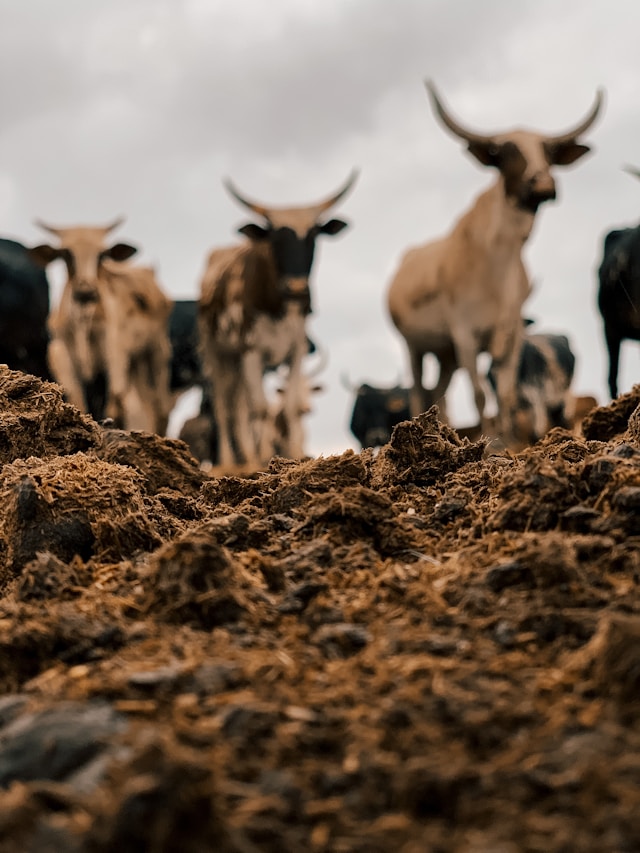
As populations became more permanent, the necessity for fertilizer grew. Farmers observed that the earth near animal pens or garbage heaps produced much taller and greener plants. They realized that waste products contained the “life force” the soil needed. Furthermore, they noticed that the land near flooding rivers stayed fertile for longer periods. These observations led to the intentional use of additives to keep the land productive. Without this invention, the great cities of antiquity would have collapsed from mass starvation within a few decades.
Civilizations and early fertilizers
Many different cultures contributed to the invention of fertilization techniques. In Mesopotamia, the Sumerians and Babylonians relied on the silt brought by the Tigris and Euphrates rivers. They built complex systems to guide this nutrient-rich mud onto their fields. They essentially used the river as a natural fertilizer delivery service. Furthermore, farmers rotated barley and wheat with legumes like lentils and chickpeas, which naturally fixed nitrogen back into the soil.
In Ancient Egypt, the Nile River provided a similar benefit. Every year, the river flooded and left behind a layer of black silt. The Egyptians recognized this as a gift. They organized their entire society around the timing of this natural fertilization. Because of this consistent supply of nutrients, Egypt became the “breadbasket” of the Mediterranean.
Meanwhile, in Ancient China, farmers developed some of the most sophisticated recycling systems in history. They realized that nothing should go to waste and began to use “night soil,” which refers to human waste, to fertilize their rice paddies. They also used oilseed cakes and crushed shells. This intense focus on recycling allowed Chinese farmers to feed a massive population on a relatively small amount of land for thousands of years.
Meanwhile, in South America, the Inca civilization made a remarkable discovery of their own. Seabird droppings, called guano in Quechua. accumulated in enormous quantities on Peru’s coastal islands. The Inca recognized its extraordinary power as a soil amendment. In fact, they considered the seabirds so important that killing one was punishable by death.
The roman contribution
The Romans were excellent recorders of agricultural knowledge. They wrote extensively about the best types of manure for different crops. Roman scholars like Columella and Varro categorized fertilizers based on their strength. They preferred bird droppings and stable manure for heavy feeding crops.
Additionally, the Romans mastered the use of “green manure.” They discovered that planting certain crops, such as beans, peas, and clover, actually made the soil richer for the next harvest. We now know this is because these plants “fix” nitrogen from the air into the ground. In addition to these plants, the Romans used lime and wood ash to balance the soil. Their systematic approach to farming allowed them to maintain a massive empire with a stable food supply.
Inventions that made fertilization possible
Several key inventions had to exist before fertilizer could be used effectively on a large scale. The most important was the plow. Early wooden sticks only scratched the surface of the earth. The development of the heavy plow allowed farmers to dig deeper into the ground. Consequently, they could bury manure and organic matter deep enough to reach the roots of the plants. This prevented the nutrients from washing away in the rain.
Irrigation was another essential technology. Fertilizers must be dissolved in water to enter a plant’s system. Ancient civilizations built massive networks of canals and dikes to manage water flow. These systems ensured that the nutrients were distributed evenly across the fields. Similarly, the invention of the terrace allowed farmers in hilly regions to keep their fertilizer from sliding down the mountain.
Crop rotation came next. Mesopotamian and Egyptian farmers developed multi-year rotation cycles, observing that legume crops left the soil stronger for cereal crops that followed. This practice spread across the ancient world as populations grew and food security became a political matter.
Finally, written record-keeping played a quiet but crucial role. The agricultural knowledge of Rome and Greece survived because scholars documented it. That accumulated wisdom formed the foundation on which 19th-century scientists would eventually build.
Mining the earth for minerals
While animal waste was the most common fertilizer, ancient peoples also looked to the earth’s crust. They practiced early forms of mining to find mineral fertilizers. In Western Europe, ancient Gauls and Britons were famous for mining “marl.” Marl is a mixture of clay and calcium carbonate. They would dig deep pits to extract this material and spread it over their fields.
Miners also sought out chalk and limestone. When crushed and added to the soil, these minerals reduced acidity and improved the texture of the dirt. In some regions, people mined saltpeter from caves or collected it from the walls of old buildings. This early mineral mining shows that ancient humans understood that the earth contained hidden treasures that could feed their crops. This practice was the precursor to the massive industrial mining operations of the future.
Social conditions and the rise of empires
The invention of fertilizer was a social necessity. In antiquity, the growth of large empires created a high demand for grain. Rome, for example, had a population of over one million people. Feeding such a large group required incredible agricultural efficiency.
Furthermore, the social structure of ancient states relied on land taxes. Governments needed to ensure that farmers were productive so they could collect revenue. Consequently, the state often encouraged the use of fertilizers and irrigation. The move from nomadic life to urban centers forced humans to find ways to maximize their land. This pressure led to the sharing of agricultural secrets across borders. As trade expanded, so did the knowledge of how to keep the earth fertile. The stability of ancient society rested entirely on the success of the harvest.
From natural manure to synthetic nitrogen: the fertilizer revolution continues
The invention of fertilizer in the ancient world was a turning point for humanity. It allowed us to move past the limitations of nature and build permanent homes. By observing the world and recycling the waste of life, ancient farmers created a sustainable future that endured for centuries.
This changed with the Industrial Revolution. It created population pressures that made soil exhaustion a crisis. Growing industrial populations demanded more food than traditional methods could provide. The solutions for this problem will be explored in the next post about Guano and The Haber-Bosch process.