Inflation in antiquity and the birth of monetary crisis
Many people believe that inflation is a modern invention of central banks and complex global markets. However, the phenomenon of rising prices and devalued currency is as old as civilization itself. Since the moment humans moved away from simple barter, they have struggled with the stability of value. Understanding the history of inflation requires us to look back at the very first experiments with money and statecraft.
What is inflation and why does it occur?
In its simplest form, inflation is the steady increase in the prices of goods and services over time. When inflation occurs, each unit of currency buys fewer items than it did previously. This process effectively erodes the purchasing power of the population. While modern economists debate the finer points of monetary policy, the root cause is usually a mismatch between the supply of money and the availability of goods.
Historically, inflation happens when the money supply grows faster than the economy can produce things to buy. If everyone suddenly has twice as many coins but the number of loaves of bread stays the same, the price of bread will naturally double. Governments often trigger this cycle when they need to pay for wars, massive building projects, or administrative costs without raising taxes. Consequently, they find ways to create more money out of thin air, leading to the first economic crises in history.

The technological foundation of money
The emergence of inflation was only possible because of specific technological and social advancements. Before the invention of coinage, people traded grain, cattle, or raw metals. Inflation was difficult in a barter system because the “money” had intrinsic value. However, the rise of metallurgy changed everything.
Mining and metallurgy
Mining allowed ancient societies to extract precious metals like gold and silver in large quantities. Metallurgy provided the tools to refine these metals and strike them into uniform shapes. This technological leap made trade much easier. People no longer had to weigh chunks of silver at every transaction. Instead, they could trust a pre-weighed coin. Unfortunately, this same technology allowed the state to manipulate the currency. By mixing precious metals with cheaper base metals like copper, rulers could produce more coins from the same amount of silver.
Writing, laws, and the state
The development of writing was equally important for the birth of inflation. Sumerian clay tablets recorded debts, grain payments, and trade agreements long before coined money existed. Writing made it possible to track obligations and prices at scale, which also made it possible to see when prices were rising.
The state and law turned metal into money. A lump of silver becomes a coin only when a government stamps it with authority, declares its value, and compels merchants to accept it. Furthermore, this legal backing was also what made manipulation possible: the same authority that gave a coin its value could quietly take some of that value away.
Early cases of inflation: from greece to rome
Athens and the grain price problem
When grain shortages struck, prices surged dramatically. The statesman Demosthenes (384–322 BCE) recorded one such crisis, noting that wheat reached 16 drachmas per medimnus. To solve the problem, Athenian authorities subsidized grain imports and distributed the crop at five drachmas, the standard price, effectively absorbing the price spike through state intervention.
This approach showed early financial creativity. Still, it also revealed a structural vulnerability: prices for essential goods were deeply sensitive to supply shocks, and without monetary buffers, crises spread fast.
The roman catastrophe
The most documented early case of inflation unfolded in the Roman Empire, and it did not happen overnight.
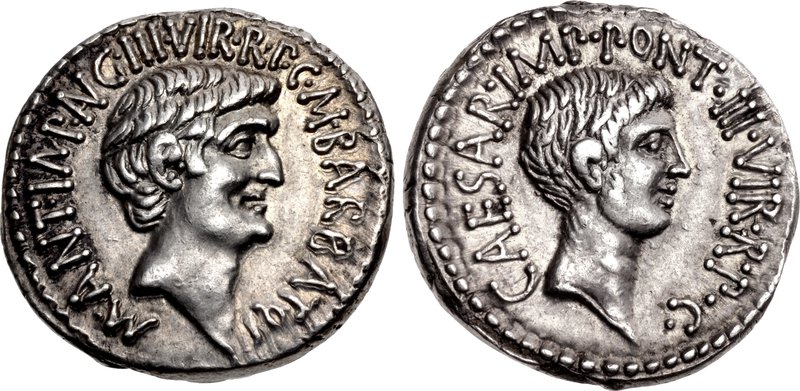
It started with the denarius, Rome’s standard silver coin. During the Republic, the denarius was nearly pure silver. Then, gradually, emperors began reducing its silver content to stretch the imperial budget, a practice known as debasement.
Emperor Nero was the first to make significant cuts around 64 AD, reducing the silver content from approximately 3.9 grams to 3.4 grams per coin. Subsequent emperors went further. By the time of the Third Century Crisis (235–284 AD), the denarius had become little more than a copper coin with a thin silver coating.
The consequences were severe. Merchants recognized the devalued coins and raised their prices in response. Soldiers demanded higher wages to keep up. Meanwhile, people began hoarding older, purer coins, because they knew the new ones were worth less. This phenomenon is known today as Gresham’s Law: bad money drives out good money.
Ancient solutions to economic ruin
Ancient governments tried several approaches to fight inflation. Some were clever, others made things worse. The most common solution was the implementation of price controls. In the year 301 AD, Emperor Diocletian issued the “Edict on Maximum Prices.” This law set a fixed price for over a thousand different goods and services. He even prescribed the death penalty for anyone who charged more than the limit.
Despite the harshness of the law, the Edict failed miserably. Merchants simply stopped selling their goods in public markets to avoid the price caps. This led to a massive black market and further shortages. Eventually, the law was ignored.
Monetary reform proved more effective. Diocletian’s successor Constantine introduced the solidus, a gold coin of consistent weight and high purity. This was a high-purity gold coin that remained stable for centuries. By anchoring the economy to a physical material that the state could not easily fake, Constantine restored confidence in the monetary system. This stability allowed the Eastern Roman Empire to survive for another thousand years.
Why does it keep happening today?
After each crisis, rulers and thinkers understood the problem. Cicero wrote about the collapse of confidence in the denarius in the first century BCE. Constantine’s reforms worked for a generation. So why did inflation return, again and again?
The primary reason is that the temptation for a state to spend more than it earns remains constant. Historically, rulers debased coins; today, governments use digital printing and debt.
Modern currency is “fiat,” meaning it is not backed by gold or silver. It is backed only by the promise of the government. This system provides great flexibility for managing an economy during a recession. However, it also removes the physical limit on how much money can be created.
The quest for growth and the need to fund public services often lead to an expansion of the money supply. Furthermore, modern global trade is incredibly complex. A war in one part of the world or a shortage of oil can drive up prices everywhere. While we no longer use metallurgy to mix copper into silver, the underlying human behavior remains the same. The desire for short-term political stability often outweighs the long-term health of the currency.
From Rome’s silver mines to digital money: the long history of inflation
Inflation is not a flaw of the modern world. It is a recurring theme in the story of human civilization. The technologies of mining, writing, and metallurgy gave us the gift of money, but they also gave the state the tools to manipulate it. From the silver mines of Rome to the digital ledgers of today, the struggle to maintain value is a constant battle. By looking at the first cases of inflation in antiquity, we see that confidence is the true currency, and once it is lost, it is very difficult to regain.