The domestication of the horse and the rise of empires
For tens of thousands of years, humans and horses shared only one relationship: hunter and prey. Paleolithic cave paintings in France and Spain, dating back 30,000 years, depict wild horses as targets of the hunt. Then, gradually, that relationship flipped entirely.
The domestication of the horse fundamentally altered the trajectory of our species. By providing speed, power, and mobility, the horse expanded the horizons of the ancient world. This animal turned isolated tribes into sprawling empires and transformed the very landscape of human interaction.
The Origins of the Wild Horse
The ancestral homeland of the modern horse is the Pontic-Caspian steppe, a vast corridor of grasslands stretching from modern Belarus through Ukraine and into Russia. This region offered exactly what horses needed: open plains, nutritious grasses, and cold winters that hardened both body and instinct.
Two wild species are considered ancestral to domesticated horses: the Przewalski’s horse, still surviving in Mongolia, and the now-extinct tarpan of southern Russia. Both were well-adapted to harsh continental climates. These horses were hardy, muscular, and capable of surviving brutal winters on minimal forage. Consequently, they became the primary focus for early human populations looking to expand their influence over the land.

The first riders of the Kazakh Steppe
The earliest strong evidence of horse husbandry comes from the Botai culture of northern Kazakhstan, around 3700–3500 BCE. Researchers found corral enclosures, evidence of manure management, tooth wear consistent with bitting, and mare’s milk residue inside ceramic vessels. The Botai people were riding, herding, and milking horses.
Humans eventually learned to breed horses for specific traits, such as endurance and temperament. Once the horse was manageable, the spread of this technology was rapid. Between 3000 and 2000 BCE, nomadic tribes moved across the steppes and took their herds with them. As these groups migrated, they introduced the horse to the Near East, Europe, and East Asia. This movement created a ripple effect that touched every major civilization from the Mediterranean to the Yellow River.
The hardware of progress: metallurgy and leather
The mastery of the horse required sophisticated engineering and the advancement of specific trades. Metallurgy played a pivotal role in this evolution during the Bronze Age. Early trainers discovered that controlling a powerful animal required a precise point of contact. The invention of the metal bit allowed riders to communicate subtle commands to the horse. Bronze and later iron bits became essential tools for steering and stopping.
Beyond the bit, bronze technology enabled the construction of chariot wheels, axles, and fittings that could withstand the stress of combat and long-distance travel. The chariot was, in many ways, a product of the metal age.
In addition to metalwork, leather working was indispensable. Strong, flexible leather was necessary to create bridles, cinches, and early saddles. These leather components ensured that the rider remained secure and that the horse could pull heavy loads without injury. Furthermore, the role of fabrics cannot be overlooked. Padded blankets made from wool or linen protected the horse’s back from sores. In many cultures, woven textiles were used to create decorative trappings that displayed the wealth of the owner. Together, these technologies formed a “hardware” suite that made the horse a functional tool for society.
Civilizations on the move
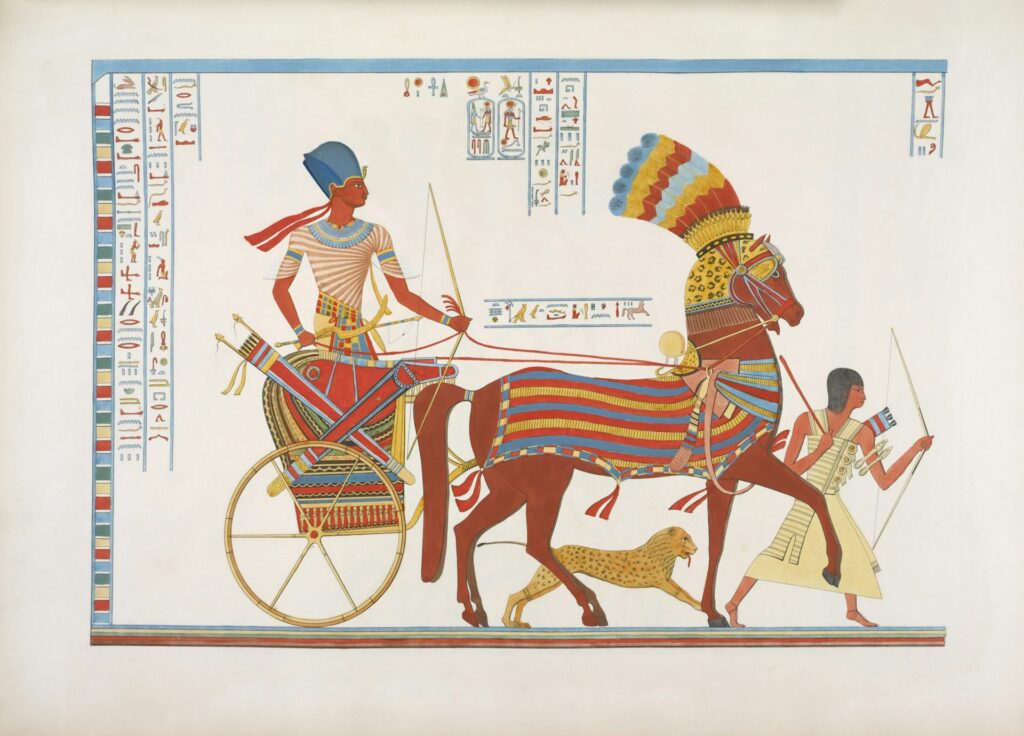
Many ancient civilizations built their power specifically on the backs of horses. The Hittites of Anatolia were among the first to master the art of chariot warfare around 1600 BCE. They used the horse’s speed to dominate their neighbors and challenge the Egyptian Empire at the Battle of Kadesh in 1274 BCE.
Similarly, the Assyrians developed some of the most disciplined cavalry units of the ancient Near East between 900 and 600 BCE. In East Asia, the Shang Dynasty utilized horse-drawn chariots as early as 1200 BCE. For these civilizations, the horse was a symbol of divine favor and political authority. Owning a stable of fine horses indicated that a ruler possessed the resources to maintain a professional military class.
Trade, roads, and the pulse of commerce
One of the most profound uses of the horse was in the realm of trade and transport. Before the horse, trade was limited by the distance a human or an ox could walk in a day. The horse effectively “shrunk” the world. Merchants carried goods over longer distances in shorter timeframes.
The Persian Empire, under Darius I around 500 BCE, utilized the horse to create one of the world’s first efficient postal systems. Known as the Angarium, this system used a relay of mounted couriers to deliver messages across the 1,600-mile Royal Road. This infrastructure allowed the central government to maintain control over distant provinces. Consequently, the horse became the literal pulse of the empire’s communication network. The development of paved roads and waystations followed the needs of the horse, laying the groundwork for future global connectivity.
The horse in ancient agriculture
While the horse is often associated with the glamour of war, its impact on the soil was equally transformative. In the early stages of agriculture, farmers relied on oxen to pull the plow. Oxen are incredibly strong, but they are also quite slow. As agricultural technology advanced, the horse became a more attractive option.
The development of the breast-strap harness in China around the 4th century BCE allowed horses to pull heavy loads without choking. A horse can work significantly faster than an ox and possesses greater stamina for long days in the field. This shift allowed farmers to cultivate larger plots of land and produce a surplus of food. The resulting food security supported the growth of urban populations. In many ways, the energy provided by the horse fueled the rise of the first true cities.
Beyond the saddle: fuel, food, and energy
In the theater of war, the horse was a game-changer. Chariots served as mobile firing platforms for archers, creating a rapid-strike effect on the ancient battlefield. Later, the transition to mounted cavalry allowed for flanking maneuvers and rapid pursuit.
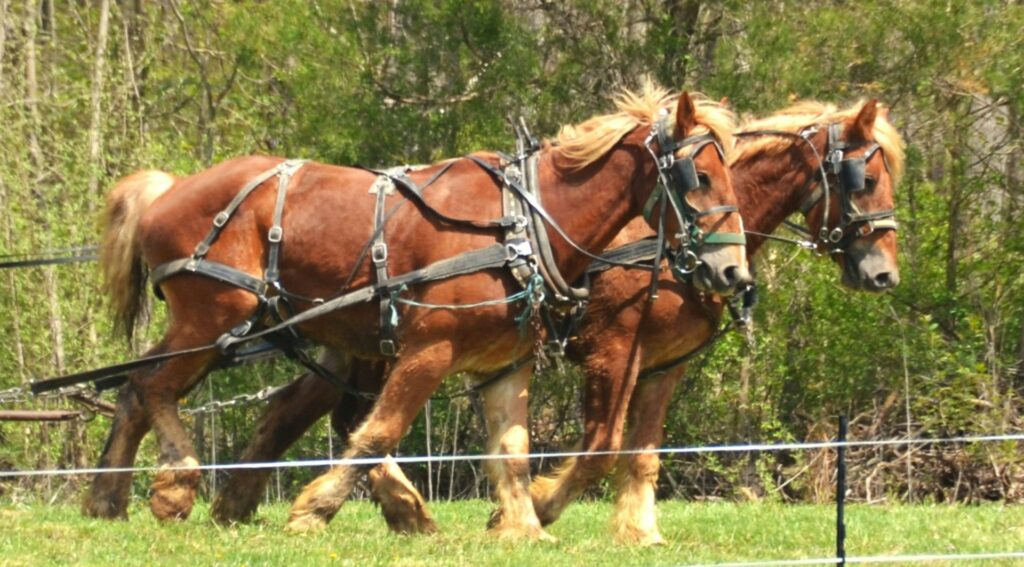
Beyond combat and farming, horses served several non-obvious roles. They were a vital source of energy for turning mills to grind grain or lifting water for irrigation. In many steppe cultures, such as the Scythians who flourished around 700 BCE, horse milk was fermented into a beverage known as kumis. This provided essential nutrients in environments where traditional farming was impossible. Even horse dung was utilized as a primary fuel source for fires in regions where wood was scarce. The animal was a complete resource, providing mobility, nutrition, and power.
Four thousand years of partnership and power
The successful use of horses was possible because of a unique synergy between people and their environment. The Indo-European migrations, occurring between 4000 and 1000 BCE, are a prime example of how social conditions favored the horse. These groups possessed a social structure that valued mobility and animal husbandry.
Additionally, the development of the horse collar and improved wheel designs allowed humans to maximize the animal’s physical potential. Social hierarchies also adapted, as the knight or charioteer class emerged as an elite social tier. The horse demanded a significant investment of time and resources, which encouraged the development of specialized labor.
Selective breeding quietly did the rest. Over generations, steppe cultures favored horses with stronger backs and calmer temperaments, gradually producing an animal suited to human partnership. The result was a four-thousand-year alliance between humans and horses that shaped the trajectory of every major civilization on Earth.