The first human tribes: life before agriculture
The first human tribes emerged as small, flexible groups of hunter‑gatherers who organized around cooperation, kinship, and shared rituals long before agriculture appeared about 10–12 thousand years ago.
These early tribes varied greatly across continents, but everywhere they depended on simple tools, social networks, and symbolic practices to hold groups together and manage life in harsh, changing environments. They were the living engines of cooperation, story, and survival that carried our species through tens of thousands of years before cities or kings existed.
Tribes of hunters and gatherers
For most of human existence, people lived in small, mobile bands made up of a handful of families who traveled together in search of game, fruits, roots, and shellfish. Life depended on cooperation: one day a hunter’s success might feed everyone, and on another day a skilled gatherer’s knowledge of hidden plants could save the group from hunger.
These bands were often surprisingly egalitarian, with status earned more by generosity, knowledge, or skill than by wealth. Food was shared widely, gossip kept arrogance in check, and anyone who tried to dominate too much risked ridicule or social isolation rather than obedience. Mobility was essential: when local resources declined, the group moved on, following animal migrations, seasonal plants, or rivers, leaving only faint traces behind.
How the first tribes formed
Tribes did not appear as formal “institutions” but as a slow deepening of human bonds over thousands of years. Small groups that once behaved like loose foraging parties gradually became more stable communities as cooperation, child‑care, and shared rituals bound people together.
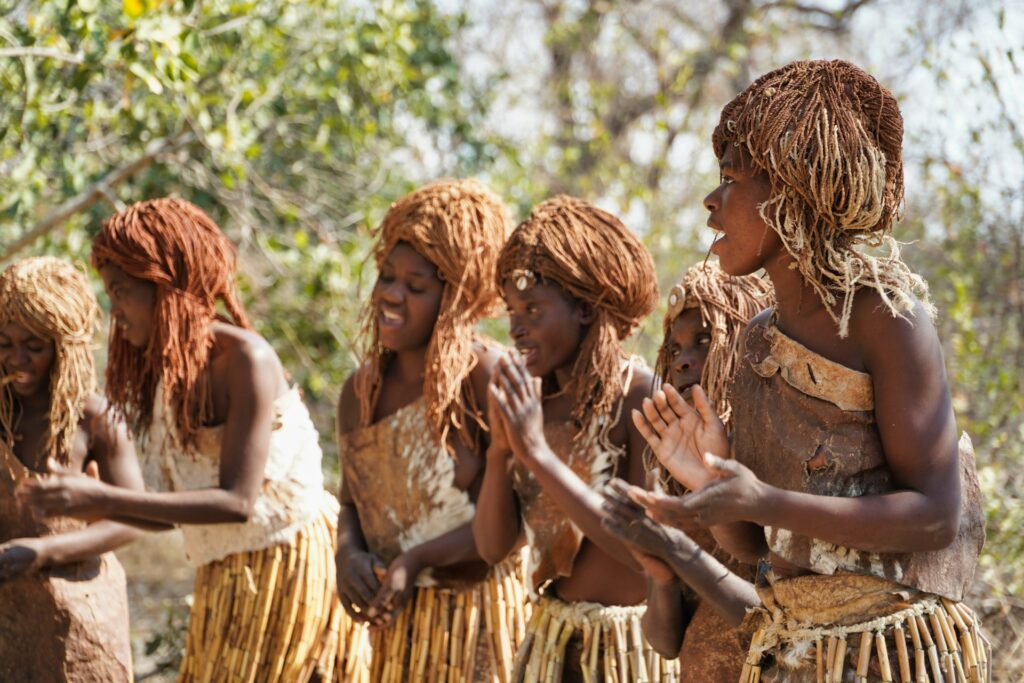
Around shared fires, early bands like ancestors of later San peoples in southern Africa or groups similar to the Hadza of Tanzania forged strong identities through stories, songs, and shared hunts. These fireside gatherings turned darkness into a space for planning and memory: people recounted successful hunts, warned of dangers, and taught children how to read tracks or shape stone, while kin alliances linked neighboring bands into broader “tribes.”
Rituals and symbols played a powerful role in this process. Decorated tools, personal ornaments, burial practices, and art were not mere decoration but identity marks that separated one tribe from another and made belonging feel real.
Networks before the dawn of agriculture
Far from living in total isolation, early tribes were often connected in broad, loose networks that stretched across valleys, mountain passes, and coasts. Archaeological discoveries of stone, shells, and other materials transported over long distances reveal paths of contact, trade, marriage, and alliance that linked different groups like beads on an invisible chain.
These networks were a form of insurance in a dangerous world. In the American Southwest, for example, later Indigenous peoples built on earlier traditions of long‑distance exchange, creating turquoise trade networks, often called the Turquoise Trail, that connected mining areas in what is now New Mexico with distant communities across the region and into Mesoamerica. When game became scarce or drought struck, a band could visit allies, exchange gifts, marry into another group, or share hunting grounds for a time, spreading ideas and technologies much faster than any group could innovate alone.
Different continents, different tribes
Although all early tribes relied on hunting and gathering, life looked very different from one continent to another because environments, animals, and histories shaped each people in unique ways. From icy plains to dense forests and rich coastlines, each region demanded distinct skills, tools, and social habits.
Europe
In Ice Age Europe, many tribes followed great herds of reindeer, horses, or mammoths across cold, open landscapes. Archaeologists identify cultural traditions such as the Gravettian and later the Magdalenian, whose peoples organized their lives around big‑game hunting and seasonal aggregation camps.
At key times of the year, scattered bands met at rich hunting grounds or sheltered valleys to form larger tribal gatherings, exchange mates, and renew alliances. The stunning cave paintings of sites associated with these cultures, along with carved figurines and ornaments, were shared symbols that likely told stories, marked rituals, and reinforced the sense of being part of a larger people rather than just a small band.
Africa
In Africa, the ancestral homeland of humanity, tribes navigated an astonishing variety of environments: savannas, deserts, woodlands, and rainforests. Groups such as the San in southern Africa and the Hadza in northern Tanzania are modern examples of hunter‑gatherer peoples whose way of life preserves elements of very ancient patterns.
San groups traditionally moved in small, flexible camps, sharing meat, tubers, and gathered foods while maintaining rich storytelling and trance‑healing rituals. The Hadza organize themselves into egalitarian bands around Lake Eyasi, with men hunting and women gathering berries, tubers, and honey, and decisions made by discussion rather than by any formal chief. Later, many such foragers traded meat, honey, and knowledge with neighboring herders and farmers, maintaining tribal identities within wider economic webs.
Asia
Asia hosted an immense mosaic of early tribes, from steppe hunters to coastal and riverine foragers. In Siberia and Central Eurasia, ancestral groups of later steppe peoples hunted herd animals across open grasslands, while in regions like the Caucasus, Upper Paleolithic communities developed rich toolkits and ornaments linked across long distances.
Archaeological sites in the North‑Western Caucasus, for instance, show Upper Paleolithic groups using obsidian, shells, and other materials brought from far‑off sources, hinting at dense regional networks of culturally related tribes. Farther east and south, ancestors of later Ainu in northern Japan or diverse forager groups in Southeast Asia relied heavily on fish, shellfish, and forest products, adapting their organization to coasts, islands, and tropical forests while interacting over time with early farmers and pastoralists.
Americas
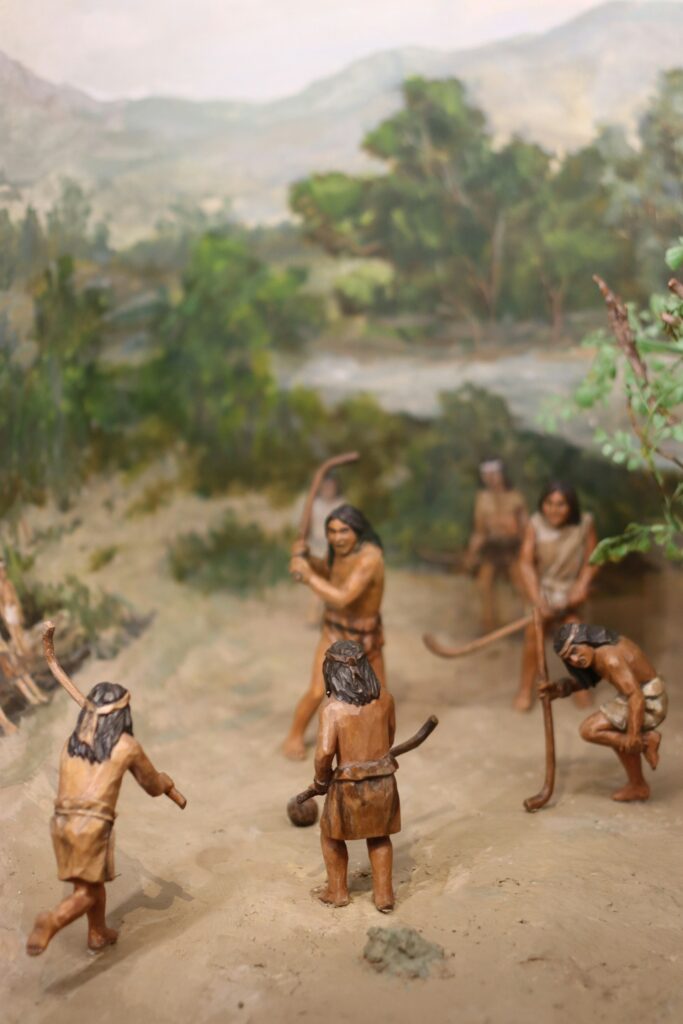
The first peoples of the Americas adapted with remarkable speed to everything from Arctic tundra to tropical forests and high plains. Early cultures associated with big‑game hunting, such as Clovis groups in North America, organized around the pursuit of large animals like mammoth and bison, leaving distinctive stone points scattered across vast territories.
Later, in the Arctic, Inuit and related peoples developed highly specialized hunting of marine mammals and reindeer using kayaks, sleds, and complex clothing, while on the Northwest Coast, tribes such as the ancestors of the Haida, Tlingit, and others built semi‑sedentary societies based on rich salmon and marine resources.
In the American Southwest, Ancestral Puebloan groups connected pueblos and distant regions through broad trade networks including turquoise, echoing and extending older pathways like the Turquoise Trail that linked mines and villages across deserts and mountains.
Tools, technologies, and the birth of organization
At the heart of all these worlds lay technology, though not technology in the modern sense. Simple stone tools, sharpened bones, wooden spears, bows, arrows, nets, baskets, clothing, and shelters were the everyday innovations that made survival possible for tribes from the San to the Gravettian, from Arctic foragers to forest peoples.
Fire was one of the most transformative technologies of all. It allowed people to cook food, making it safer and more nutritious, kept predators away, and created warm, social spaces at night where stories and traditions could accumulate like embers in memory. Symbolic technologies, paint, carvings, jewelry, ritual objects, helped signal who someone was, which tribe they belonged to, and what roles or status they held within that group.
These technologies supported more complex organization. Cooperative hunts required planning, leadership, and coordination; building shelters or maintaining communal spaces demanded shared effort; rituals needed time, resources, and social agreement. Over generations, such practices made tribal life more structured, giving rise to elders, respected hunters or shamans, and eventually more formal authority in some societies.
Before and after agriculture
The invention of agriculture, roughly 10,000 years ago in several parts of the world, did not instantly replace tribes, but it changed the rules of the game. Before agriculture, most tribes were mobile, their wealth carried on their backs and in their knowledge rather than in permanent houses or fields, and leadership tended to be flexible and situational.
With farming and herding, people began to settle in one place for longer periods, tending fields, storing grain, and managing herds. Surpluses allowed populations to grow, but they also created reasons to draw borders, defend territory, and formalize ownership and inheritance, pushing some tribal societies toward villages and chiefdoms with hereditary leaders and clearer social classes.
Yet the old and the new coexisted for millennia, and in many regions they still touch today. On the edges of early agricultural heartlands, mobile hunter‑gatherer and pastoral tribes interacted with farmers through trade, raiding, alliances, and intermarriage, constantly reshaping both sides and preserving older lifeways within changing worlds.
The story of the first tribes is, ultimately, a story of creativity: from the San tracking game in African savannas to Gravettian hunters in icy Europe, from Hadza bands moving lightly across the bush to ancestral Puebloan traders walking the Turquoise Trail, humans have continually reinvented how to live together, long before the first field was plowed or the first city wall was raised.