The discovery of fermentation: humanity’s first biotechnology
One of humanity’s most brilliant discoveries emerged not in a laboratory, but in accident: fermentation. Imagine, for a moment, a nomadic traveler ten thousand years ago. In a pouch made from a calf’s stomach, they carry a supply of fresh milk. After a long day of trekking across the sun-baked plains, they open the pouch to find the liquid has transformed. It is no longer milk. It has separated into strange, tangy clumps and a thin liquid. To a modern mind, this might look like a disaster. To our ancestors, driven by hunger and curiosity, it was a revelation. It tasted good, it didn’t make them sick, and, most importantly, it didn’t spoil the next day.
This was the dawn of fermentation: humanity’s first great biotechnological revolution. Before we understood the existence of microbes, before we had refrigeration, and long before we had chemical preservatives, we had the “invisible magic” of fermentation. It is the process that allowed us to stop wandering and start building.
How fermentation works
At its core, fermentation is a metabolic process that produces chemical changes in organic substrates through the action of enzymes. In simpler terms: it’s a controlled decay.
When we ferment food, we are essentially inviting “good” microorganisms, like Lactobacillus bacteria or Saccharomyces yeasts, to a feast. These microbes consume the sugars and starches in the food. In exchange, they produce byproducts like lactic acid, acetic acid (vinegar), or alcohol.
This is the secret to preservation. Most harmful bacteria, the kind that cause rot and food poisoning, cannot survive in highly acidic or alcoholic environments. By lowering the pH level of the food, these friendly microbes create a “biological shield” that keeps pathogens at bay. Furthermore, these beneficial bacteria engage in “competitive exclusion,” hogging all the nutrients so that the bad bacteria simply starve to death.
But fermentation offers more than mere preservation. The metabolic activities of these microorganisms produce vitamins, enhance flavor through organic acid production, and break down complex compounds into more digestible forms. In essence, fermentation was ancient humanity’s first biotechnology, a method to improve food safety, taste, and nutrition simultaneously, without understanding a single principle of microbiology.
The unexpected discovery: how fermentation was born
Historians believe fermentation was discovered independently across the globe as humans transitioned from hunter-gatherers to settled farmers. When we began to store grain, rain would occasionally leak into the stores. The grain would sprout, wild yeasts from the air would settle in the damp mixture, and suddenly, the gruel would begin to bubble. That bubbling was the sign of life, the birth of leavened bread and primordial ale.
Archaeological evidence reveals that this accidental discovery happened far earlier than most imagine: 13,000 years ago, Natufian cultures in the Levant were fermenting grain into beer, with residues preserved in rock pits near Haifa, Israel. Other early evidence points to fermented beverages in Neolithic China around 7000 BCE, where a combination of rice, honey, and fruit created one of the earliest wines.
Similarly, vegetables left in brine or milk kept in animal-skin containers reacted with the natural bacteria present in the environment. By 5000 BCE, Sumerians and Egyptians were producing bread, wine, and beer through fermentation. The Babylonians were fermenting alcoholic drinks around 3000 BCE, while ancient Egyptians documented the process around 3150 BCE.
What these ancient peoples lacked in scientific understanding, they compensated for with keen observation and cultural memory. They viewed fermentation as miraculous, a gift from the gods, because they couldn’t explain the invisible forces at work.

The great preservation pantry: bread, cheese, and kimchi
As civilizations grew, so did the variety of fermented staples. These products became the pillars of the human diet:
- Bread: The “Staff of Life” was revolutionized by yeast. By allowing dough to ferment, humans unlocked nutrients in grain that were otherwise indigestible and created a portable, calorie-dense food source.
- Cheese and Yogurt: Milk is a precious but perishable resource. By fermenting it into yogurt or pressing it into cheese, ancient peoples created a way to store the protein and fat of the herd for months or even years. This was particularly vital for the development of Northern European and Middle Eastern cultures.
- Kimchi and Sauerkraut: In East Asia, the fermentation of cabbage and radishes (Kimchi) became a cultural cornerstone. By submerging vegetables in brine, the Lactobacillus bacteria produced enough acid to preserve the vegetables’ Vitamin C. This was the ancient world’s primary defense against scurvy during the winter months.
- The Global Brine: From the Roman garum (a pungent fermented fish sauce that was the ketchup of the ancient world) to the soy sauce of the Han Dynasty, fermentation provided the “umami” punch that defined regional cuisines.
The technology of the jar
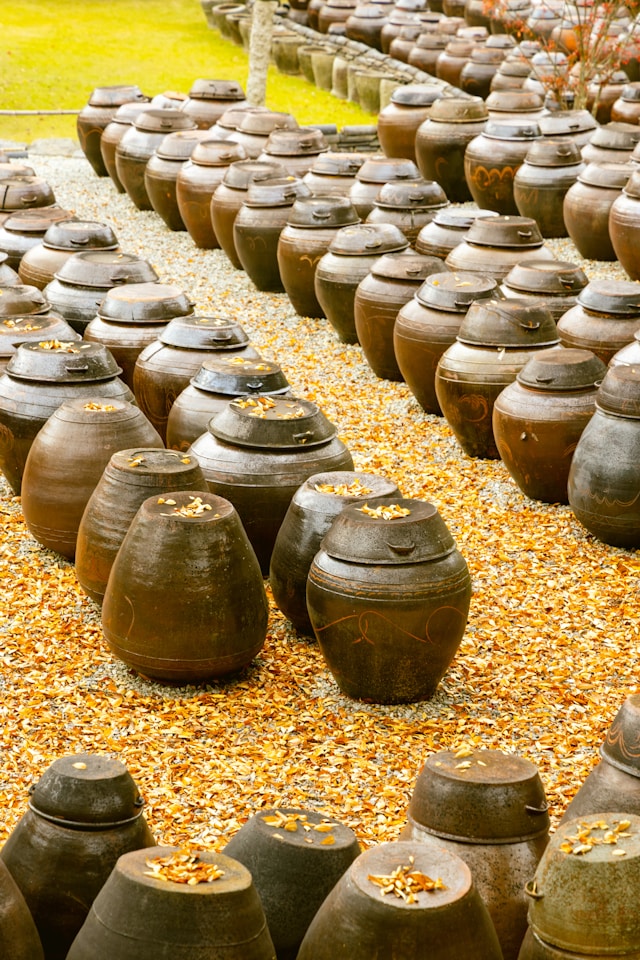
Fermentation wasn’t just about the microbes; it was about the technology used to house them. The invention of pottery was the “silicon chip” of the Neolithic era. Earthenware crocks and amphorae allowed for airtight seals, which were crucial for anaerobic fermentation (fermentation without oxygen).
Later, the development of salt mining became the great catalyst. Salt draws moisture out of food through osmosis, creating the perfect brine for “good” bacteria to thrive while killing off the “bad.” The control of salt became a matter of national security, as it was the key ingredient in the fermentation that fed armies and navies.
The process of fermentation still was a mystery until industrialization. In the 19th century, scientists isolated and maintained pure microbial cultures, enabling reproducible, consistent fermentations. Louis Pasteur’s work in the 1860s finally revealed that specific microorganisms drove fermentation, laying the scientific foundation for modern biotechnology. The identification of yeast species, the development of starter cultures, and eventually molecular biology techniques transformed fermentation from folk practice to precise science.
Trade Routes and the Spread of Culture
Fermentation didn’t stay local; it traveled. Fermented goods were the ideal trade commodities because they were stable. Wine from Greece, cheese from the Alps, and fermented fish from the North Sea traveled thousands of miles along the Silk Road and maritime routes.
These trade routes didn’t just move products; they moved “starters.” Cultures and techniques for fermentation were passed from merchant to merchant. This exchange led to a global homogenization of certain techniques, while allowing others to diverge into the rich tapestry of regional flavors we see today. Fermentation was the first “open source” technology, refined by millions of hands over thousands of years.
The Impact of the discovery of fermentation on civilization
Without fermentation, the rise of large-scale civilizations might have been impossible. It allowed for food surpluses, which in turn allowed for specialized labor. If everyone didn’t have to spend every waking hour hunting or gathering fresh food, they could become builders, philosophers, or scientists.
Fermentation also changed our biology. The probiotics found in fermented foods helped develop the human gut microbiome, strengthening our immune systems. In many ways, we didn’t just domesticate the microbes; they domesticated us, shaping our tastes, our health, and our social structures.
Today, the global fermented food market is worth approximately $30 billion annually and continues growing. Yet behind this economic figure lies something deeper: a technology so fundamental to human history that we take it for granted.
But while we’ve focused today on how fermentation kept us fed, there is another side to this story. A side that involves celebration, ritual, and the transformation of the human spirit. Fermentation’s most transformative product, alcohol, deserves its own comprehensive exploration. From ritual significance in ancient civilizations to its role in navigation, economics, and cultural identity, alcohol fermentation represents a parallel story equally as fascinating as food preservation itself.