The creation of soap: from ancient rituals to modern chemistry
Long before we understood the existence of pathogens or the molecular architecture of surfactants, our ancestors created a substance that could bridge the gap between the oily grime of the physical world and the purity demanded by ritual and health. The creation of soap is rooted in a fascinating paradox: the very substances that represent waste and decay were the ingredients of our salvation from filth.
Its history runs from Mesopotamian laundry vats to Islamic laboratories and medieval guild halls. Each step adding a little more science to a very old craft. What began as an accident on riverbanks and in sacrificial pits, ended up as one of the quiet engines of global trade, chemistry, and public health.
Smoke, ash, and the first soaps
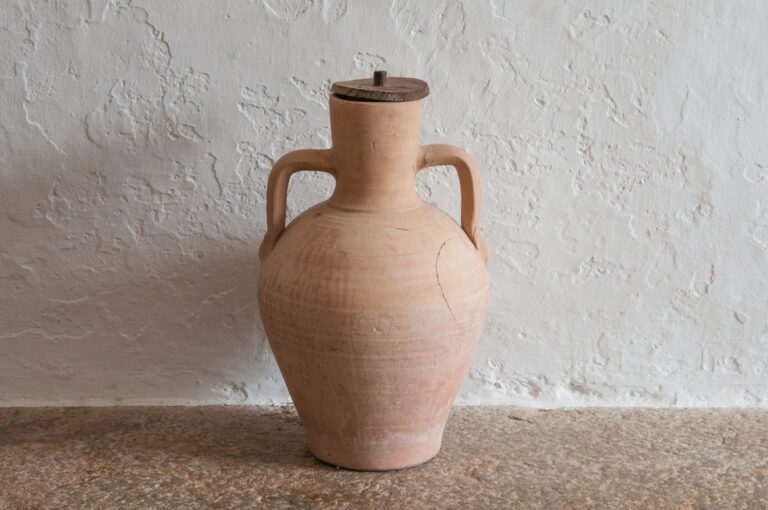
The earliest written traces of soap appear in Bronze Age Mesopotamia. In clay tablets and cylinders from around 2800 BCE that describe mixing fats with alkaline ash and water. These Sumerian and Babylonian recipes were not bathroom luxuries. They were tools for washing wool and preparing textiles, where removing grease and dirt was essential for spinning and dyeing.
They understood that by boiling ash with fats, they could create a “grease-cutter” that allowed them to dye and weave fabrics more effectively. This was humanity’s first major foray into synthetic chemistry, transforming two disparate biological wastes into an entirely new functional substance.
A later legend, preserved by Roman writers, imagines that soap was born on Mount Sapo. Where animal sacrifices left a residue of fat and ash that rain washed down to the river, making clothes washed there come out mysteriously cleaner. Whether or not this hill ever existed, the chemistry in the story is sound. Animal fats plus the alkaline compounds in wood ash create a primitive soap. Essentially, a sticky paste that can lift oils from cloth and skin.
By 1500 BCE, Egyptian papyri described mixtures of oils with alkaline salts used to wash the body and treat diseases. Showing that these “soap-like” preparations had already crossed from craft into medicine.
Saponification: turning fat into a cleaning tool
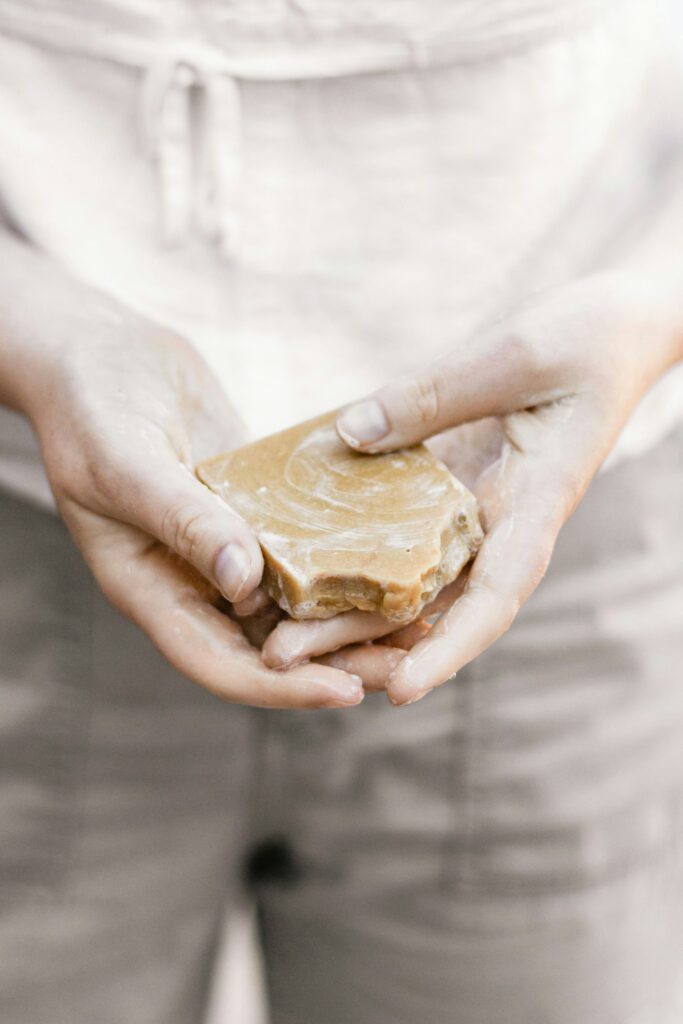
Modern chemistry calls the underlying reaction saponification. Where fats (triglycerides) transform into glycerol and soap when they meet a strong alkali such as sodium hydroxide. Each fat molecule breaks apart under the attack of the alkali. Releasing fatty acid “tails” that recombine with sodium or potassium to form soap molecules with a split personality.
One end of a soap molecule is hydrophilic, attracted to water. While the other is hydrophobic, attracted to oils and grease. The practical effect is that soap lets water do something it normally struggles with: mix with oil.
When soap is applied to a dirty surface, the tails burrow into the grease and grime, while the heads remain anchored in the water. As the water is agitated, the soap pulls the oil into tiny droplets called micelles, suspending them in the water to be rinsed away. This molecular bridge-building is what allowed humans to finally conquer the microscopic layer of sebum and dirt that harbors bacteria.
From ritual to commodity: the great trade
By 600 BCE, Phoenician traders were boiling goat tallow with tree ashes, producing blocks of soap they carried around the Mediterranean alongside purple dye and glassware. The Celts in northern Europe made something similar from animal fat and plant ashes. They called it “saipo,” a word that would slowly evolve into soap in Latin languages
As the secret of soap-making spread, it became a marker of cultural sophistication and a driver of global trade. In the Mediterranean, the technology evolved as different cultures substituted local ingredients.
The city of Aleppo in Syria became the epicenter of a soap-making tradition that persists to this day. By combining olive oil with laurel oil and soda ash, Syrians created a hard and aromatic bar that was superior. These green bars of “Aleppo Soap” traveled along the Silk Road and across the Mediterranean, becoming a prized commodity.
When the Crusaders returned to Europe, they brought with them the Eastern habit of regular bathing and the superior vegetable-oil soaps of the Levant. This sparked a soap-making Renaissance in Europe.
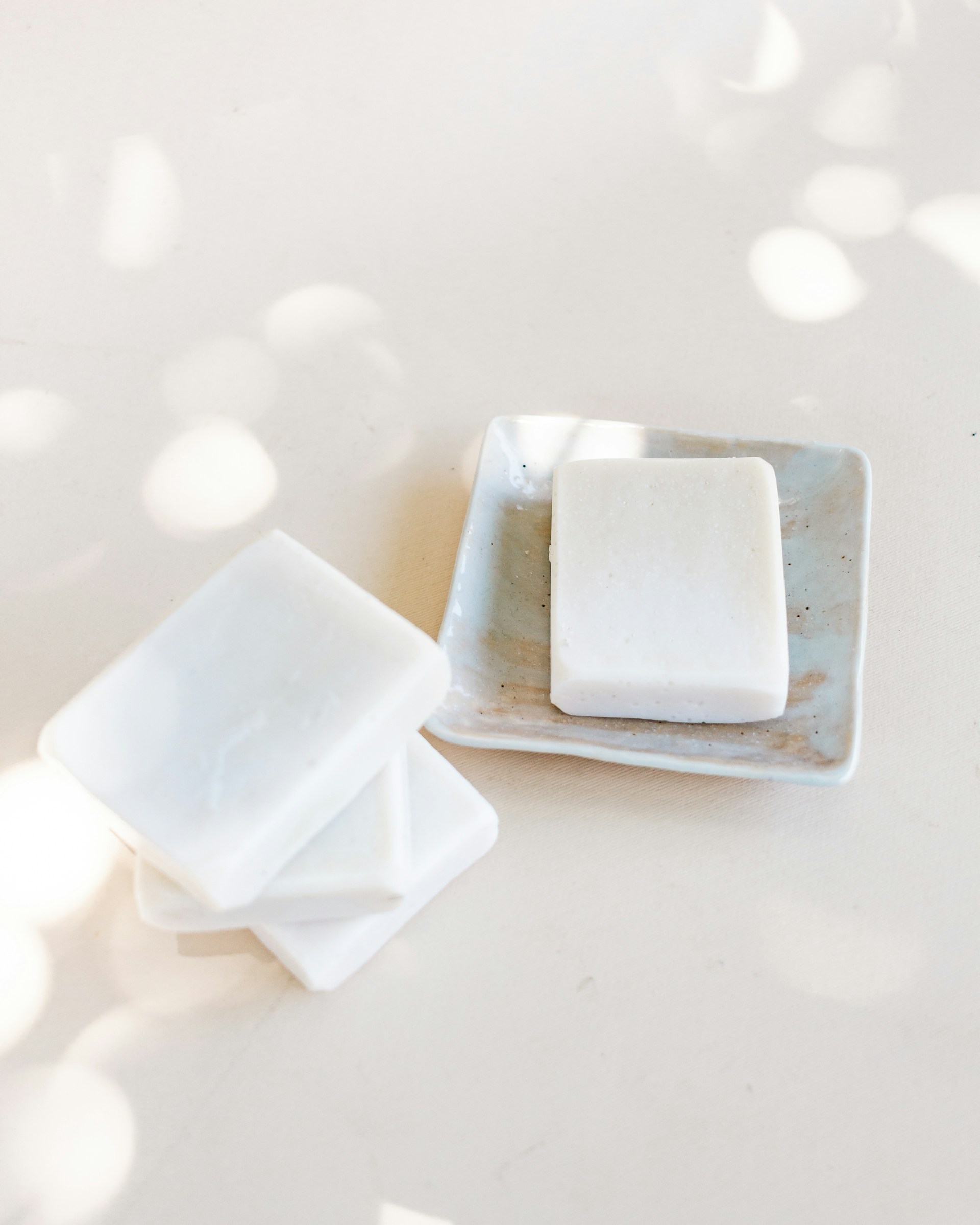
In Spain, the “Castile” soap was born. It used the region’s vast olive groves to create a white, pure bar that became the gold standard for European royalty. By the 12th century, Italian and French artisans organized soap-making guilds, transforming the substance from a textile-processing chemical into a high-status cosmetic and medicinal tool.
The technological leap: the industrialization of soap
For most of history, soap remained a luxury because the alkali was difficult to produce in large quantities. It required the burning of massive amounts of wood or seaweed. The democratization of soap and the subsequent explosion in public health, required a technological breakthrough in chemistry.
That breakthrough arrived in 1791. When French chemist Nicolas Leblanc patented a process for extracting soda ash from common table salt. This was a pivotal moment in the Industrial Revolution. Suddenly, the most expensive ingredient in soap could be manufactured in a factory.
Simultaneously, the work of Louis Pasteur and the development of the “Germ Theory of Disease” in the 19th century transformed soap from a cosmetic luxury into a frontline weapon of survival. Once the link between invisible microbes and deadly diseases like cholera and the plague was established, cleanliness became a civic duty. Governments began to invest in the mass production of soap, and advertising campaigns were launched to convince people that “Cleanliness is next to Godliness.”
From ash pits to modern chemistry
Beyond the laboratory and the factory, soap reshaped the very structure of human society. It created new industries and changed the architecture of our homes. It moved the bathroom from a peripheral outhouse to a central, tiled sanctuary of the modern dwelling.
Behind every bar of modern soap stands a long chain of peoples and technologies: Sumerian scribes recording recipes, Babylonian and Egyptian artisans boiling fats, Phoenician traders stocking their holds, Celtic farmers rendering tallow, Roman writers preserving legends, and Islamic chemists refining alkalis and oils into elegant, exportable goods.
Industrial chemists eventually distilled these traditions into precise equations and controlled processes. But the core insight remains recognizably ancient: if you treat fat with the right kind of ash, water suddenly learns how to carry away dirt.
Soap’s importance is easy to underestimate precisely because it is so ordinary. Yet this quiet product has shaped cities, structured guilds, driven trade routes, inspired chemical research, and helped billions of people survive in crowded, interconnected societies where the boundary between clean and dirty can be the difference between life and death.