The evolution of medicine from prehistory to ancient empires
For most of human history, the act of healing was intertwined with mystery, spirituality, and keen observation of the natural world. Long before the scientific method, ancient civilizations developed sophisticated medical systems that laid the groundwork for modern practice. These early physicians identified effective treatments that, in some cases, remain in use today.
The first healers and their techniques
The origins of medicine stretch back to the Paleolithic era, well before written records. Archaeological evidence suggests that as early as 60,000 years ago, Neanderthals cared for injured group members. A Neanderthal skeleton from Shanidar Cave in Iraq, dating to around 45,000 BCE, shows signs of healing from severe injuries, suggesting the individual received care.
The first specific healing techniques likely involved the use of plants. Evidence of medicinal plant use appears at the Shanidar Cave site, where pollen from flowers like yarrow, cornflower, and groundsel was found. These plants have known medicinal properties, including anti-inflammatory and astringent effects. This knowledge likely came from watching animals eat specific herbs when they were sick. Consequently, these early humans developed a deep understanding of the local flora.
Early humans also practiced trepanation, the act of drilling a hole into the skull. Trepanned skulls from the Neolithic period, around 5000 BCE, have been found in Europe, South America, and Africa. Some show signs of bone healing, meaning the patient survived the procedure. They often used it to treat head injuries sustained during hunting or conflict. The procedure relieved pressure on the brain caused by swelling or internal bleeding. In other cases, healers used it to treat chronic migraines and epilepsy. Some cultures also believed that drilling a hole could release trapped spirits. This mixture of physical and spiritual reasoning was common in prehistoric societies.
Healers crafted the tools for these surgeries directly from their environment. Specifically, they primarily used sharp flakes of flint or obsidian. Because these stones possess a unique molecular structure, artisans can work them to create an edge sharper than a modern steel scalpel. Consequently, these delicate methods required immense precision and a steady hand.
Medicine in the land between the rivers
The civilizations of Mesopotamia created some of the first written records of healthcare. By 2500 BCE, Sumerian doctors were using clay tablets to list prescriptions. These tablets described how to use salt, milk, and various plants to treat skin conditions. The practitioners in this region were often divided into two groups. The ashipu focused on spiritual causes of illness. The asu functioned as traditional physicians who applied physical treatments.
Furthermore, the Code of Hammurabi established legal standards for doctors in 1750 BCE. This famous set of laws defined the fees that a surgeon could charge. It also listed the penalties for medical mistakes. These laws show that medicine was a respected and regulated profession. The Mesopotamians also believed that hygiene was essential for health. They built drainage systems to move waste away from living areas. This social development significantly reduced the spread of disease.
Anatomical expertise of ancient egypt
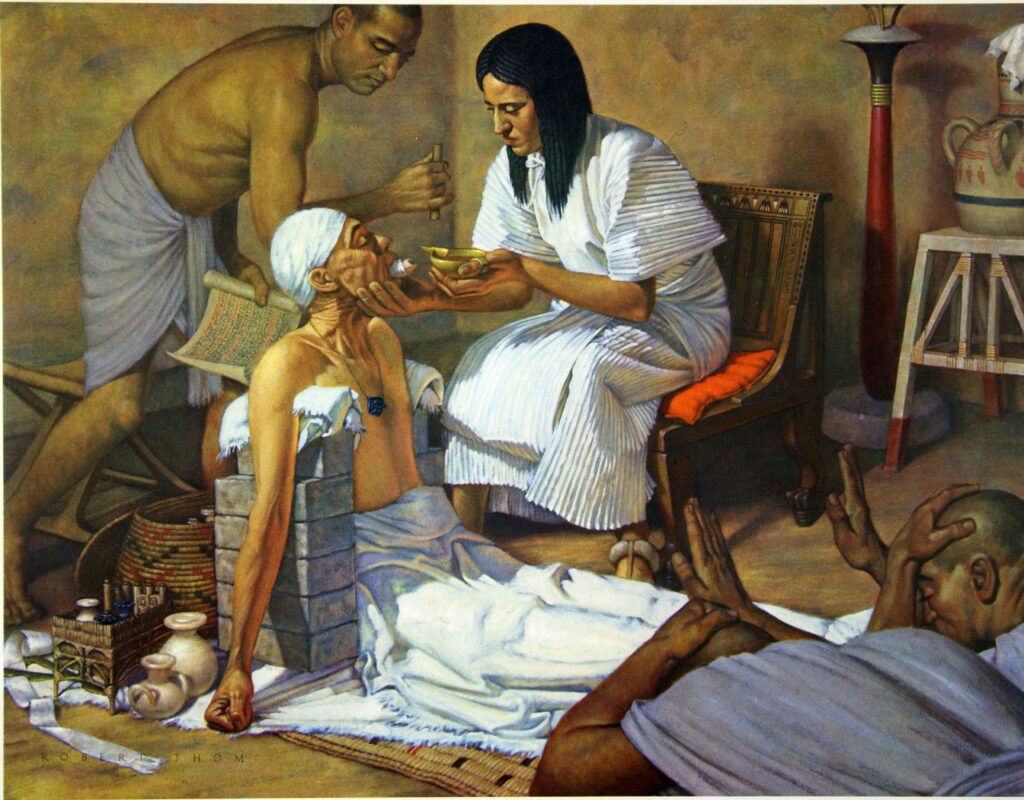
Egyptian medicine stands out for its advanced understanding of the human body, largely due to the practice of mummification. Beginning around 3000 BCE, Egyptian embalmers developed anatomical knowledge, even if it remained rudimentary. The most famous medical papyri, including the Ebers Papyrus (circa 1550 BCE) and the Edwin Smith Papyrus (circa 1600 BCE), provide a comprehensive view of Egyptian practice.
The Edwin Smith Papyrus is a surgical treatise that describes 48 cases of injuries, from head to spine, with rational observations. It includes the first known descriptions of the brain, the meninges, and cerebrospinal fluid. The text presents a logical, empirical approach: examination, diagnosis, prognosis, and treatment.
Egyptian physicians were specialists. Some focused on the eyes, others on the stomach, and still others on the teeth. They used honey, which has natural antibacterial properties, for wound dressings. They employed castor oil as a laxative and willow leaves, which contain salicin, for pain relief. Many Egyptian remedies combined practical ingredients with incantations, reflecting a worldview where physical and spiritual health were inseparable.
The ayurvedic tradition of india
In India, medicine developed within the framework of Ayurveda, meaning “the science of life.” The foundational texts, the Charaka Samhita and the Sushruta Samhita, were compiled between 600 BCE and 200 CE, though their origins are likely much older. Ayurveda presents a holistic system that balances three bodily humors, or doshas: vata, pitta, and kapha. Health was seen as equilibrium, while disease resulted from imbalance.
The Sushruta Samhita is a landmark in surgical history. Sushruta, often called the father of surgery, described over 300 surgical procedures and 120 surgical instruments. He detailed rhinoplasty, or nose reconstruction, using a flap of skin from the cheek. This technique, developed around 600 BCE, remained unknown in Europe until the 18th century. Sushruta also classified burns, fractures, and wounds, emphasizing the importance of hygiene and surgical training.
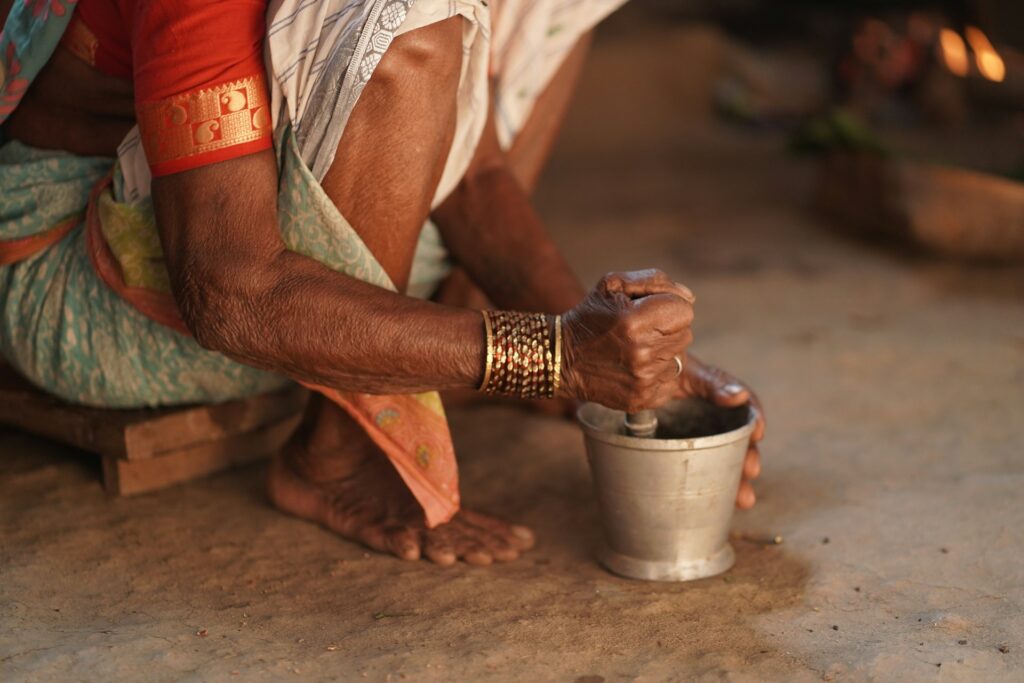
Ayurvedic practitioners used extensive pharmacopoeias of herbs, minerals, and metals. They understood the concept of digestion and metabolism and emphasized diet and lifestyle as preventive measures.
China: balance and careful observation
Traditional Chinese medicine (TCM) emerged from philosophical traditions like Taoism and Confucianism, with roots in the Shang dynasty (1600–1046 BCE). The foundational text, the Huangdi Neijing, or “The Yellow Emperor’s Inner Canon,” was compiled around 300 BCE to 100 CE. It established the concepts of qi (vital energy), yin and yang, and the five elements as the basis for understanding health.
A central technique in Chinese medicine was acupuncture. The earliest written record of acupuncture appears in the Huangdi Neijing, which describes meridians, or energy channels, through which qi flows. Inserting fine needles at specific points along these meridians was believed to restore balance. The practice likely originated in the Neolithic period, with stone needles called “bian” found in archaeological sites dating to 4000 BCE.
Chinese physicians also developed herbal medicine, with the Shennong Bencao Jing, a pharmacopoeia from the 1st century CE, listing 365 medicines. They used plants like ephedra (ma huang), which contains ephedrine, a bronchodilator, and chaulmoogra oil for skin diseases.
Biological principles behind ancient practices
Many ancient medical practices, despite their mystical frameworks, were grounded in biological principles that science has since validated. The use of willow bark for pain relief is a classic example. Willow bark contains salicin, which the body metabolizes into salicylic acid. In the 19th century, scientists synthesized acetylsalicylic acid, known as aspirin, which remains one of the most widely used drugs today.
Similarly, the Egyptian use to moldy bread or soil on wounds inadvertently introduced penicillin-like substances. Modern clinical trials have confirmed that certain fungi produce antibacterial compounds. The practice of beewax and honey dressings, still used in some wound care today, is supported by studies showing honey’s antimicrobial and anti-inflammatory properties.
The principles of Ayurvedic surgery, including the use of sterile techniques with heat and the practice of rhinoplasty, have been validated by modern surgical outcomes. Acupuncture, though its mechanism was historically explained by qi, has been shown in clinical trials to stimulate nerve endings, release endorphins, and modulate pain pathways.
The technologies that made it possible
Several key technologies facilitated the development of ancient medicine. Writing was perhaps the most crucial, as it allowed for the accumulation and transmission of knowledge. Without cuneiform, hieroglyphs, or written manuscripts, the insights of Sumerian asu, Egyptian surgeons, and Ayurvedic physicians would have been lost.
Metallurgy also played a vital role. The ability to smelt copper, bronze, and later iron allowed for the creation of surgical instruments. Sushruta’s instruments included scalpels, forceps, and needles made of metal. Egyptian surgeons used bronze and copper tools, which have natural antimicrobial properties.
Agriculture and trade networks enabled the spread of medicinal plants across regions. Myrrh from Arabia, frankincense from Somalia, and silphium from North Africa traveled along trade routes to Egypt, Greece, and Rome.
Architecture and infrastructure, including the construction of temples and healing sanctuaries, provided spaces for treatment. In Egypt, temples dedicated to Imhotep, a deified healer, served as centers for incubation, where patients slept seeking divine dreams for cures.
The social conditions that fostered healing
The development of medicine required specific social conditions. First, urbanization created concentrated populations where diseases could spread and where specialized labor, including the medical profession, could emerge. In cities like Uruk, Memphis, and Mohenjo-Daro, the density of population necessitated organized responses to illness and injury.
Political centralization allowed for the patronage of knowledge. Kings and pharaohs sponsored scribes to document medical knowledge, supported temple healing centers, and funded the training of physicians. The royal courts of the Gupta Empire in India and the Han dynasty in China provided resources for medical scholars to compile and refine their texts.
Finally, the existence of a literate class, often priests or scribes, ensured that medical knowledge was preserved. In Egypt, the scribes who copied medical papyri maintained continuity over millennia. In Mesopotamia, the libraries of Ashurbanipal in Nineveh, dating to the 7th century BCE, collected medical texts from across the empire.
From skull drilling to science: the first steps of medicine
The journey from prehistoric trepanation to the sophisticated medical systems of antiquity reveals a continuous thread of human inquiry. The peoples of Mesopotamia, Egypt, India, and China each developed unique approaches to healing. Their technologies, from writing to metallurgy, and their social structures, from cities to states, provided the foundation for these advances.
Many of their practices, once dismissed as superstition, have found validation through modern clinical trials. Aspirin, surgical drainage, and even elements of acupuncture all have roots in ancient healing traditions. Today, as we face new medical challenges, we continue to draw on this ancient legacy. The first healers established the foundational principle of medicine: the combination of observation and the relentless pursuit of solutions to human suffering.