The invention of musical instruments in ancient civilizations
Humanity has always been a noisy species. Long before written language, before cities, before agriculture, our ancestors were making sound. They clapped hands, stamped feet, and likely discovered early that blowing across a hollow reed or striking a log produced music. The invention of musical instruments represents one of our most profound creative leaps.
The first instruments
Archaeological evidence pushes the origins of instruments deep into our prehistory. The oldest known musical instruments in the world are flutes carved from bird bone and mammoth ivory, discovered in the Swabian Jura region of present-day Germany. These artifacts date to approximately 42,000 to 43,000 years ago. The Hohle Fels flute, carved from a griffon vulture’s wing bone, features precisely placed finger holes that required careful calculation.
These Paleolithic instruments likely accompanied rituals, communicated across distances, and strengthened social bonds within small hunter-gatherer groups. The effort required to carve a functional flute from bone indicates that music held real value for these communities.

Mesopotamia and Egypt: the first musical civilizations
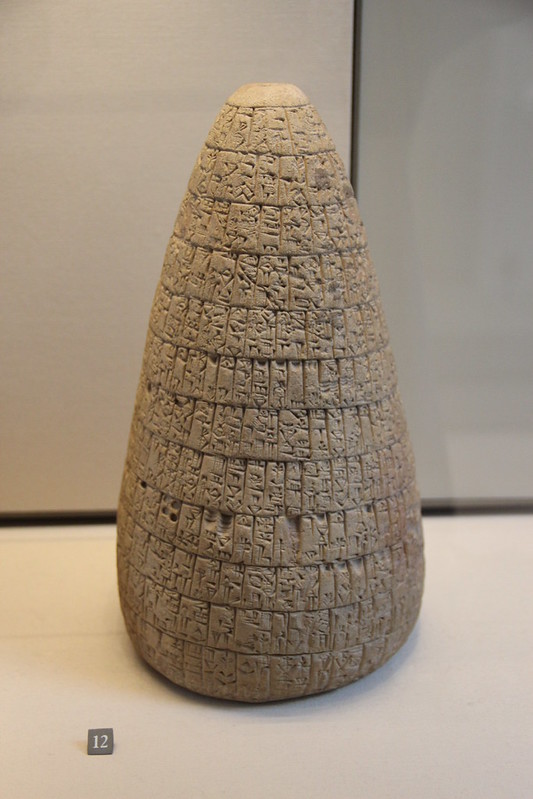
As humans settled into agricultural societies, instruments became more sophisticated and diverse. The Sumerians of Mesopotamia, writing in cuneiform by 3400 BCE, left detailed records of their musical culture. Lyres and harps appear in Sumerian art from the third millennium BCE. The famous Bull-Headed Lyre from Ur, dating to approximately 2450 BCE, demonstrates advanced woodworking and inlay techniques.
In Egypt, instruments proliferated during the Old Kingdom (c. 2686–2181 BCE). Tomb paintings depict musicians playing harps, lutes, clarinets, and percussion. By the New Kingdom (c. 1550–1070 BCE), Egypt had developed sophisticated ensembles combining voices, harps, lutes, and percussion for both temple rituals and banquets.
The Egyptians also exported their instruments. Trade networks along the Nile and across the eastern Mediterranean carried Egyptian harps and lutes to neighboring cultures. This exchange of musical technology would continue for millennia.
China: regulating sound and society
China developed one of the world’s most systematic approaches to instrument building and music theory. By the Shang Dynasty (c. 1600–1046 BCE), Chinese craftsmen were producing bronze bells with remarkable precision. The set of sixty-four bronze bells from the tomb of Marquis Yi of Zeng, dating to 433 BCE, demonstrates extraordinary acoustic knowledge. Each bell produces two distinct pitches depending on where it is struck.
Chinese philosophy treated music as a cosmic and political force. The Yue Ling (Monthly Ordinances) from the Zhou Dynasty specified which modes and instruments were appropriate for each season. The belief that music could harmonize society meant that instrument building was a state concern.
Greece: music as mathematics
The Greeks approached music with their characteristic love of theory and measurement. By the sixth century BCE, Pythagoras had investigated the mathematical ratios underlying musical intervals. He discovered that dividing a string into simple ratios produced consonant harmonies—2:1 for the octave, 3:2 for the fifth, 4:3 for the fourth.
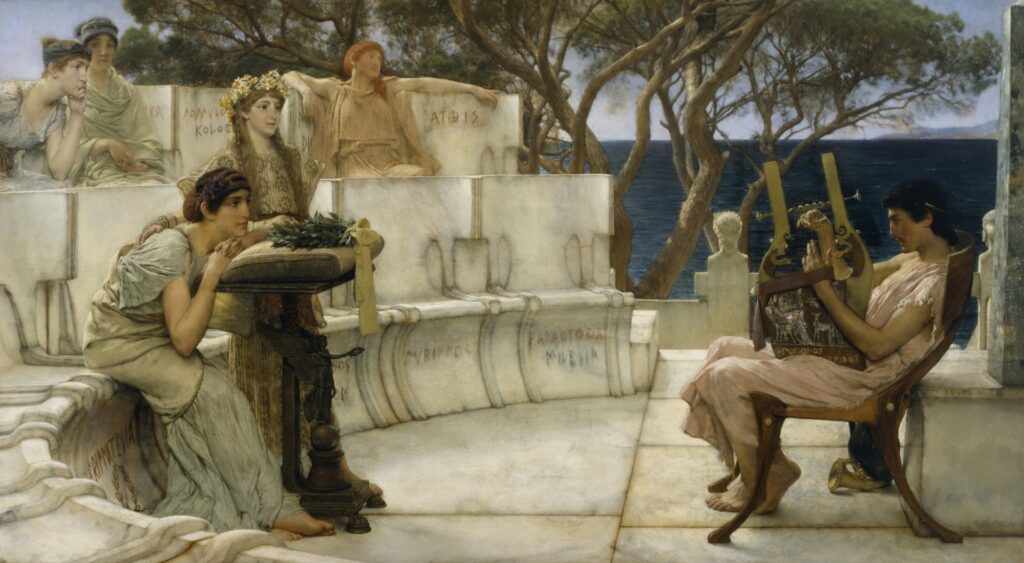
Greek instruments included the lyra, the kithara, and the aulos, a double-reed instrument associated with the god Dionysus. The kithara became a virtuoso instrument by the fifth century BCE, requiring years of training. Professional musicians competed at the Panhellenic games, and instrument builders developed increasingly sophisticated construction techniques.
Greek musical theory, preserved in works like Aristoxenus’s Harmonic Elements, would later influence Islamic and European music theory. The Greek conviction that music expressed character (ethos) meant that instrument choice carried moral weight. Certain modes and instruments were considered suitable for education and virtue; others were condemned as corrupting.
Technologies that made instruments possible
Metallurgy transformed instrument building. Bronze allowed for bells, cymbals, and trumpets with unprecedented projection and tonal clarity. The Celtic carnyx, a war trumpet depicting animals, used bronze sheets riveted together to create a fearsome instrument capable of sounding across battlefields. Iron working, spreading after 1200 BCE, enabled stronger frames for harps and later for piano mechanisms.
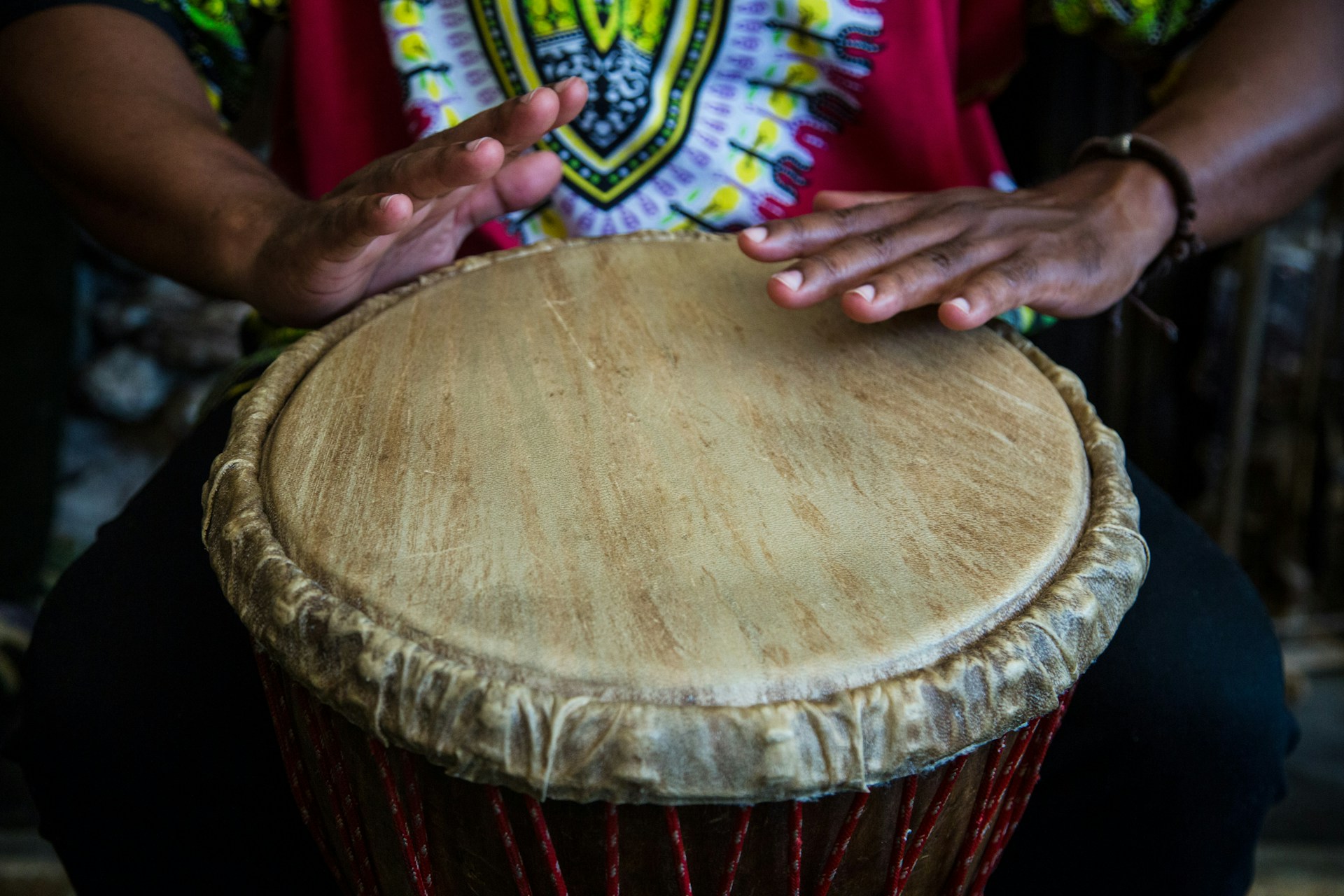
Leather working and animal domestication were equally essential. Domesticating cattle, sheep, and goats provided reliable sources of hides for drum heads. Tanning techniques, developed by at least 5000 BCE, preserved these materials. Without leather, drums would have remained perishable curiosities. Domestication also provided sinew for strings and bone for flutes and pipes.
Woodworking advanced from simple carving to complex joinery. The Egyptian bow harp, dating to 2500 BCE, required bending wood under heat, a technique also used in shipbuilding. Later, the development of saws, planes, and lathes allowed for precise construction of sound boxes and necks.
Global evidence of ancient musical practice
Archaeologists have recovered instruments from every inhabited continent, demonstrating that music-making is a universal human activity. The diversity of these finds reveals both shared principles and local innovation.
In the Americas, the Andean region produced sophisticated wind instruments. Ceramic pututos (conch shell trumpets) appear in Andean sites by 2000 BCE. The Moche culture (100–800 CE) created elaborate ceramic vessels that double as whistles or ocarinas, often molded into human or animal shapes.
In sub-Saharan Africa, the oldest known instruments include rock gongs, natural rock formations that produce musical tones when struck. Archaeological sites in Nigeria and Tanzania have identified rock gong sites used for thousands of years. Ironworking, arriving in West Africa by 500 BCE, enabled the creation of iron bells (agogo) that remain central to Yoruba and Edo ceremonial music.
The Pacific islands developed instruments from locally available materials. In Hawaii, the pahu drum was carved from a single coconut trunk and fitted with sharkskin heads. These drums accompanied hula and religious ceremonies.

Music in ritual, religion and education
In ancient Egypt, temple rituals employed sistra (rattles) and menit necklaces that produced sound when shaken. These instruments were believed to pacify dangerous gods and attract benevolent ones.
In Vedic India, by approximately 1200 BCE, priests chanted hymns with precise melodic and rhythmic patterns. The Sama Veda, a collection of chants, functioned as a manual for ritual singers. Correct performance was believed to maintain cosmic order; mistakes could have dangerous consequences.
Greek city-states integrated music into education. By the fifth century BCE, Athenian boys learned lyre playing alongside reading and writing. Plato’s Republic argues that musical education shapes character before reason can develop. The right music produces balanced citizens; the wrong music produces disorder.
Medieval European churches preserved and transformed musical practice. Gregorian chant, codified from the eighth century CE, provided a unified liturgical sound across Christendom. Monasteries became centers of music theory and notation, developing the staff and neumes that allowed melody to be written and transmitted.
Mathematics and music
The relationship between music and mathematics has fascinated thinkers for millennia. Beyond Pythagoras’s ratios, music provided a model for understanding proportion and harmony in the natural world.
Chinese mathematicians of the Han Dynasty (206 BCE–220 CE) developed the huangzhong system, generating a twelve-tone scale by a cycle of fifths. This system linked music to cosmology and calendar calculation.
The development of musical notation in the eleventh century by Guido of Arezzo allowed melody to be visualized and taught systematically. His staff lines and solmization syllables (ut, re, mi, fa, sol, la) remain the basis of Western sight-singing. Notation turned music from a purely oral tradition into a written text that could be studied, analyzed, and transmitted across centuries.
Sound, craft, and the growth of civilization
Bone flutes carved more than forty thousand years ago and the precisely tuned bronze bells of ancient China belong to the same long process: humans shaping material to control sound. The expansion of musical instruments required specific social and material conditions. Trade networks carried instruments and ideas across vast distances. The Silk Road, active from approximately 200 BCE, transported Central Asian lutes to China and Chinese instruments westward. The Persian rabab traveled to India, where it became the rebec and eventually influenced the development of the violin.
Urbanization concentrated skilled artisans and created demand for professional musicians. Imperial courts in Constantinople, Baghdad, Chang’an, and Delhi employed ensembles requiring hundreds of instruments. These courts provided patronage for instrument makers to experiment and refine their craft.
Across continents, instruments structured ritual in temples, disciplined students in Greek schools, aligned music with cosmology in China, and stabilized liturgy in medieval Europe. Sound was organized, measured, and preserved with care. The long development of musical instruments follows the growth of technical knowledge, trade, and political power, leaving behind a record of how societies chose to shape noise into ordered, meaningful sound.