The invention of steel: the metallurgical revolution of the classical world
The transition from the relative softness of bronze to the unyielding edge of steel did not occur in a vacuum. The shift from the Bronze Age to the Iron Age was a grueling, centuries-long struggle to master the chemistry of heat. Steel demanded a level of control over fire that early civilizations simply could not achieve at scale.
Although iron was abundant, it was initially too soft for demanding tools and weapons. The challenge of hardening it into steel became a defining technological pursuit. One that shaped the industrial trajectory of the classical world’s most formidable civilizations.
The accidental invention of steel
Steel was discovered through the persistent trial and error of early blacksmiths. In the earliest days of the Iron Age, smiths used “bloomeries”, small, chimney-like furnaces fueled by charcoal. These furnaces never reached the melting point of iron. Instead, they produced a spongy mass of metal and slag known as a “bloom.”
Blacksmiths noticed that iron left in the charcoal fire for too long changed its properties. It became harder, less prone to bending, and capable of holding a lethal edge. They were unknowingly witnessing “carburization.” Because charcoal is nearly pure carbon, the hot iron absorbed the carbon atoms from the fuel. When these smiths hammered the red-hot metal to squeeze out impurities, they were effectively folding carbon into the iron lattice, creating a crude form of steel.
The barrier to mass production of steel
If steel was so superior to bronze and soft iron, why did it take millennia to dominate the globe? The answer lies in the limitations of ancient thermodynamics.
In antiquity, producing steel was an exhausting, artisan-level craft rather than an industrial process. First, the temperature control required to produce consistent steel was nearly impossible to maintain in a standard bloomery. Most iron produced was “wrought iron,” which has almost no carbon. To turn this into steel, a smith had to heat the iron in contact with carbon-rich materials for days. A process that only hardened the surface (case-hardening).
Furthermore, the lack of powerful bellows meant that furnaces could not stay hot enough to liquefy the iron. Without liquefication, you couldn’t separate impurities easily or ensure a uniform distribution of carbon. Every piece of steel was a unique, unpredictable experiment. Consequently, steel was a luxury reserved for the elite, used for the swords of kings and expensive spears.
Regional masters of steel
Wootz and the mystery of damascus steel
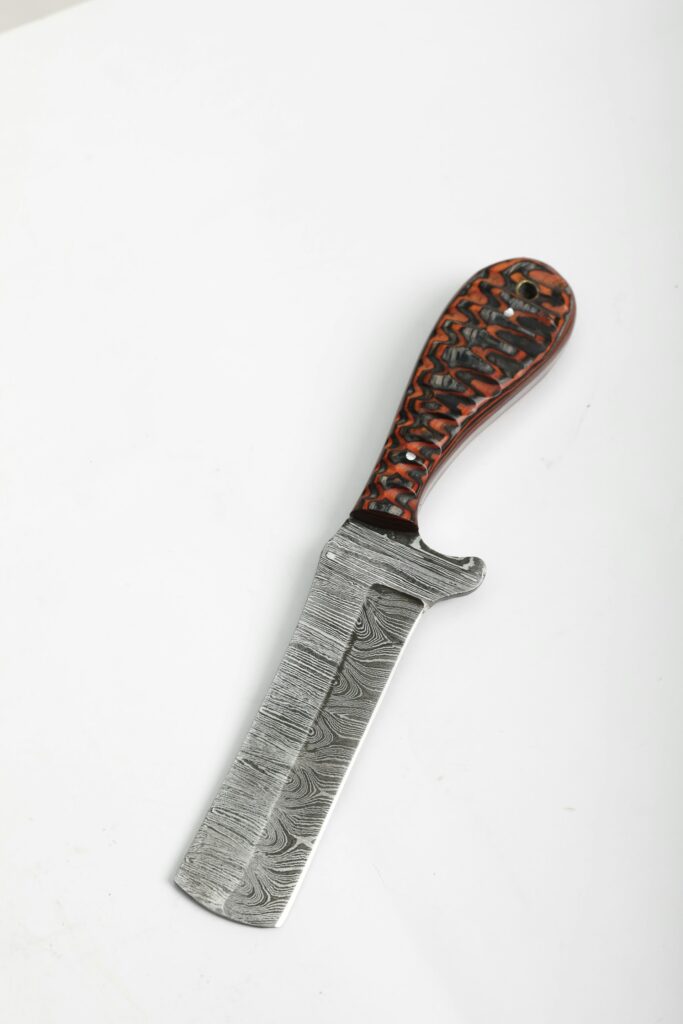
Far to the west, in the Indian subcontinent, a breakthrough occurred: the crucible process. Around 300 BCE, workers in Southern India and Sri Lanka developed “Wootz steel.”
Indian smiths placed wrought iron and charred organic matter (like wood or leaves) into a sealed clay crucible. These crucibles were heated for weeks. In this controlled environment, the iron slowly soaked up the carbon. When the crucible was cooled, it contained a high-carbon steel ingot with a crystalline structure.
This material was traded along the Silk Road and through the Persian Gulf, eventually reaching the master smiths of Damascus. These Syrian artisans learned to forge Wootz ingots into blades that became legendary. Damascus steel was famous not only for its “watered” aesthetic pattern but for its incredible toughness. Modern electron microscopy has even revealed that these ancient blades contained carbon nanotubes, a byproduct of the specific ores and plant matter used in the crucible process.
The chinese blast furnace revolution
While the West struggled with small-scale bloomeries, China achieved a technological leap that would not be matched in Europe for over a thousand years. By the 5th century BCE, Chinese engineers developed the blast furnace and the double-acting piston bellows.
These innovations allowed them to reach temperatures high enough to actually melt iron, creating “cast iron.” While cast iron is brittle because it has too much carbon, the Chinese invented the finery process. They would stir the molten iron in the open air to burn off excess carbon until it reached the perfect “steel” sweet spot (between 0.2% and 2.1% carbon).
By the Han Dynasty, China was mass-producing steel for agriculture. While Roman soldiers were still predominantly using iron, Chinese peasants were using steel-tipped plows to revolutionize their crop yields and infrastructure. State-run ironworks supported this industrial-scale production, employing thousands of workers and launching the first true Steel Age in human history.
Ferrum noricum: the roman edge
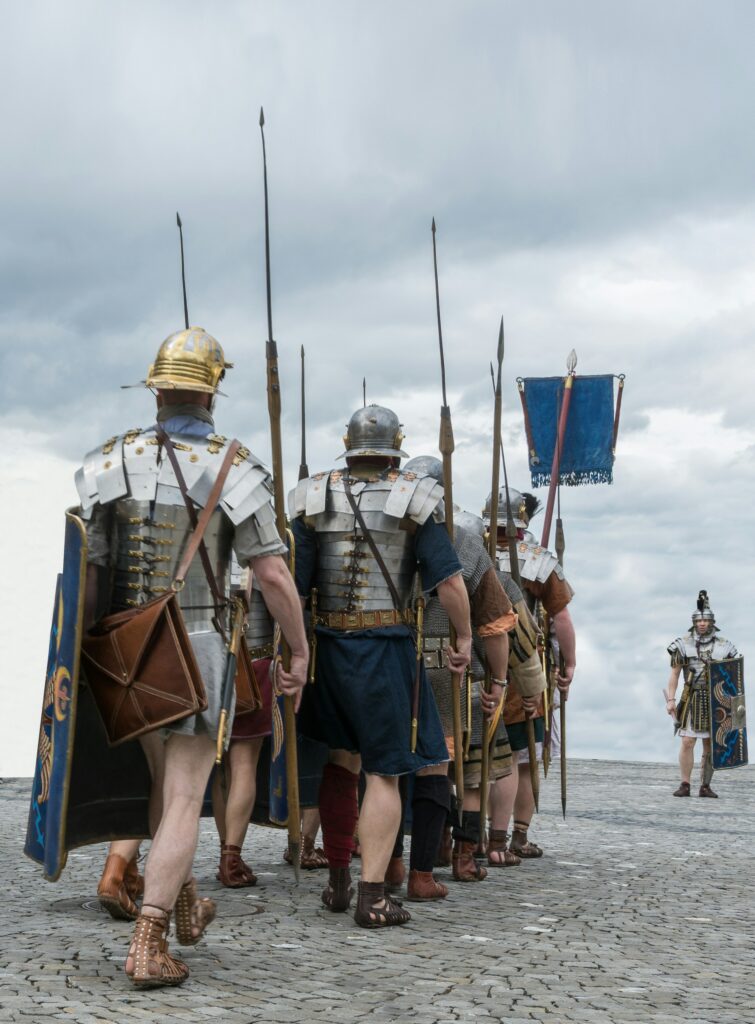
The Romans built their Republic and Empire on the backs of their legions, forging their power with “Noric Steel” (Ferrum Noricum). The Romans were masters of logistics and acquisition, and when they encountered the Celtic tribes of Noricum (modern-day Austria and Slovenia), they found a people who had mastered a naturally superior ore.
Noric iron ore was naturally rich in manganese and low in phosphorus. Manganese acts as a natural alloying agent that toughens steel during the forging process. The Romans didn’t necessarily have a secret chemical formula; they had the best geography.
The Roman military-industrial complex took this high-quality ore and standardized the production of the gladius (short sword) and pilum (javelin). The Roman innovation was the systematic use of quenching, rapidly cooling the hot steel in water or oil to “freeze” its crystalline structure in a hard state, and tempering. Which involved reheating the steel to reduce brittleness. This made the Roman legionary’s equipment more reliable than that of almost any opponent they faced.
The engines of innovation: trade and social status
The invention and refinement of steel were driven by a unique convergence of social and economic factors.
- The Professionalization of the Smith: In many ancient societies, the blacksmith was a figure of near-mystical status. Because the chemistry of steel was not understood, the process was often shrouded in ritual. This social insulation allowed smiths to pass down secret techniques through guilds, ensuring that metallurgical knowledge was preserved even when empires fell.
- Military Necessity: The arms race between armor and weaponry was the primary driver of steel technology. As shields became sturdier and bronze armor more common, the demand for a metal that wouldn’t blunt or snap in combat became a matter of national survival.
- The Silk Road and Maritime Trade: Steel was one of the most valuable commodities of ancient trade. Indian Wootz ingots traveled thousands of miles to reach Middle Eastern forges. This trade facilitated a cross-pollination of ideas. Roman smiths eventually tried to replicate Eastern crucible methods, and Chinese cast-iron technology slowly trickled westward.
- Fuel Scarcity and Labor: The shift toward more efficient steel production was often born of necessity. As forests were decimated to provide charcoal for bloomeries. Civilizations like the Chinese were forced to innovate with coal and more efficient furnace designs, inadvertently discovering that higher heat led to better metal.
The legacy of ancient and classical steel
By the height of the Classical period, steel had changed the world’s geography. It allowed for the clearing of vast forests with durable axes, the tilling of hard soils with steel-tipped plows, and the consolidation of empires through superior weaponry. Its rise was the result of countless experiments, exchanges, and improvements that laid the foundation for the modern world.