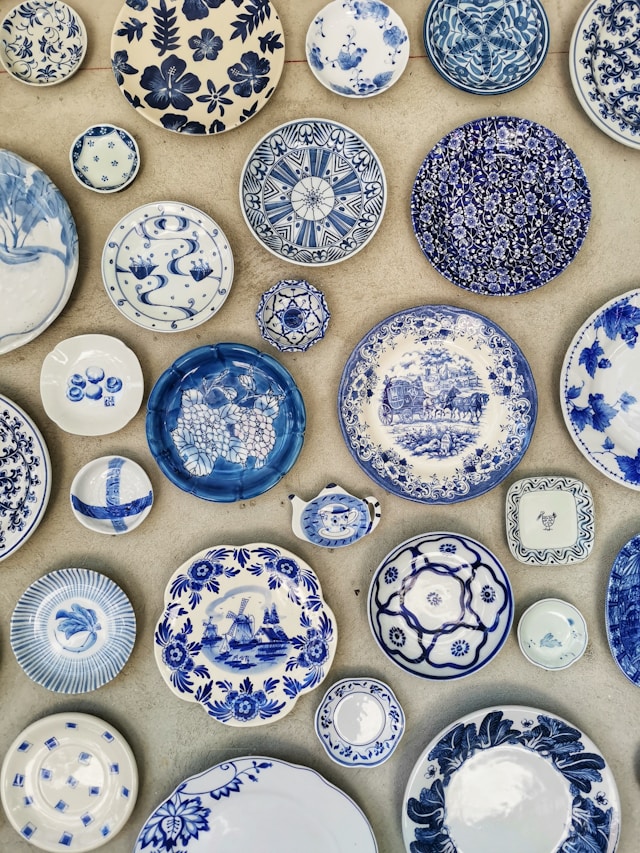
Porcelain and the first global luxury trade
Porcelain began as a local Chinese experiment in clay and fire and ended up reshaping global trade, taste, and technology. For centuries, it has held the world’s imagination captive. In the courts of Europe and the palaces of the Islamic world, it was known as “White Gold.” Porcelain was the first global luxury commodity.
It was a material that seemed to defy the natural laws of geology, translucent as glass, yet strong as stone. Being delicate enough to mimic a lotus petal and capable of ringing with the clear resonance of a silver bell. It sparked industrial espionage, bankrupted kings, and reshaped the map of maritime trade. But before it was a symbol of status, it was a secret written in the earth of Jingdezhen.
The creation of porcelain and the chemistry of earth
While the rest of the world was working with earthenware, clay fired at low temperatures that remained porous and brittle. Chinese potters in the Han and Tang dynasties began experimenting with specific minerals found in the Jiangxi province.
The discovery hinged on two specific materials: kaolin (a white china clay) and petuntse (a feldspathic rock). Kaolin provided the structure and ability to withstand immense heat without melting into a puddle. Petuntse, a mineral that would melt into a glass-like substance that fused with the clay.
This required a technological leap that no other civilization had yet mastered: the high-temperature kiln. To create porcelain, a kiln must reach temperatures exceeding 1,300°C (2,372°F). At these temperatures, a process called vitrification occurs. The silica in the clay turns to glass, filling every pore and creating a non-porous material. That is incredibly hard, and translucent.
This was a technical slope climbed in tiny increments over a millenia. Refining clays, adjusting kiln atmospheres, experimenting with glazes, and documenting successes over generations. The discovery lies in a culture willing to invest centuries in learning what clay can do under extreme heat.
Why porcelain beat ordinary clay
To understand why porcelain became so coveted, it helps to put it beside the other major ceramic families: earthenware and stoneware.
- Porcelain is fired hotter than earthenware, usually well above 1,250 °C. Which vitrifies the body and makes it very hard and non‑porous even before glazing. Earthenware, fired at lower temperatures, remains more porous and needs a glaze simply to hold liquids.
- The high kaolin content gives porcelain a fine, smooth, white body that can be made thin without losing strength. Allowing translucency when held to the light. Earthenware is coarser and opaque, even when beautifully decorated.
- Vitrification and the glassy microstructure mean porcelain resists thermal shock better and is less likely to absorb flavors, stains, or odors, making it more durable in daily use.
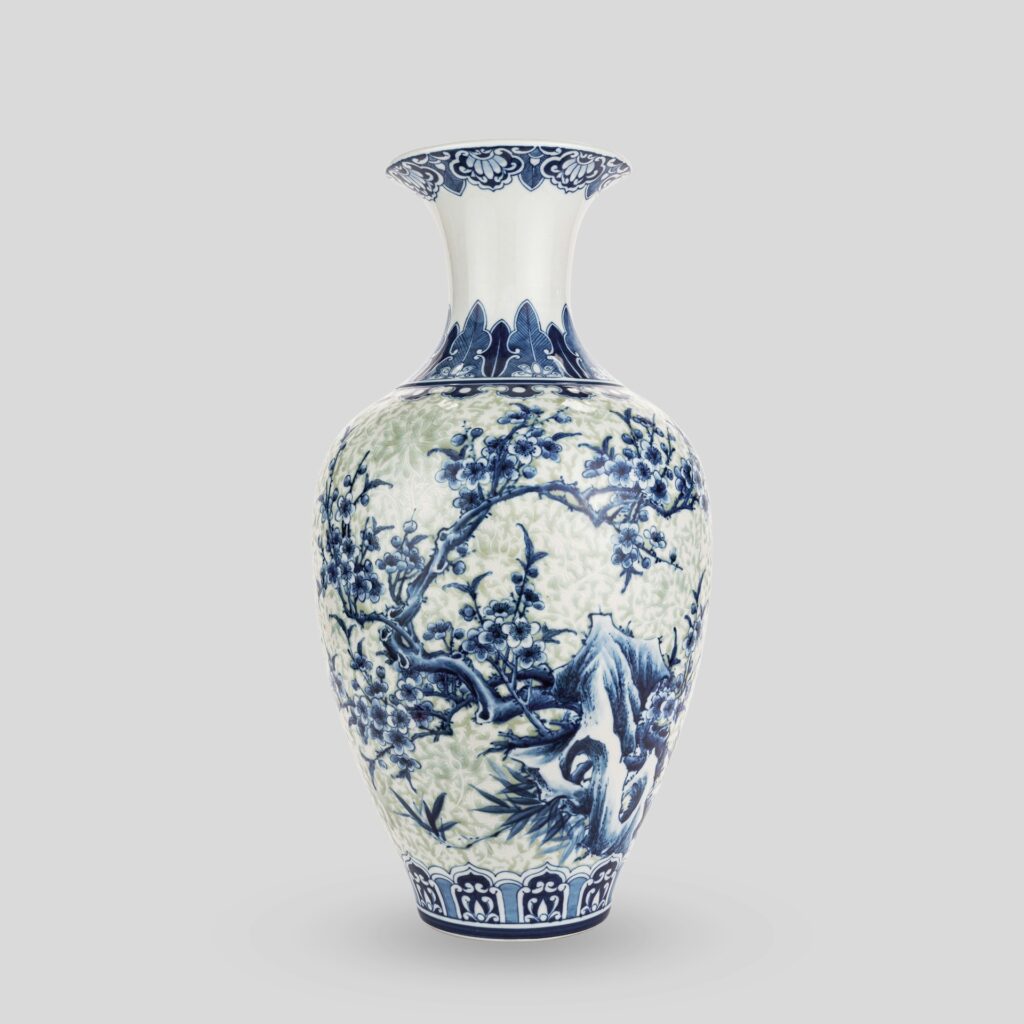
Functionally, this made porcelain superior for tableware, storage, and ritual objects. It held liquids without seeping, it survived hot foods and washing, and it could be cleaned thoroughly. Aesthetically, its whiteness made it the perfect canvas for underglaze cobalt blues and later polychrome enamels, a kind of three‑dimensional painting that could circulate through trade routes. Because it was so difficult to produce and required such specific raw materials, it became the ultimate signifier of wealth.
White gold and the politics of secrecy
For nearly a thousand years, China held a total monopoly on the production of true hard-paste porcelain. It was perhaps the most guarded secret in human history. In the imperial kilns at Jingdezhen thousands of workers labored under strict supervision to satisfy the whims of the Emperor and the demands of the Silk Road.
The Chinese government understood the value of their intellectual property. While they happily exported the finished product, the Imperial court guarded the clay formula and kiln designs with the ferocity of a modern military secret.
European alchemists, commissioned by desperate monarchs like Augustus the Strong of Saxony, spent decades trying to reverse-engineer the Chinese secret. They tried mixing clay with ground glass, eggshells, and even fish scales, producing soft-paste porcelain that looked similar but lacked the strength and heat resistance of the Eastern original. It wasn’t until the early 19th century that the West finally cracked the code. But for the vast majority of the second millennium, China stood alone as the world’s sole provider.
Trade, culture, and the maritime silk road
As Chinese porcelain production scaled up, it slotted neatly into existing trade circuits that linked inland kilns to coastal entrepôts, and then to the Islamic world, Southeast Asia, and Europe. By the Tang and Song periods, ports were shipping porcelain as a routine export. By the Ming and Qing, it was one of the emblematic goods of the maritime Silk Road and later of European chartered companies.
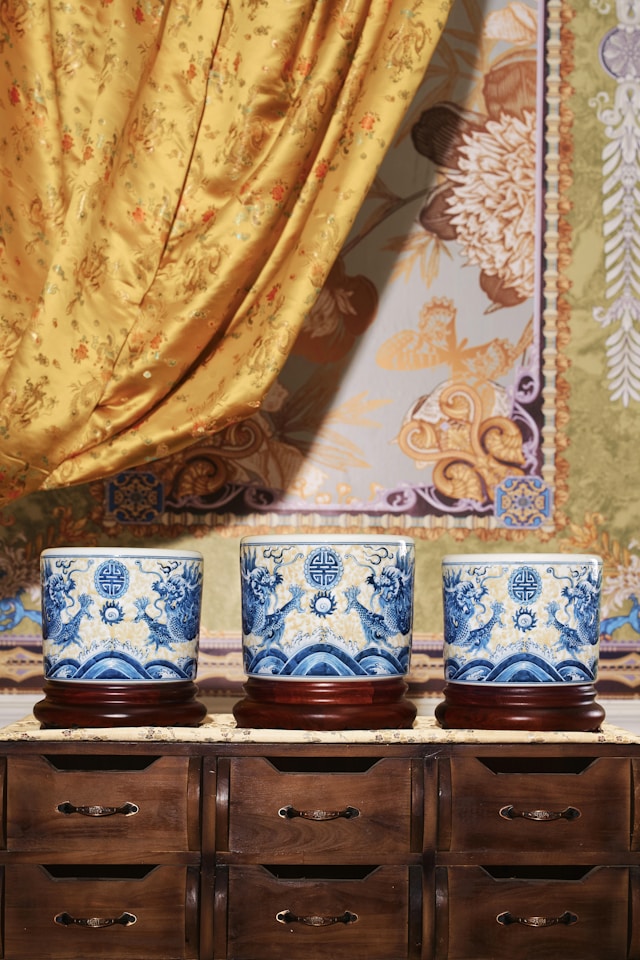
This trade created a cultural bridge. The iconic blue and white porcelain, which we now associate with the Ming Dynasty, was actually a product of globalization. Chinese artisans adapted their designs to suit the tastes of Islamic traders, and later, European aristocrats.
In Europe, the arrival of porcelain revolutionized social life. It facilitated the introduction of tea, coffee, and chocolate. These beverages required vessels that could withstand boiling water without cracking, a feat only porcelain could reliably achieve.
The english innovation: from alchemy to industry
Early English wares in the 18th century were mostly soft‑paste porcelains, mixtures of clays and frits that tried to mimic the translucency of East Asian hard‑paste but lacked its strength and resistance. The real turning point arrived with the use of calcined animal bone.
Josiah Spode, working in Staffordshire at the turn of the 19th century, refined a body composed of kaolin, feldspathic materials, and a high proportion of bone ash, creating what we now call bone china. This material vitrified at lower temperatures than Chinese hard-paste. Yet it offered a warm whiteness, fine translucency, and high mechanical strength that met English tastes and industrial demands.
Bone China was even tougher than the Chinese original, less prone to chipping, and possessed a warm, milky whiteness that became the hallmark of British luxury. This technological shift, spearheaded by figures like Josiah Wedgwood, moved porcelain from the realm of the alchemist into the realm of the factory.
Wedgwood’s use of steam engines and a division of labor transformed the pottery into an industrial powerhouse, making fine porcelain accessible to the rising middle class and cementing Staffordshire as the ceramic capital of the world.
The legacy of porcelain
The same properties that made porcelain valuable to an 18th-century duke, its resistance to heat and its electrical insulation. Make it vital for spark plugs, dental implants, and aerospace heat shields.
Porcelain exists because different communities, at different moments, committed to a particular kind of problem: how far can you push clay, water, and fire. In ancient China, that commitment showed up in the organization of kiln complexes, in state support for large‑scale workshops, and in regional specializations that linked specific clays with particular firing styles.
In Europe, the key figures were often perched between craft and early science: alchemists who logged failed recipes, mathematicians and natural philosophers who thought about heat and materials, and royal patrons willing to bankroll years of experiments for the promise of strategic independence.
Across all of these settings, the technologies that made porcelain possible were cumulative: improved kiln designs, measured control of high temperatures, evolving glaze chemistry, and increasingly systematic ways of recording and transmitting craft knowledge.