The invention of money: how humans learned to trade value
Money began as a story people told each other about value, long before anyone stamped a king’s face on metal or printed a serial number on paper. Cattle, shells, and metals carried that story across early villages and tribes. Eventually, with the invention of money, coins and notes transformed human trade, the organization of power, and the vision of the future.
To transcend tribal limits, humanity required a universal language. A medium that stored the value of labor and time, transported that value across distances, and passed it through generations.
When trade was face to face
In the earliest settled communities, trade was built on barter and on webs of obligation rather than on money in the modern sense. A herder might swap grain for tools, a potter might trade bowls for meat, and neighbors kept mental ledgers of favors, hospitality, and gifts.
This worked as long as communities were small and relationships tight. But it carried a structural flaw: the “double coincidence of wants.” The grain farmer needed a tool, the toolmaker wanted cloth, and the weaver needed salt, so the chain of swaps grew long and fragile.
As agriculture produced surpluses, and as trade routes stretched beyond a single village, people started to lean on specific goods that most participants would accept. Not because they needed them immediately, but because they trusted others would take them later.
The era of living currency
As tribes grew into settled societies, they began to designate specific items as “commodity money.” These were objects that possessed intrinsic value, durability, and portability. In the sun-drenched plains of Africa and the humid jungles of Southeast Asia, the cowrie shell emerged as one of the most successful currencies in history. Polished, small, and impossible to counterfeit, these shells became the pulsing heart of commerce for millennia.
Elsewhere, the “living currency” of livestock reigned supreme. In the Homeric epics, the value of a suit of armor might be measured in oxen. In the salt mines of the Sahara and the Roman outskirts, salt was so precious it was used to pay soldiers. These early forms of money were cultural symbols. Bit by bit, value began to detach from pure utility and attach to whatever the community agreed to treat as payment.
The leap to coins and standard currencies
The true pivot point in the history of civilization occurred in the 7th century BCE in the kingdom of Lydia (modern-day Turkey). While other cultures were still weighing irregular lumps of silver or gold, the Lydians introduced a revolutionary technology: the standardized coin.
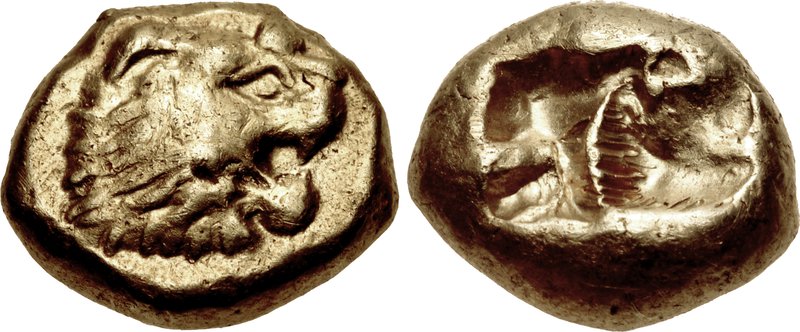
By stamping a piece of electrum, a natural alloy of gold and silver, with the emblem of a lion’s head. The mark guaranteed weight and purity, so traders no longer had to weigh each piece or test it constantly. This efficiency acted as a catalyst for the Mediterranean world.
From Lydia, coinage spread rapidly into the Greek world. Greek city-states minted silver coins like the drachma, pairing economic utility with civic identity. Images of gods, symbols, and inscriptions carried political messages as much as monetary ones. In the Persian Empire, standardized coinage under rulers like Darius I helped govern a vast territory by providing a reliable medium for taxes and soldiers’ pay.
China followed its own path, moving from cast bronze tools to round coins with square holes. Mintages included these center holes so that citizens could string the currency together for convenience. Over time, rulers asserted control over mints, gradually turning currency into an instrument of state power. Controlling coinage meant controlling taxation, armies, and long-distance trade.
Technologies such as improved metallurgy, casting, and die engraving made mass coin production possible. But the real innovation was social: the central authority’s promise stamped into metal, backed by law and sometimes by force.
The coin was the technology that funded the Parthenon, fueled the Roman legions, and facilitated the Silk Road. It transformed trade from a series of personal favors into an impersonal, objective system of mathematics.
A global mosaic: first currencies by continent
The evolution of money was not a linear path but a global explosion of ingenuity. With each continent forging its own path toward the concept of abstract value.
- Africa: Beyond the cowrie shell, the “Manilla”, bronze or copper bracelets, served as a primary currency across West Africa. These were not just money but wearable wealth, signifying status and bridging the gap between jewelry and capital.
- Asia: China was a pioneer of diversity in currency. Before coins, they used “spade money” and “knife money”, bronze casts shaped like the tools they replaced. By the time the West was perfecting the circular coin, China was already experimenting with the world’s first paper notes.
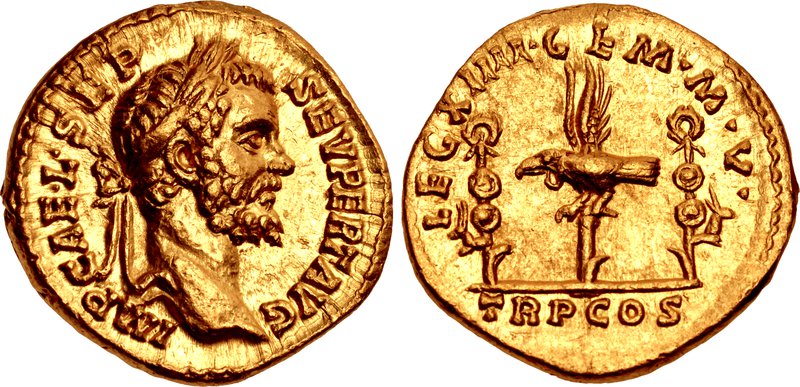
- Europe: The Greek drachma and later the Roman denarius set the standard for the Western world. These coins were the propaganda of their time. Carrying the faces of emperors to the furthest reaches of the known world, signaling who held the reins of power.
- The Americas: The Aztecs and Mayans utilized cacao beans; they valued the seeds so highly that clever fraudsters occasionally “counterfeited” them by filling empty husks with clay. In North America, Wampum, intricate beadwork made from shells, served as a medium of exchange and a record of treaties among the Iroquois and Algonquian peoples.
- Oceania: Perhaps the most remarkable “heavy” currency was the Rai stones of Yap Island. Some of these limestone discs were twelve feet in diameter. They didn’t need to move to be traded. Communities transferred ownership through oral history, creating a fascinating precursor to the decentralized ledgers of the modern era.
Paper promises and the modern standard
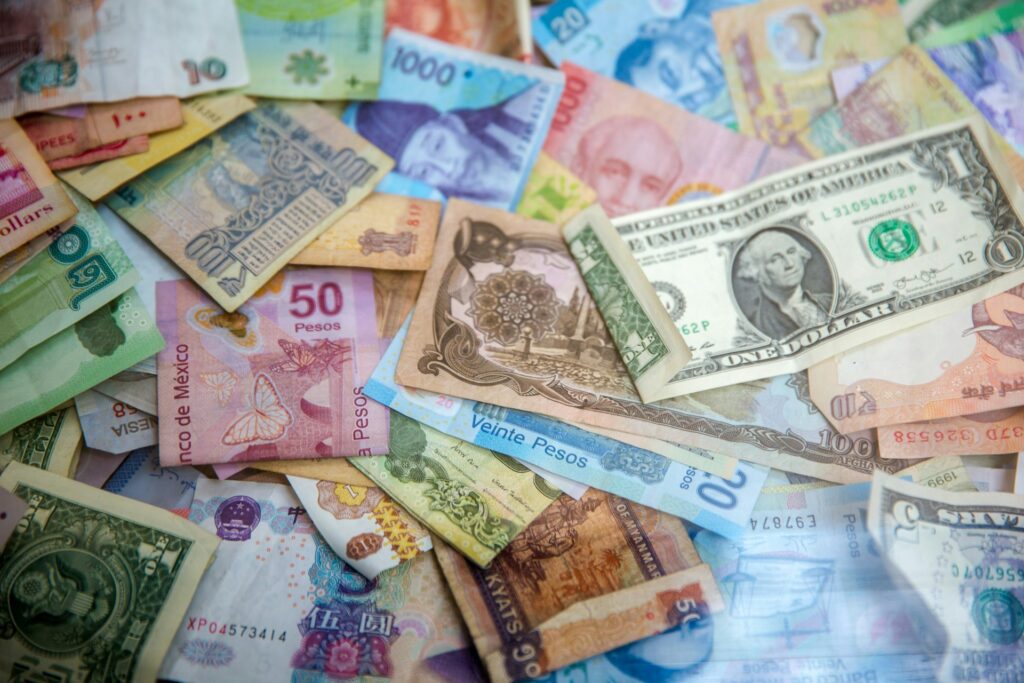
The transition to paper money was born of necessity and the limits of physical weight. In the 11th century, during the Song Dynasty in China, merchants found that carrying thousands of copper coins was both dangerous and exhausting. They began leaving their heavy metal with trusted wholesalers, receiving “promissory notes” in return. Eventually, the government realized that if people trusted the notes, the metal itself could stay in the vault.
This concept traveled to Europe via the Silk Road and the reports of explorers like Marco Polo. However, it wasn’t until the 17th century that the West fully embraced the “banknote.” The shift from representative money (paper backed by gold) to fiat money (paper backed by government decree) was the final decoupling of value from the physical world.
Printing technology, secure paper manufacturing, anti-counterfeiting inks, and later telegraph and digital networks all played their part, but the decisive ingredient was institutional trust: belief that a state would honor its debts and manage its money supply responsibly. It allowed for the creation of credit on a massive scale, fueling the expansion of global shipping lanes.
Peoples, technologies, and the reshaping of civilization
The invention of currency was made possible by a convergence of disparate technologies and minds. It required the advancements of metallurgy to smelt and stamp durable metals, the development of mathematics to calculate interest and exchange rates, and the invention of intricate printing to prevent forgery. Money changed our relationship with time. Through the concept of interest and investment, humans began to trade their present labor for future security.
But more importantly, money required the Social Architects: the bankers of the Renaissance like the Medicis, the philosophers of the Enlightenment, and the anonymous merchants of the Levant. They understood that money is essentially a collective hallucination. For a piece of paper or a round disc of nickel to have value, everyone must believe that everyone else believes it has value. This shared myth is perhaps the greatest technology humanity ever invented.