From clay pots to barrels: the evolution of food storage
Food storage is as old as civilization itself. The need to keep edible things safe from spoilage, pests, and the rhythms of hunger drove humans to invent methods that would extend the usefulness of the day’s harvest.
The earliest storage practices emerged from observation, necessity, and a willingness to exploit available materials. In many cultures, storage was not a single technique but a system of tricks and technologies that worked together to keep food edible longer and to separate abundance from want.
Food storage mastery provided the foundation for settled societies, liberating humanity from the daily grind of subsistence and opening the door to culture, complex economies, and civilization.
The necessity and difficulty of preservation
Organic matter is inherently ephemeral. The moment an animal is slaughtered or a fruit picked, the process of decomposition begins. Bacteria, fungi, insects, and oxidation immediately go to work, breaking down nutrients and rendering food toxic or inedible within days, sometimes hours.
In warm climates, bacteria and molds multiply rapidly; in cooler regions, chemical changes and insect activity can still ruin perishable goods. Early people faced a dual challenge: how to prevent spoilage and how to prevent theft or loss during storage.
The simplest solutions, drying in the sun, sheltering food from rain, or burying it, were often the first lines of defense. Yet even these rudimentary strategies had limits. Dry goods could still mold if humidity rose or pests found a way in. Perishables like meat, fish, milk, and fruits required more sophisticated handling.
The refinement of storage was not a single leap but a sequence of innovations that paralleled developments in agriculture, metallurgy, pottery, and architecture.
Clay as a transformative storage technology
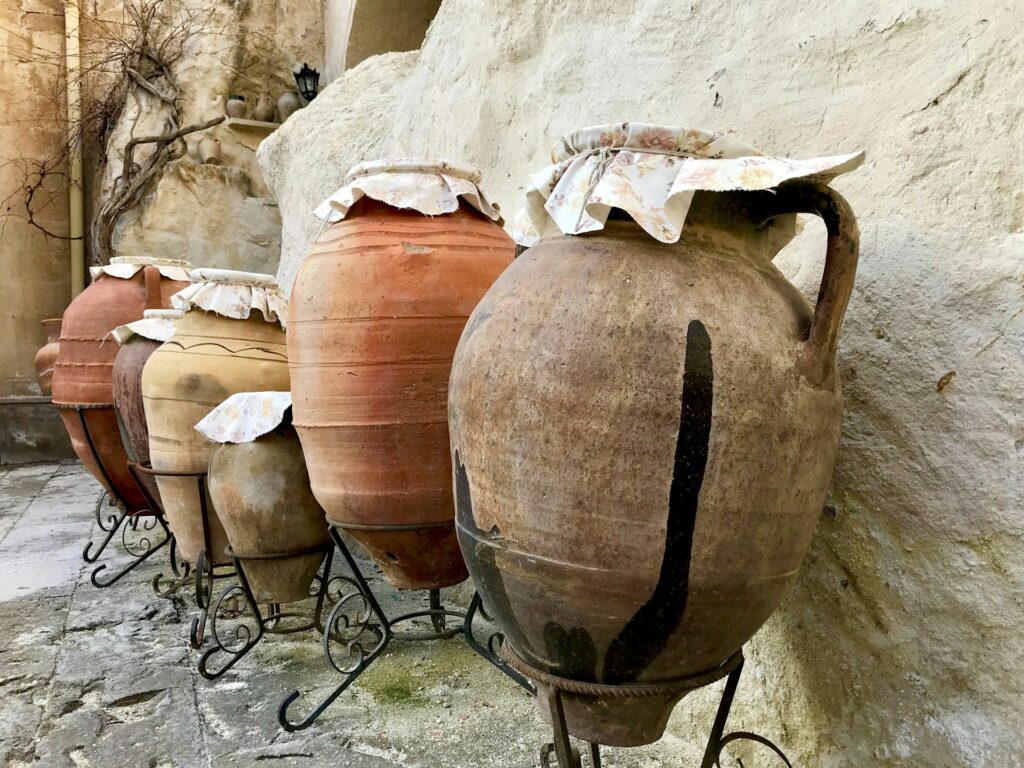
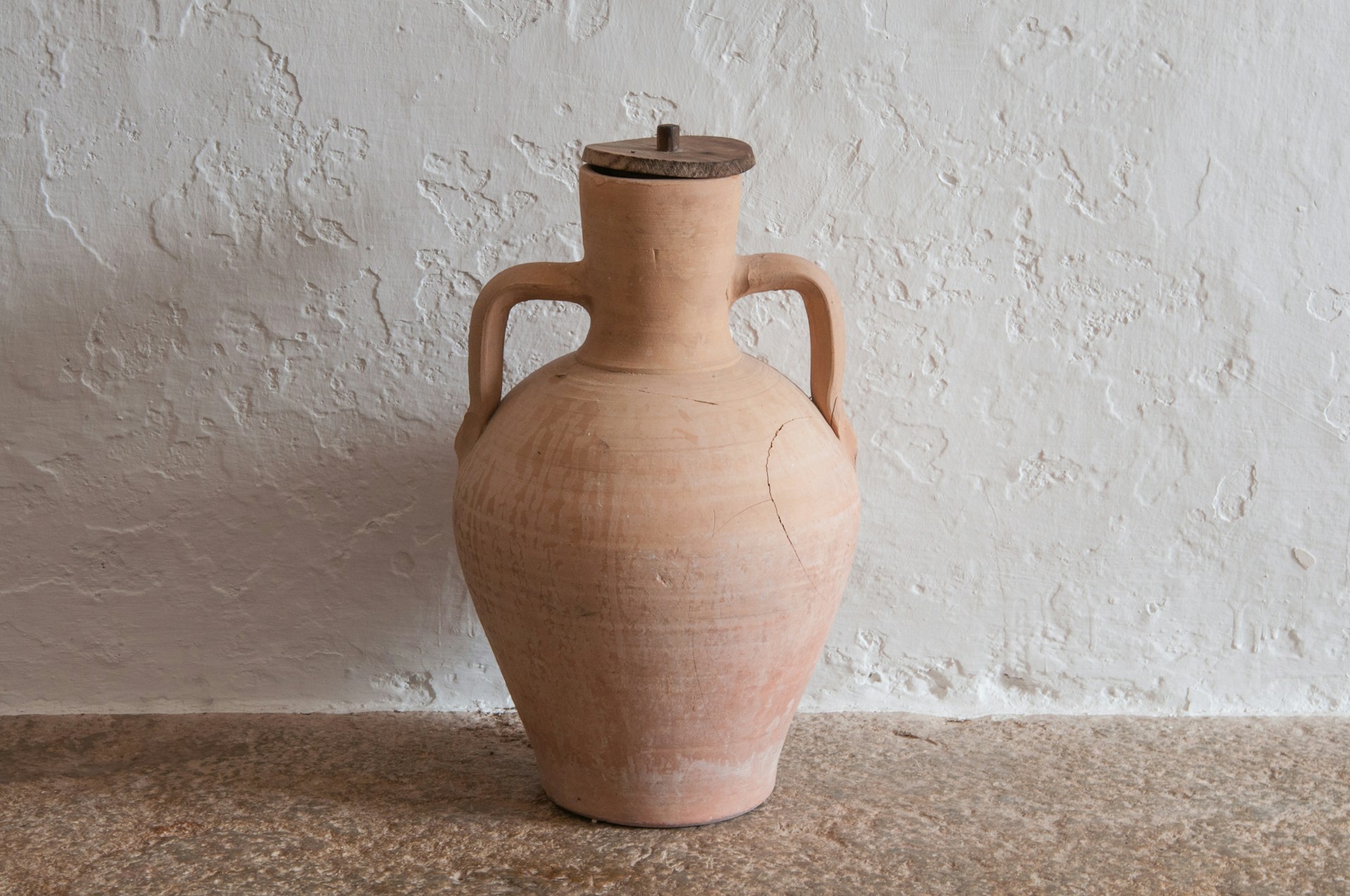
Clay stands out as one of humanity’s earliest and most versatile storage materials. In many regions, clay was molded into containers, pots, and storage jars that could hold grains, pulses, oils, and liquids. The properties of clay, its availability, moldable plasticity when wet, and eventual hardening when dried or fired, made it ideal for durable, weather-resistant containers.
Fired pottery could be kept sealed to limit air contact and moisture ingress, slowing spoilage and deterring pests. Clay storage vessels also enabled standardized quantities, facilitating trade and long-distance exchange. In arid environments, ceramic jars kept salt and preserved foods at stable temperatures, while in the Near East and the Mediterranean, clay amphorae preserved wines, olive oils, and fermented products for extended periods.
The discovery of ceramics was not a singular “eureka” moment transferred from one culture to another. It was a case of parallel invention, a technology discovered independently by diverse peoples across the Fertile Crescent, East Asia, the Americas, and Africa. Humans everywhere realized that the earth could be shaped into vessels and hardened by fire to create durable, waterproof containers.
Clay revolutionized storage; its chemically inert and accessible nature accommodated specific forms, ranging from wide-mouthed bowls for dry goods to narrow-necked amphorae for liquids like wine and olive oil. The ceramic pot was the first true technology of storage anchoring communities in stable supply chains.
Wood barrels and straw baskets: complementary approaches
While clay dominated, early humans utilized whatever materials their environment provided. In areas where suitable clay was scarce, or for foods that required different conditions, other ingenious methods arose.
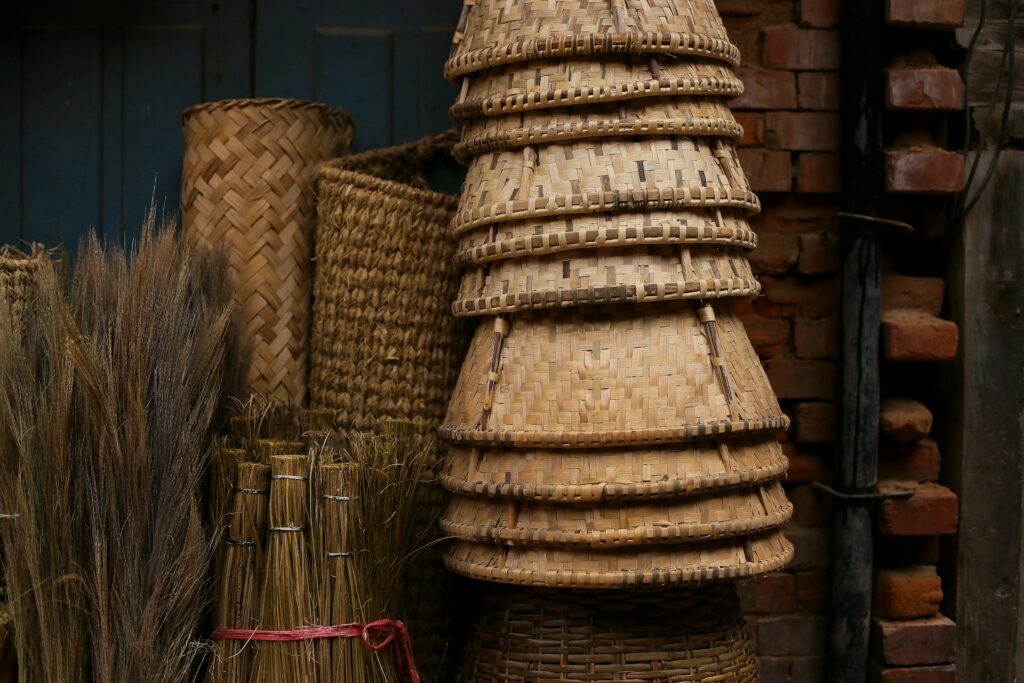
Basketry, in many regions, likely predated pottery. Woven from reeds, grasses, bark, or roots, baskets were lightweight and breathable. They were essential for gathering, but also for storing dry goods like nuts, seeds, and certain dried fruits that needed air circulation to prevent mold. The indigenous peoples of North America, for instance, became masters of intricate basket weaving, creating tightly woven containers that could even hold water when lined with pine pitch.
Later in human history, particularly in wetter, forested regions like Celtic Europe, wood became the dominant storage material. The invention of the barrel, cooperage, was significant engineering. Unlike a simple hollowed-out log, a barrel requires precise joinery and metal hoops to create a watertight seal. Barrels were durable, easily rolled for transport, and became indispensable for storing liquids and salted meats, eventually replacing clay amphorae in the Roman Empire for transporting wine across vast distances.
In many places, people used a combination of materials. Clay jars for long-term storage, baskets for daily use and transport, and wooden chests for valuables or durable goods. Creating layered storage strategies that matched the demands of climate, trade, and social organization.
How the evolution of food storage made civilization possible
The earliest storage innovations arose independently across distant regions of the world, revealing a shared human logic: survival depended not only on producing food, but on preserving it. To endure beyond the harvest season, communities had to protect the value of their labor from time, decay, and scarcity.
In agrarian and pastoral societies, effective storage systems became the foundation of stability. They enabled seasonal migrations, supported long-distance trade, and allowed surplus to accumulate as a form of stored wealth against famine and uncertainty. These solutions rarely evolved in isolation. Clay containers improved alongside kiln technologies, while wooden barrels developed in tandem with advances in shipbuilding and rail transport, unlocking access to broader markets and new economic possibilities.
As storage technologies advanced, they strengthened civilizations on multiple levels. Reliable food preservation reduced famine risks and supported larger, denser populations. At the same time, this shift drove innovation across other domains: farmers selectively bred crops for longer shelf life, artisans developed new processing techniques like drying and fermentation, and specialists advanced material science through glazes, sealants, and waterproof coatings.
From simple pits carved into cool earth to refined ceramic vessels and durable wooden barrels, early storage methods reflected humanity’s enduring struggle to overcome time and decay. Developed independently across continents, these technologies allowed people to settle permanently, accumulate surplus, and build increasingly complex societies. Yet physical containment alone was not enough. To fully extend the life of food, humans needed a way to transform it at a chemical level.