The origins of agriculture: humanity’s fundamental transformation
Approximately twelve thousand years ago, humanity experienced one of the most profound transformations in its existence. The origins of agriculture, when small groups of foragers in several parts of the world started to manage and then domesticate plants such as wheat, barley, rice, and maize.
These experiments with cultivation transformed human societies. Without this transformative innovation, the cities, empires, and complex social structures that characterize our civilization simply would not exist.
From foragers to first farmers
Archaeological evidence suggests that agriculture did not begin in a single “center,” but emerged independently in regions such as the Fertile Crescent (West Asia), the Yangtze and Yellow River basins (China), the Indus Valley (South Asia), and Mesoamerica (Central America). In each place, late hunter‑gatherers began by intensively harvesting wild stands of grasses and other plants, selectively favoring traits like larger seeds and non‑shattering ears that later defined domesticated crops.
In the Fertile Crescent, an arc of lands from the Levant through northern Mesopotamia, groups like the Natufians were gathering and processing wild cereals as early as 12,000–10,000 BCE, gradually shifting from mobile foraging to more settled communities with stone houses and storage pits. Over time, these communities cleared vegetation, managed water, and sowed saved seed, turning wild landscapes into managed agroecosystems and laying the basis for Neolithic villages such as Jericho and Abu Hureyra.
Barley and wheat in Eurasia
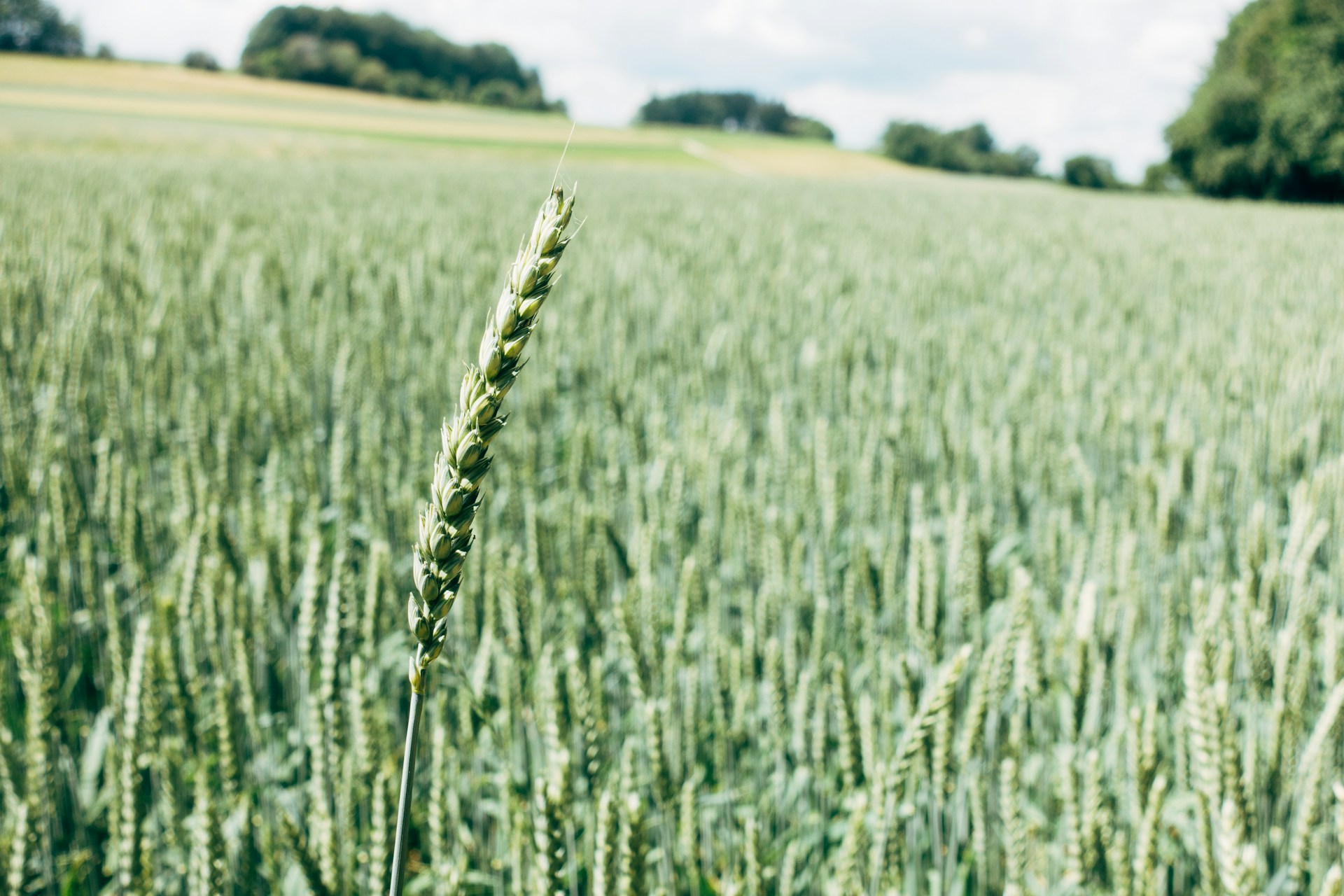
The domestication of cereal grains marks the true beginning of the agricultural revolution, and barley and wheat assume starring roles in this narrative. Approximately 9,500 years before present, the Fertile Crescent witnessed the emergence of what archaeologists call the “Eight Neolithic Founder Crops”: einkorn wheat, emmer wheat, hulled barley, peas, lentils, bitter vetch, chickpea, and flax.
These cereals had different ecological advantages and social uses.
- Barley tolerated poorer, saltier soils and became the main grain for human consumption in regions like Babylonia and Assyria, while also serving as fodder and later as a key ingredient in beer.
- Wheat, especially emmer and later free‑threshing varieties, became central to bread‑making traditions around the eastern Mediterranean and beyond, supporting urban societies in Mesopotamia, the Levant, and eventually Europe.
The transformation of wild wheat into cultivated varieties involved multiple generations of artificial selection. Ancient farmers selected seeds from plants with larger grains that grew more quickly, and that produced more seeds. Over time, these desired characteristics became fixed in populations, creating what we could recognize as true domesticated wheat.
Barley may have been domesticated at least twice: once in the Fertile Crescent and again further east in Central Asia, where wild barley also grew, before spreading as a versatile crop from Europe to western China. From these early heartlands, wheat and barley cultivation radiated outward along trade and migration routes into Europe, North Africa, Central Asia, and parts of the Indian subcontinent, carrying with it plow technologies, field systems, and cereal‑based cuisines.
Rice and the Asian farming revolutions
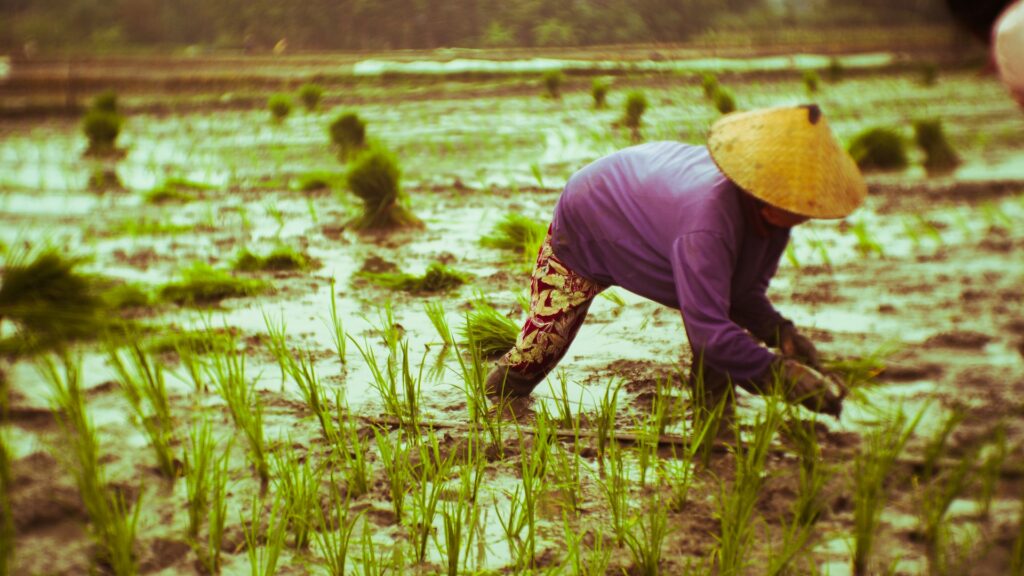
While wheat and barley reshaped western Eurasia, rice transformed eastern and southern Asia. Genetic and archaeological evidence indicates that rice (Oryza sativa) was first domesticated in the Yangtze River basin in China approximately 9,000 years ago.
By the Bronze Age, rice was part of sophisticated multi‑crop systems.
- In the Indus Valley, farmers combined winter crops such as wheat and barley with summer crops like rice, millets, and tropical beans, exploiting both monsoon and winter rains in a year‑round farming regime.
- Archaeological work shows domesticated rice in South Asia earlier than once thought, with evidence for rice use by the fifth millennium BCE and for integrated rice cultivation within Indus agricultural systems by roughly 2500–2100 BCE.
The domestication of rice in East Asia had profound implications. Unlike the Fertile Crescent, where multiple crops were domesticated at approximately the same time, rice would dominate the agricultural economy of East Asia, becoming the subsistence base for billions of people who would live in its territories. The expansion of Austronesian culture, beginning from Taiwan between 3,500 and 2,000 years ago, would disseminate rice cultivation techniques throughout Southeast Asia, creating specialized agricultural zones across the continent.
Plants for fiber, oils, and tools
Not all early cultivated plants were primarily foods. In the Fertile Crescent, flax appears among the Neolithic founder crops alongside cereals and pulses, valued both for its oily seeds and, especially, for its fibers used to make linen.
The cultivation of flax and similar plants had several important implications.
- Textile production: Flax fibers could be spun and woven into light, durable fabrics, enabling clothing better suited to hotter climates and supporting specialized crafts such as weaving and dyeing.
- Rope, nets, and tools: Fiber plants provided materials for fishing nets, ropes, and bindings, enhancing hunting, fishing, transport, and construction.
Alongside flax, other regions saw early domestication of fiber and utility plants such as cotton in parts of South Asia and the Americas. These “non‑food” crops expanded economic possibilities, encouraged division of labor, and contributed materially to the rise of household industries and trade.
Maize and pre‑Columbian American agriculture
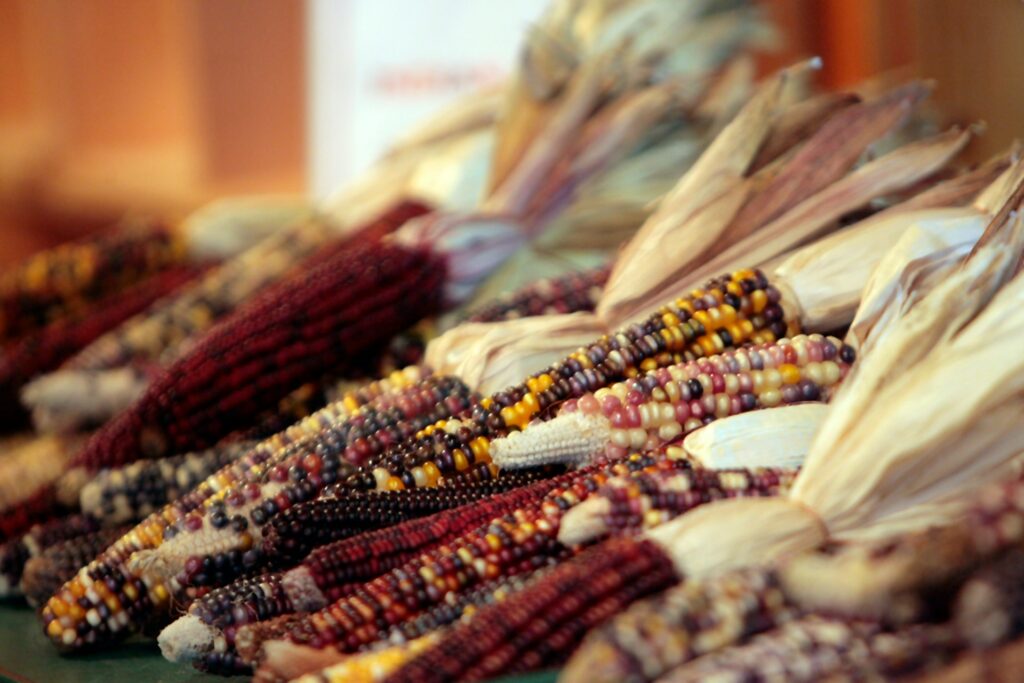
In the Americas, maize (corn) became the signature crop, as significant for American civilizations as wheat was for those of the Old World. Genetic and archaeological evidence points to south‑central Mesoamerica as the original domestication zone, where people began to manage and breed the wild grass teosinte perhaps 9,000 years ago, producing early forms of maize with larger, more nutritious ears.
By at least 5300 BCE, maize was being cultivated in lowland areas of Mexico, including coastal Tabasco, where early farmers cleared vegetation with fire and planted maize in combination with fishing and gathering. Over the following millennia, maize agriculture intensified and spread across Mesoamerica, becoming central to the diets and ritual life of cultures such as the Olmec (c. 1200–400 BCE) and, later, the Maya and Aztec.
Technologies such as terracing, raised fields (chinampas in central Mexico), and sophisticated irrigation and canal systems allowed American farmers to cultivate maize and companion crops (beans, squash, and others) in environments ranging from tropical lowlands to high Andean valleys. These innovations supported large populations, monumental architecture, complex calendars, and elaborate religious systems long before contact with Eurasia.
Technologies and impacts on civilization
Agriculture rested on a suite of technologies and social practices rather than on plants alone. Early farmers developed tools for cutting and grinding (sickles, grinding stones), storage facilities (silos, clay jars), and later plows and harnesses that increased the efficiency of fieldwork.
Irrigation systems in river valleys such as Mesopotamia’s Tigris–Euphrates and Egypt’s Nile included canals, dikes, and basins designed to control flooding and distribute water, demanding organized labor and administrative oversight.
These technological and organizational changes had far‑reaching consequences.
- Sedentism and urbanism: Stable food surpluses allowed permanent villages to grow into towns and cities, as seen in Mesopotamia, the Indus Valley, and early Chinese states.
- Cultural and intellectual innovation: With more predictable food supplies, societies invested in architecture, writing systems, mathematics, law codes, and religious institutions, much of which revolved around agricultural cycles and the management of harvests.
At the same time, agriculture transformed environments through deforestation, soil salinization, and changing hydrology, effects noted from ancient Mesopotamia to early maize fields in tropical forests. Yet, despite costs and regional variations, agriculture made possible what no hunter-gatherer society could achieve: large populations, advanced technical specialization, science, sophisticated art, and complex political structures. The Egyptian pyramids, the Roman aqueduct, Mayan temples, and the Great Wall of China could not exist in a hunter-gatherer society.